


 Home /
 Fast Charging Rechargeable AA Batteries for Game Controllers with USB-C Charging Technology


Table of Contents
Game controllers use Rechargeable AA Batteries with low internal impedance so they can be adjusted to meet varying loads. These batteries should also be able to estimate run time. With these attributes, 1.5V Lithium AA Batteries can potentially solve these problems. These batteries contain a lithium ion cell with an internal voltage conversion circuit. With a USB-C multi-slot charger, they can charge remarkably quick. Of course system compatibility still needs to be evaluated with the controller and charging methods.
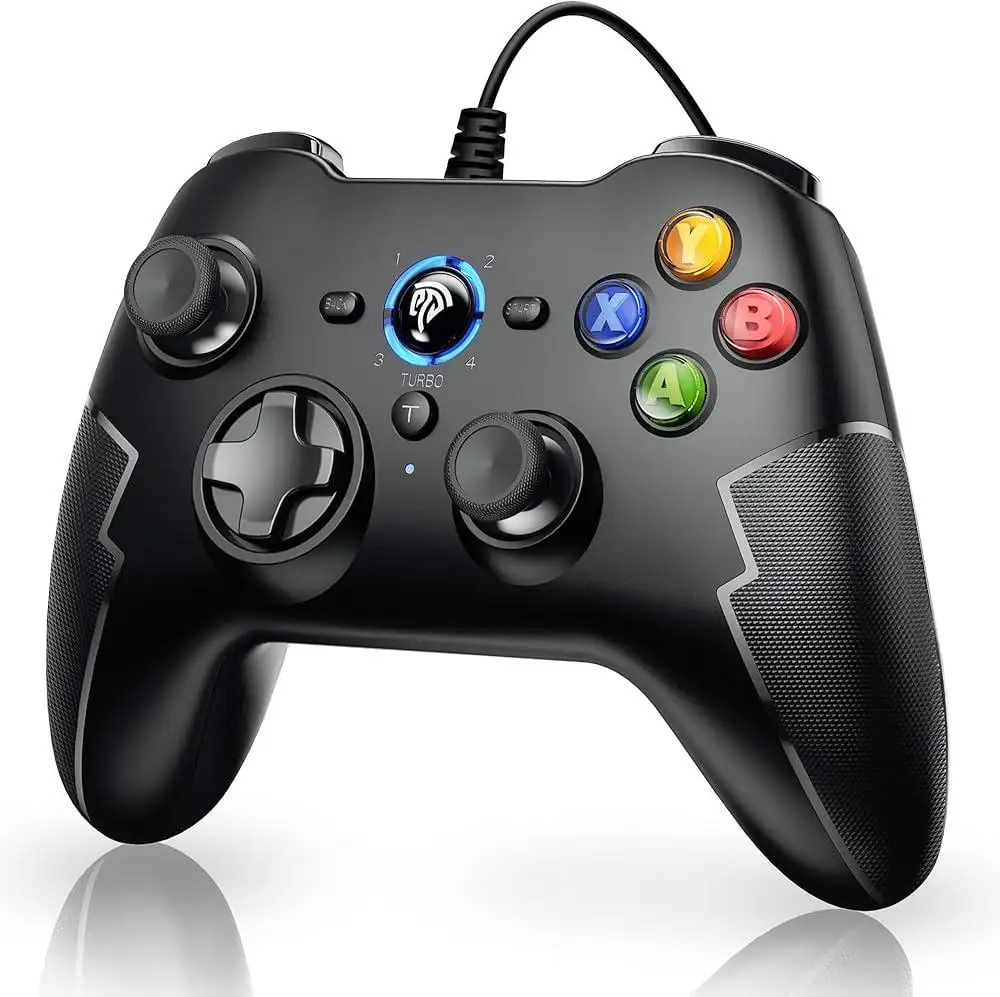
What Game Controllers Require from AA Batteries
Modern controllers continuously power wireless communication and control electronics. Vibration motors, lighting, and accessories can create temporary current peaks.
Rechargeable AA Batteries for Game Controllers should therefore be evaluated by:
•Voltage stability under continuous and peak loads
•Discharge-current capability
•End-of-discharge behavior
•Charger compatibility
•Overcurrent, overcharge, and over-discharge protection
Alkaline batteries begin near 1.5V but gradually decline. NiMH cells are rechargeable, yet their nominal voltage is generally 1.2V. In some controllers, this may trigger an earlier low-battery warning even when usable energy remains.
Why Regulated 1.5V Output Is Important
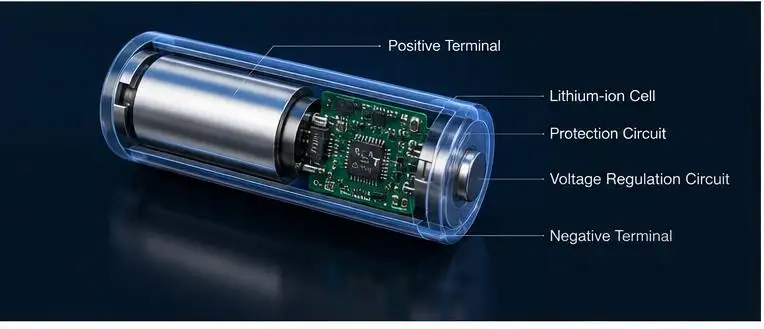
The Li-ion cell used in a regulated Li AA battery operates at above 1.5V. An internal PCB converts the voltage to a regulated 1.5V DC output to provide stable power for wireless transmission, vibration motors, LEDs, audio accessories, and controller logic.
A regulated cell may stay near 1.5V throughout most of its discharge cycle and quickly drop to the designed cutoff. It is recommended to have a charged spare set.
Stable 1.5V output may not guarantee compatibility. Rechargeable AA Batteries for Game Controllers should only be used in devices that support AA cells of the appropriate voltage and external charging.
1.5V Lithium AA vs 1.2V NiMH
| Evaluation Point | Regulated 1.5V Lithium AA | 1.2V NiMH AA |
| Nominal output | Regulated near 1.5V | About 1.2V |
| Discharge profile | Flat output, faster final cutoff | Gradual voltage decline |
| Weight | Generally lighter | Generally heavier |
| Low-battery display | May change quickly near empty | Usually more progressive |
| Charger | Dedicated lithium charger | Dedicated NiMH charger |
| Main strength | Stable voltage and fast rotation | Mature, widely available system |
Users concerned with consistent voltage and short charging times will prefer regulated lithium AA Batteries for Game Controllers over non-regulated NiMH Batteries. However, NiMH AA Batteries are viable in applications that accept 1.2V output.
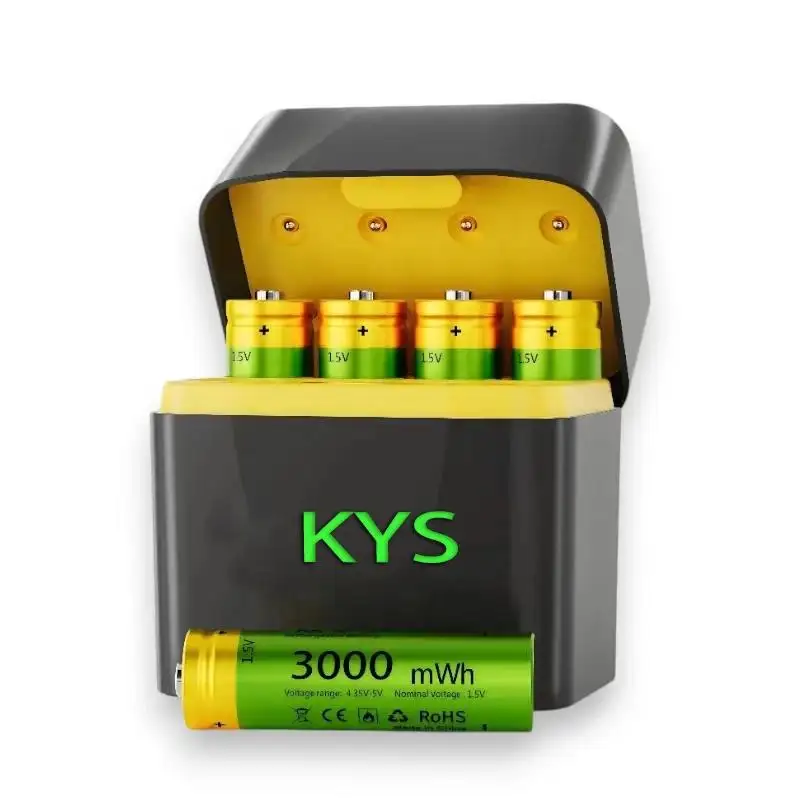
Why mWh Is Important When Discussing Energy Ratings
Capacity expressed as mAh is not enough information when battery voltages vary. Energy is expressed as:
Energy (mWh) = Voltage (V) × Capacity (mAh)
Standard 1.5V batteries measure energy availability in mWh. For configurations that target 2500mWh and 3600mWh, decisions around runtime, weight, cost, and the limit of the load will apply.
There are a few factors specific to this device that will also contribute to the total run time, including the level of vibration, state of the wireless connection, any attachments (if any), conversion efficiency, peak current, cutoff level, and discharge capacity. The behavior of the system's heat, conversion losses, and the conditions under which the cycle tests are run will also be contributing factors.
How USB-C Charging Improves Battery Management
A USB-C charging interface reduces dependence on proprietary connectors. For a charger designed around 5V/3A input, an underpowered adapter may increase charging time, especially when all slots are occupied.
USB-C here describes the connector and 5V input arrangement. It should not automatically be interpreted as high-voltage USB Power Delivery.
With suitable input power, a typical charging cycle of approximately 2.5 hours supports rotation between working and standby sets. Actual time varies with remaining energy, ambient temperature, battery age, and the number of occupied slots.
Independent Charging Slots
An eight-slot independent charger allows each position to operate separately. Users can charge one battery, several batteries, or cells with different remaining energy levels without forming matched pairs.
Key benefits include independent monitoring, flexible charging for one or multiple controllers, mixed-state charging, and combined charging and storage.
Internal Protection and Battery Recovery
A regulated lithium AA battery normally integrates voltage conversion and protection functions such as:
•Overcharge and over-discharge protection
•Current limiting
•Abnormal-condition detection
•Controlled low-energy cutoff
•Charging-status monitoring
Some chargers use low-current activation to attempt recovery of deeply discharged batteries. This may help cells stored at very low charge, but it cannot repair leakage, deformation, internal short circuits, or damaged insulation.
How to Select Rechargeable AA Batteries for Game Controllers
First confirm the controller manual, cell dimensions, terminal geometry, polarity, and external charging requirements. Removable regulated lithium cells should not be charged in an incompatible NiMH charger or unsupported controller circuit.
| Parameter | Typical Configuration |
| Battery voltage | Regulated 1.5V |
| Rated energy | 2500mWh or 3600mWh |
| Battery size | 14 × 50 ± 0.5 mm |
| Battery weight | 19 ± 0.5 g |
| Charger input | USB-C 5V/3A |
| Slot output | AA 350mA per slot |
| Slot count | 8 independent slots |
| Charging time | Approximately 2.5 hours |
| Status display | Flashing while charging; solid when complete |
Professional buyers should also request applicable UN38.3 transport documentation, RoHS declarations, relevant CE files, charge-discharge curves, cycle-life data, protection-test reports, and batch traceability.
Gloflux Design Approach
Gloflux develops Rechargeable AA Batteries for Game Controllers around regulated 1.5V output, lithium-ion energy storage, and dedicated external charging. Its charging system combines USB-C 5V/3A input, eight independently controlled slots, LED indication, low-current battery activation, abnormal-condition detection, and integrated protection.
The same platform can support remote controls, toys, wireless microphones, selected medical devices, and other AA-powered electronics, subject to device requirements.
Are Rechargeable AA Batteries for Game Controllers Worth Using?
Consider Rechargeable AA Batteries for Game Controllers if you want steady voltage, consistent charging, and lower consumption of disposable batteries. The most important factors in selection here are: Does the battery work with your controller, output regulation, energy usage, response to discharge, compatibility with the charger, and your safety?
Gloflux takes on custom and branded projects. They have working energy options, a built-in USB-C charging system, technical documents, packaging assistance, and OEM/ODM assistance. Gloflux takes battery and charger configurations for specific controllers or devices for review for their clients.
FAQs
Q1. Can each charging slot be used independently?
Yes, each slot can be used independently. The Gloflux charger includes eight independently controlled AA charging slots. Therefore, users are able to charge one battery or even multiple batteries with different energy levels concurrently, even if they are not using all of the charging slots.
Q2. Why does Gloflux use a regulated 1.5V output?
Gloflux charges lithium-ion batteries which, typically, operate at above 1.5V. For this reason, Gloflux includes a voltage regulation circuit within their design to output a stable 1.5V. This helps the controller operate consistently throughout most of the battery discharge cycle.
Q3. What energy options are available for Gloflux AA batteries?
Gloflux has rechargeable AA batteries for game controller use that have energy options of approximately 2500mWh and 3600mWh. Which option is used will be dependent on the desired runtime, the load of the device, the weight of the product, selling price, and other market considerations.
Q4. What is the estimated battery recharging time of the Gloflux charging system?
Approximately 2.5 hours is the expected time for a full battery recharge. Note that the actual time will depend on the energy in the battery when charging, the power of the input, the temperature of the ambient air, the condition of the battery, and the number of charging slots in use.
Q5. What is the power input for the Gloflux charger?
A USB-C 5V/3A power input is used by Gloflux's battery charger. In order to fully utilize the charger, a power adapter with sufficient output must be used. Lower output power adapters will extend the charging time of multiple batteries.
Talk to the Manufacturer
Resources & Insights
High Capacity Lithium Battery for Wearables: High-Voltage LiPo Cell Design
2026-10-19
Cylindrical Battery Packs for Laptops: 2S vs 3S vs 4S Battery Design
2026-10-19
Stage Lighting Battery Pack: Prevent Voltage Drop & LED Flicker
2026-10-19
Best Rechargeable Batteries for Smart Devices: Performance, Safety, and Selection Guide
2026-10-19


