


 Home /
 Industrial Wide-Temperature Battery Pack: Reliable Power for Harsh Operating Environments


Table of Contents
- Why Temperature Has a Major Effect on Battery Performance
- Cell Chemistry and Material Selection
- Low-Temperature Discharge and Charging
- High-Temperature Operation and Thermal Management
- Battery Management System for Wide-Temperature Packs
- Mechanical Design for Industrial Environments
- Common Industrial Applications
- Information Required for Custom Development
- Conclusion
- Frequently Asked Questions
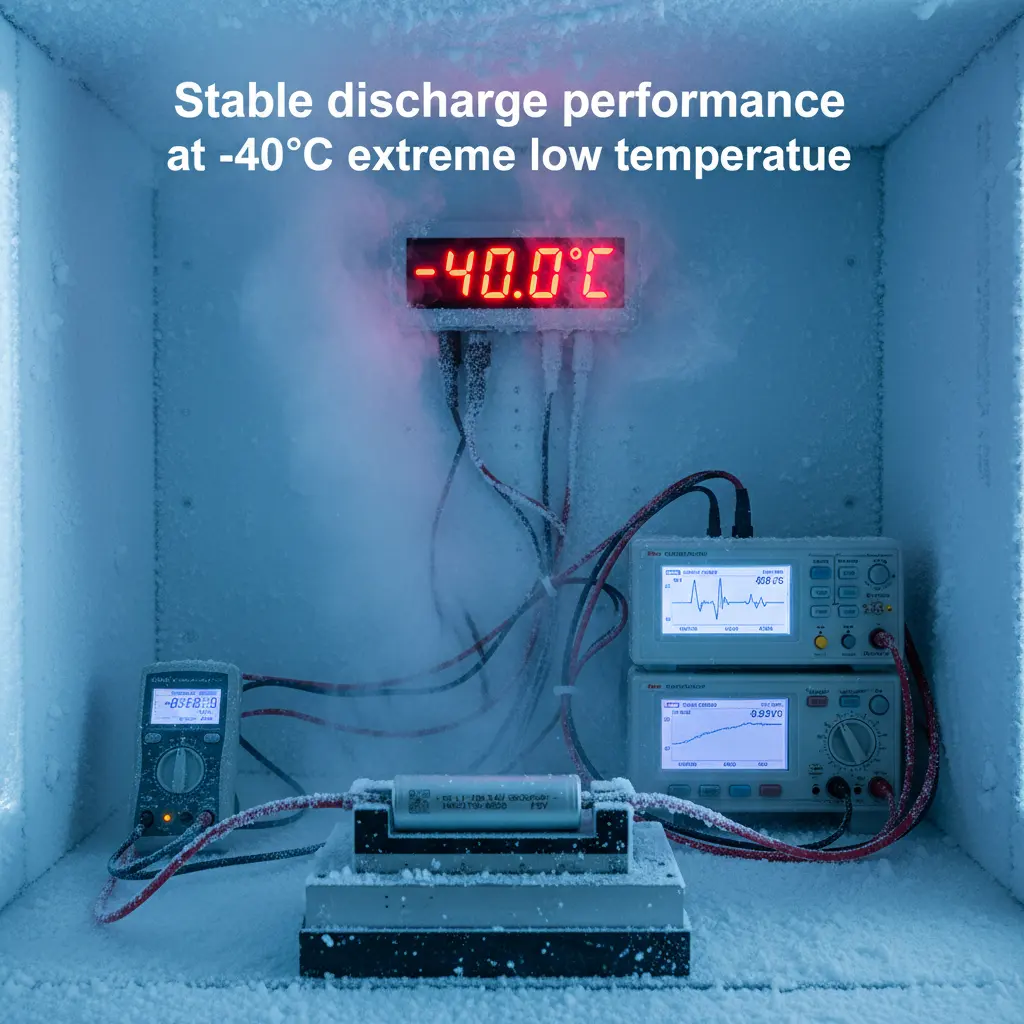
Industrial equipment does not always operate in a controlled indoor environment. Batteries may be exposed to freezing warehouses, outdoor winter conditions, hot equipment cabinets, direct sunlight, rapid temperature changes, vibration, dust, and continuous charging or discharging. Under these conditions, a standard consumer battery may lose capacity, experience increased internal resistance, charge slowly, or trigger protective shutdowns.
An industrial wide-temperature battery pack is developed to provide more stable power across a broader operating-temperature range. It combines suitable battery chemistry, cell selection, thermal management, mechanical protection, and an application-specific battery management system. These battery packs are commonly considered for industrial robots, monitoring equipment, outdoor communication devices, emergency systems, inspection instruments, transportation equipment, and other applications where dependable operation is more important than achieving the lowest initial cost.
Why Temperature Has a Major Effect on Battery Performance
Battery performance depends on electrochemical reactions inside the cells. Temperature changes the speed and efficiency of these reactions.
At low temperatures, electrolyte movement becomes slower and internal resistance increases. The battery may still show an acceptable open-circuit voltage, but the voltage can drop quickly when the equipment draws current. This may lead to reduced usable capacity, shorter operating time, weaker power output, or unexpected system shutdown.
High temperatures create a different set of problems. Although a warm battery may temporarily deliver power more easily, continuous exposure to excessive heat can accelerate ageing and increase the rate of capacity loss. It may also place greater stress on the electrolyte, separator, seals, protection circuit, and other battery components.
For this reason, a wide-temperature battery is not simply a standard battery with a wider temperature value printed on the label. The complete pack must be designed around the actual environment, load profile, charging method, installation position, and required service life.
Cell Chemistry and Material Selection
The first step in developing an industrial wide-temperature battery pack is selecting an appropriate cell chemistry. Lithium-ion, lithium polymer, lithium iron phosphate, nickel-metal hydride, and other rechargeable technologies have different advantages and operating limitations.
Modified lithium-ion or lithium polymer cells may be suitable for compact equipment requiring high energy density. LiFePO4 batteries are often considered for industrial systems where cycle life, thermal stability, and long-term reliability are priorities. The final choice depends on voltage, available space, weight, discharge current, charging requirements, and target temperature range.
Specialized cells may use adjusted electrolyte formulations, electrode materials, separators, and internal structures to improve low-temperature discharge or high-temperature durability. However, improved performance in one area may involve trade-offs in energy density, charging speed, cost, or cycle life.
A responsible battery design therefore begins with a clear project specification rather than selecting a cell from capacity alone.
Low-Temperature Discharge and Charging
Low-temperature operation is a frequent requirement for outdoor sensors, security equipment, surveying instruments, refrigerated warehouses, winter robots, and remote communication systems.
Discharging at low temperature is generally easier to manage than charging. When the battery becomes cold, its available capacity and current capability may decrease. Equipment with high startup current, motors, pumps, transmitters, or heating elements can place additional stress on the battery.
Charging requires more careful control. Depending on the cell chemistry and temperature, charging a cold lithium battery at a normal current may damage the cell and shorten its service life. An industrial battery management system may therefore reduce the charging current, delay charging, or stop charging until the battery reaches an acceptable temperature.
For applications that must charge below normal temperature, the system may require specially designed cells, an integrated heater, temperature sensors, insulation, and a controlled preheating strategy.
High-Temperature Operation and Thermal Management
Industrial batteries may also operate near engines, motors, lighting equipment, machinery, charging stations, or sealed electronic cabinets. In these locations, the temperature around the battery may be considerably higher than the general ambient temperature.
The battery pack should be positioned away from concentrated heat sources whenever possible. Enclosure ventilation, thermal barriers, heat-resistant wiring, flame-retardant materials, and correct spacing can all contribute to a more reliable design.
Temperature monitoring is especially important in high-power applications. Sensors can provide data to the battery management system, allowing it to reduce current or stop charging and discharging when temperature limits are exceeded.
Thermal management should be considered during the product design stage. Adding insulation or cooling after the equipment has already been completed may be difficult and may not solve heat generated inside the pack.
Battery Management System for Wide-Temperature Packs
The battery management system is one of the most important components in an industrial battery pack. Its functions may include:
- Overcharge and over-discharge protection
- Overcurrent and short-circuit protection
- Cell-voltage monitoring
- Cell balancing for multi-series packs
- Charging and discharging temperature protection
- State-of-charge calculation
- State-of-health monitoring
- CAN, RS485, UART, SMBus, or other communication
- Fault recording and system alarms
Temperature thresholds should be selected according to the cells, current demand, charger, equipment, and operating environment. A generic protection board may not provide suitable control for an industrial wide-temperature project.
Some applications also require multiple temperature sensors because the cells, protection board, connector, and enclosure may not remain at the same temperature.
Mechanical Design for Industrial Environments
Temperature is rarely the only challenge in an industrial application. The battery may also experience shock, vibration, moisture, dust, mechanical impact, or repeated connector movement.
The pack structure can include cell holders, cushioning materials, insulation sheets, protective brackets, reinforced wiring, sealed connectors, and a metal or engineering-plastic enclosure. The design should prevent the cells from moving while avoiding excessive compression.
Material selection should also consider expansion and contraction caused by temperature changes. Different metals, plastics, adhesives, foams, and cables may respond differently when repeatedly heated and cooled.
For outdoor or mobile equipment, the enclosure may require a suitable level of water and dust protection. However, a sealed enclosure must still manage internally generated heat and pressure safely.
Common Industrial Applications
Industrial wide-temperature battery packs can be developed for:
- AGVs, AMRs, and mobile robots
- Inspection and service robots
- Outdoor communication equipment
- Remote monitoring and data-collection systems
- Emergency lighting and backup systems
- Security cameras and access-control devices
- Surveying and mapping instruments
- Medical transport and field equipment
- Cold-storage warehouse devices
- Railway and transportation electronics
- Oil, gas, mining, and construction equipment
- Outdoor cleaning and maintenance machines
Each application has a different operating cycle. A battery for an outdoor sensor may require low self-discharge and long standby time, while a robot battery may need high current and rapid opportunity charging.
Information Required for Custom Development
Before developing a wide-temperature battery pack, the battery manufacturer should receive the required voltage, capacity, continuous current, peak current, charging current, target operating-temperature range, charging-temperature range, available installation space, expected runtime, communication protocol, and environmental conditions.
It is also helpful to understand how long the equipment stays at extreme temperatures, whether it charges outdoors, and whether heating or cooling is available. A brief exposure to cold is different from operating continuously in a freezer or winter field environment.
Prototype batteries should be tested in the complete device. Recommended evaluations may include low- and high-temperature discharge, charging control, startup current, thermal cycling, vibration, protection response, communication, runtime, and cycle testing.
Conclusion
An industrial wide-temperature battery pack is a complete power system designed for demanding environments. Reliable performance depends on cell chemistry, current capability, charging control, temperature monitoring, mechanical construction, thermal management, and equipment-level testing.
The best design is not necessarily the battery with the widest claimed temperature range. It is the battery that operates safely and consistently under the customer’s real conditions. Clear technical information and early cooperation between the equipment developer and battery manufacturer can reduce project risk and improve long-term reliability.
Frequently Asked Questions
1. What is an industrial wide-temperature battery pack?
It is a rechargeable battery system designed to maintain more reliable operation across a broader temperature range than a typical consumer battery. Its cells, BMS, wiring, enclosure, and thermal design are selected for the application.
2. Can a lithium battery be charged below freezing?
Charging capability depends on the cell and system design. Some applications require reduced charging current, special low-temperature cells, or battery preheating before charging begins.
3. Can the voltage, capacity, and temperature range be customized?
Yes. These specifications can be developed around the equipment’s power demand, available space, charging system, runtime target, and environmental conditions.
4. Which battery chemistry is best for industrial temperature conditions?
There is no universal answer. Lithium-ion, lithium polymer, and LiFePO4 each offer different advantages. The choice depends on energy density, current, cycle life, safety, size, and temperature requirements.
5. What information is needed to develop a sample?
The manufacturer normally needs voltage, capacity, current, temperature range, charging method, dimensions, connector details, communication requirements, application environment, and preferably the equipment or enclosure drawing.
Talk to the Manufacturer
Resources & Insights

High Capacity Lithium Battery for Wearables: High-Voltage LiPo Cell Design
2026-10-19
Cylindrical Battery Packs for Laptops: 2S vs 3S vs 4S Battery Design
2026-10-19
Stage Lighting Battery Pack: Prevent Voltage Drop & LED Flicker
2026-10-19

Best Rechargeable Batteries for Smart Devices: Performance, Safety, and Selection Guide
2026-10-19


