


 Home /
 18650 11.1V 3800mAh 3S1P Li-Ion Battery Pack for Security Cameras, Geological Exploration, and Outdoor Equipment, with a Wide Operating Temperature Range of -40°C to +60°C


Table of Contents
- Understanding the 11.1V 3S1P Battery Configuration
- Reliable Power for Security Cameras
- Battery Performance in Geological Exploration
- Benefits of Wide-Temperature Battery Technology
- Protection Functions for Safe Operation
- Compact and Lightweight 18650 Design
- Suitable Application Areas
- OEM and ODM Customization Options
- Quality Control and Testing
- Conclusion
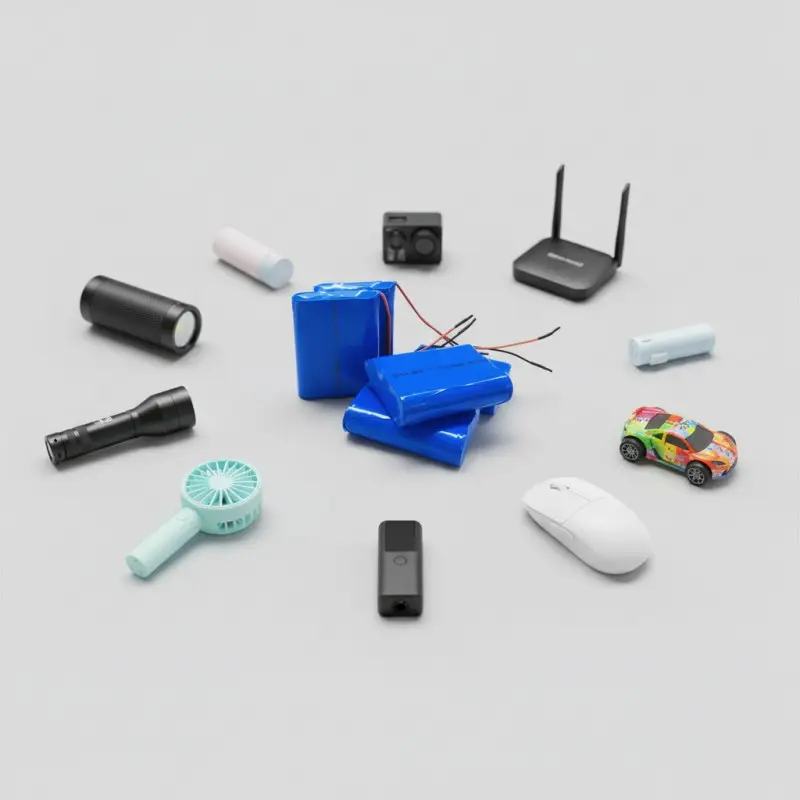
Outdoor electronic equipment often operates in environments where temperature, weather, and access to power are difficult to control. Security cameras, geological exploration instruments, remote monitoring systems, and portable industrial devices all require a dependable power source to maintain stable performance. The 18650 11.1V 3800mAh 3S1P Li-Ion battery pack is designed for these demanding applications, offering a wide operating temperature range from -40°C to +60°C.
With stable voltage output, compact construction, rechargeable lithium-ion technology, and flexible OEM customization, this battery pack can support equipment used in cold regions, deserts, construction sites, mountains, mines, and other challenging outdoor locations.
Understanding the 11.1V 3S1P Battery Configuration
The term 3S1P describes the internal cell arrangement of the battery pack. Three 18650 lithium-ion cells are connected in series to create an 11.1V nominal voltage. The 1P configuration means that one cell is used in each series group.
A typical lithium-ion cell has a nominal voltage of approximately 3.7V. When three cells are connected in series, the total nominal voltage reaches 11.1V. The fully charged voltage is generally about 12.6V, depending on the selected cell chemistry and charging design.
The 3800mAh capacity provides a practical balance between runtime, battery size, and weight. This makes the pack suitable for portable equipment that requires reliable power without an excessively large battery enclosure.
Before integrating the battery into a device, manufacturers should confirm the operating voltage, charging voltage, current demand, connector polarity, and available installation space.
Reliable Power for Security Cameras
Outdoor security cameras frequently operate continuously, transmitting images, recording video, detecting motion, and communicating through wireless networks. These functions place constant demand on the battery.
In remote areas, security cameras may be installed where there is no stable grid connection. Battery-powered systems are often combined with solar panels, wireless communication modules, or backup charging equipment. A reliable 11.1V battery pack can help maintain camera operation during cloudy weather, power interruptions, or nighttime use.
The 3800mAh capacity may support compact surveillance devices, wireless camera systems, temporary monitoring installations, and portable security products. Actual runtime depends on camera resolution, infrared lighting, wireless transmission, standby mode, temperature, and recording frequency.
A stable battery output helps reduce unexpected shutdowns, data interruptions, and communication failures.
Battery Performance in Geological Exploration
Geological exploration teams often work in mountains, deserts, forests, mines, and isolated areas. Their equipment may include portable detectors, data loggers, positioning systems, measurement instruments, sensors, and communication terminals.
These devices need reliable power because charging opportunities may be limited during field operations. In addition, temperature conditions can change significantly between daytime and nighttime or between different elevations.
The wide operating temperature range of -40°C to +60°C makes this battery pack suitable for applications where standard consumer batteries may not perform consistently. In cold conditions, ordinary lithium-ion batteries may experience reduced capacity, increased internal resistance, and lower discharge performance. A properly designed wide-temperature battery uses suitable cells, protection components, wiring, and structural materials to improve reliability.
In hot environments, temperature control is equally important. Excessive heat may accelerate battery aging and affect safety. Equipment manufacturers should ensure that the battery compartment has suitable heat management and that the device does not expose the pack to temperatures beyond its rated limits.
Benefits of Wide-Temperature Battery Technology
A wide-temperature battery is designed to support equipment used outside normal indoor conditions. This is valuable for industrial users who operate in different climates or export products to multiple regions.
At low temperatures, the battery should maintain sufficient discharge capability to power the connected device. At high temperatures, the battery design should remain mechanically stable and work with suitable protective controls.
The -40°C to +60°C range can support applications in cold storage areas, winter construction projects, high-altitude environments, tropical regions, deserts, and exposed outdoor sites.
However, operating temperature and charging temperature are not always the same. Lithium-ion batteries usually require stricter temperature limits during charging. For this reason, buyers should confirm the permitted charging range separately. A temperature sensor or charging control circuit may be required for extreme-environment applications.
Protection Functions for Safe Operation
An integrated protection circuit is an important part of a rechargeable lithium-ion battery pack. It helps monitor electrical conditions and disconnect the pack when abnormal conditions occur.
Typical protection functions may include:
- Overcharge protection
- Over-discharge protection
- Overcurrent protection
- Short-circuit protection
- Temperature monitoring
Overcharge protection helps prevent the cell voltage from rising beyond its safe limit. Over-discharge protection disconnects the load before the cells fall to an excessively low voltage. Overcurrent and short-circuit protection help reduce risks caused by device faults, damaged wiring, or abnormal loads.
The protection board should be selected according to the normal operating current and peak current of the equipment. Outdoor cameras with infrared LEDs, motors, wireless transmitters, or heaters may briefly draw higher current. The battery supplier should understand these load characteristics before confirming the protection parameters.
Compact and Lightweight 18650 Design
The 18650 cell format is widely used in industrial battery packs because it offers high energy density, consistent dimensions, and mature manufacturing technology. It allows engineers to create compact rechargeable power solutions for portable equipment.
For outdoor devices, reducing weight is often important. Geological workers, surveyors, inspectors, and technicians may carry several instruments throughout the day. A compact lithium-ion battery can help reduce the total equipment load.
The cylindrical cell structure also provides mechanical strength, while custom brackets, insulation materials, housings, and shrink wrapping can protect the cells during use.
Battery dimensions should be designed according to the available space inside the equipment. Mechanical drawings, enclosure measurements, and original battery samples can help the supplier create a suitable pack layout.
Suitable Application Areas
The 18650 11.1V 3800mAh 3S1P battery pack can support a wide range of professional devices, including:
- Outdoor security cameras
- Wireless surveillance systems
- Geological exploration instruments
- Remote monitoring equipment
- Environmental sensors
- Portable data collection devices
- Construction inspection tools
- Mining and drilling instruments
- Outdoor communication terminals
- Industrial handheld equipment
Each application has different electrical, mechanical, and environmental requirements. Compatibility should always be evaluated before sample production and mass manufacturing.
OEM and ODM Customization Options
Custom battery development allows manufacturers to match the battery pack to the specific requirements of their equipment. Available customization options may include:
- Battery dimensions and shape
- Cell brand and performance grade
- Connector model and polarity
- Wire length and wire gauge
- Protection circuit parameters
- Temperature sensor
- Plastic housing or shrink wrapping
- Charging interface
- Product label and branding
- Packaging design
For outdoor applications, manufacturers may also require reinforced housings, waterproof connectors, vibration resistance, impact protection, or additional insulation.
Providing detailed technical information helps reduce development time. Useful information includes device voltage, maximum current, operating time, battery compartment dimensions, connector photos, charging method, operating temperature, and expected order quantity.
Quality Control and Testing
Battery quality directly affects the reliability of outdoor equipment. A professional manufacturing process should include incoming cell inspection, voltage matching, internal resistance testing, capacity testing, welding inspection, protection-board verification, charging tests, and discharge tests.
Wide-temperature applications may also require low-temperature discharge testing and high-temperature storage evaluation. Finished battery packs should be tested inside the actual device whenever possible.
Equipment-level testing can identify problems related to current demand, connector fit, charging behavior, communication, temperature, and installation space. This helps ensure that the battery performs correctly under real working conditions.
Conclusion
The 18650 11.1V 3800mAh 3S1P Li-Ion battery pack provides a reliable rechargeable power solution for security cameras, geological exploration instruments, outdoor monitoring systems, and industrial portable equipment. Its wide -40°C to +60°C operating range supports use in demanding climates and remote environments.
With stable output, high energy density, protective circuitry, compact construction, and flexible OEM customization, this battery pack can help equipment manufacturers improve runtime and field reliability. Careful cell selection, protection design, temperature testing, and device compatibility verification are essential for achieving dependable long-term performance.
Talk to the Manufacturer
Resources & Insights

High Capacity Lithium Battery for Wearables: High-Voltage LiPo Cell Design
2026-10-19
Cylindrical Battery Packs for Laptops: 2S vs 3S vs 4S Battery Design
2026-10-19
Stage Lighting Battery Pack: Prevent Voltage Drop & LED Flicker
2026-10-19

Best Rechargeable Batteries for Smart Devices: Performance, Safety, and Selection Guide
2026-10-19


