


 Home /
 Replaceable Battery Solutions for EU Products


Table of Contents
- What Does the EU Replaceable Battery Requirement Mean?
- Are All Products Required to Have User-Replaceable Batteries?
- Common Replaceable Battery Pack Structures
- Key Engineering Considerations
- Battery Chemistry Options
- Testing and Documentation
- Developing a Custom Replaceable Battery with GLOFLUX
- Conclusion
- Frequently Asked Questions
Design of batteries is emerging as an important product development issue for companies selling portable electronics in the European Union. Many products containing portable batteries will have to be designed to allow the battery to be easily removed for replacement by the end user under Regulation (EU) 2023/1542 as of 18 February 2027.
For brands, OEMs and product developers, it means that the replacement of batteries should begin at the early mechanical, electrical and compliance phase, rather than starting after determining the product enclosure and electronics.
A good removable battery design can help products meet regulatory requirements, increase their service life, reduce e-waste and enhance after-sales maintenance.
What Does the EU Replaceable Battery Requirement Mean?
Article 11 of the EU Battery Regulation states that portable batteries incorporated into products should be readily removable and replaceable by the end user.
Generally, a battery will be deemed readily removable if it can be removed with commercially available tools. There should be no need for proprietary tools, dedicated equipment, heat or solvents. When a special tool is required, it could have to be provided with the product.
Manufacturers should also include explicit usage, removal and replacement instructions and safety data. This information should be made openly available and available on the internet at all times.
This is not for the individual cells or the battery pack's internal components, but for the entire battery.
Are All Products Required to Have User-Replaceable Batteries?
Not every battery-powered product follows exactly the same replacement method.
Some products could have replacement options that are only available from a third party professional. Some examples are appliances that are supposed to work in wet or washable environments and some medical imaging, radiotherapy, and in-vitro diagnostic appliances used by professionals.
Other exemptions may apply when a permanent battery connection is required to keep the product safe and/or functional for user safety or to ensure data integrity.
First, companies need to consider the structure of their batteries before choosing which ones to use, taking into account their product classification, intended environment and relevant EU legislation. For products that are unusual in terms of safety requirements, an extra advisory from a regulatory specialist or qualified testing laboratory may be helpful.
Common Replaceable Battery Pack Structures
The right battery type will vary according to size, environment, and load and change requirements.
Removable Battery Cartridge
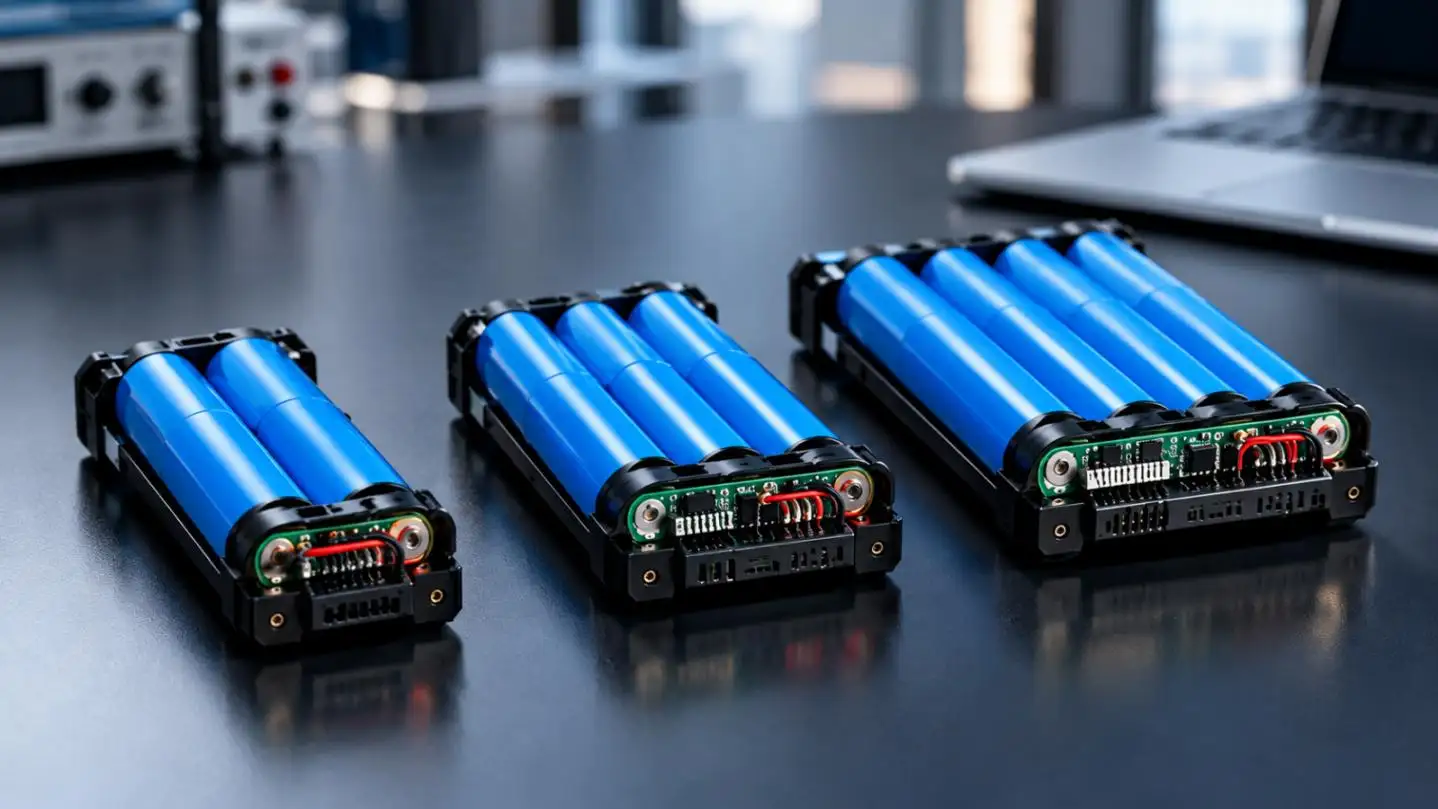
A cartridge-style battery consists of a hard plastic box, locking mechanisms and guide rails as well as integrated contacts. It can be used on the handheld terminal, portable instrument, inspection instrument and industry controller.
The cartridge helps to keep the battery cells and BMS safe and assists the user in installing the battery in the proper orientation
Battery Pack with Connector and Service Cover
In this design, the battery pack is installed behind a screwed or latched service cover. The user disconnects a keyed plug before removing the pack.
This solution is useful when the battery does not need to be changed frequently but still must remain accessible with ordinary tools.
Slide-In Battery Module
A battery module with quick electrical connectors such as spring contacts or blade connectors can be slide in for rapid electrical connection. It is frequently used in professional equipment, where a battery change is necessary for frequent operation.
Soft-Pack Battery with Protective Housing
The LiPo pouch cells can be mounted inside a designed plastic frame or protective casing. The housing protects against punctures, compressions and improper installation and offers a relatively thin product profile.
Key Engineering Considerations
Making the enclosure easy to open is not the end of the process to create a replaceable battery. The battery and host product must be safe to operate before, during and after replacement.
Mechanical Fit and Retention
The battery should be firmly secured in its normal use, in vibration, during transportation and accidental drops. Guide rails, locking tabs, screws or latches must avoid any accidental shifting, but not cause any unnecessary difficulty when replacing.
Connector Selection
The connector must correspond to the desired voltage, continuous current and peak current demand. A keyed/polarized connector minimizes the risk of installation in the wrong direction.
If the battery is frequently removed, it might need reinforced blade terminals or pogo pins and/or durable spring contacts.
BMS Protection
Protection against overcharge, over discharge, over current, short circuit and abnormal temperature can be achieved by using a custom battery management system. Protection settings are to be determined by the battery chemistry and configuration of the cells and load.
Communication Functions
Smart products could need battery identification and/or operating data transmission or require fuel gauging. The battery can be used for various functions, such as NTC temperature sensing, ID resistance, UART, I2C, SMBus, CAN or RS485 communication depending on the device.
Enclosure and Environmental Protection
Balance of replaceable construction with dust, moisture and impact resistance. Sealing of gasket, positioning of connector covers and properly placed service panels can help to ensure product protection after replacing the battery.
Battery Chemistry Options
When high energy density, mechanical stability and configurable capacity are required, then lithium-ion cylindrical cells are generally used. Portable instruments, robotics and industrial electronics can be powered with formats like 18650 and 21700.
LiPo batteries can be used in thin, light or odd-shaped product space. Pouch cells are not the same however and must be protected from bending, puncture and compression.
Industrial devices, backup systems and applications that require durability rather than minimum weight, such as LiFePO4 batteries can be used.
Chemistry selection should be based on the complete application rather than capacity alone.
Testing and Documentation
The battery specifications and drawings are included.The battery specification and drawings are attached.
Typical documentation may include:
- Battery specifications and drawings
- Cell and BMS information
- UN38.3 test summary
- Safety Data Sheet
- IEC 62133-2 or application-specific test reports
- RoHS and REACH documentation
- EU conformity documents where applicable
- Removal, replacement and safety instructions
Labeling and information requirements are also introduced in the EU Battery Regulation. Effective February 18, 2027, batteries will, in general, need to be equipped with a QR code and battery-Passports will apply to certain batteries (specification: LMT, EV and industrial batteries over 2 kWh).
The exact compliance package depends on the battery category and final product.
Developing a Custom Replaceable Battery with GLOFLUX
GLOFLUX can design replaceable lithium batteries for an OEM product, based on the electrical and mechanical specifications.
Typically it starts with the voltage, capacity, current, runtime, and available space information. The engineers are then able to assess cell type, series-parallel configuration, BMS, connector, wiring and enclosure structure.
Prototype batteries should be tested in the product they are intended to be used in. This allows for installation, removal, connector durability, charging behavior, temperature performance and communication functions to be verified prior to mass production.
Conclusion
EU replaceable batteries are changing the design of portable products. For companies designing products for 2027 and beyond, check battery access and stockability, spare part availability, replacement instructions and compliance documentation at the initial design phase.
Compliance with the product can be achieved by using a custom replaceable battery pack, while enhancing product life, serviceability and customer experience. Good coordination between the product designer, battery manufacturer and testing partner keeps miscellaneous enclosure and certification changes to a minimum, which can be expensive near the end of the project.
Frequently Asked Questions
1. When will the EU replaceable battery requirements come into effect?
Article 11 of Regulation (EU) 2023/1542 applies from February 18, 2027.
2. Can individual cells be replaced by the users?
Normally, no. The requirement applies to the whole portable battery and not each cell in the battery.
3. Can screws be used on the battery compartment?
Yes. A battery is considered removable if it can be accessed using commercially available tools, without the use of heat, solvents or proprietary equipment.
4. How long must replacement batteries remain available?
The regulation stipulates that applicable portable and LMT batteries shall be made available as spare batteries for a period of five years after the last unit of the equipment model is placed on the market.
5. What information is needed to develop a replaceable battery?
Offer the needed voltage, capacity, operating current, peak current, charging technique, product size, connector, speaking protocol, operating temperature and needed certifications.
Talk to the Manufacturer
Resources & Insights

High Capacity Lithium Battery for Wearables: High-Voltage LiPo Cell Design
2026-10-19
Cylindrical Battery Packs for Laptops: 2S vs 3S vs 4S Battery Design
2026-10-19

Stage Lighting Battery Pack: Prevent Voltage Drop & LED Flicker
2026-10-19

Best Rechargeable Batteries for Smart Devices: Performance, Safety, and Selection Guide
2026-10-19


