


 Home /
 Custom Replaceable Battery Solutions for POS Terminals: OEM/ODM Options Explained


Table of Contents
Wireless Point of Sale (POS) terminals are widely used in retail, hospitality, and logistics applications. Like other devices, rechargeable batteries within POS terminals are subject to charge and discharge cycles and inevitably deteriorate. Battery degradation leads to diminished runtime, increased voltage inconsistency, and frequent unexpected battery shutoff during work shifts.
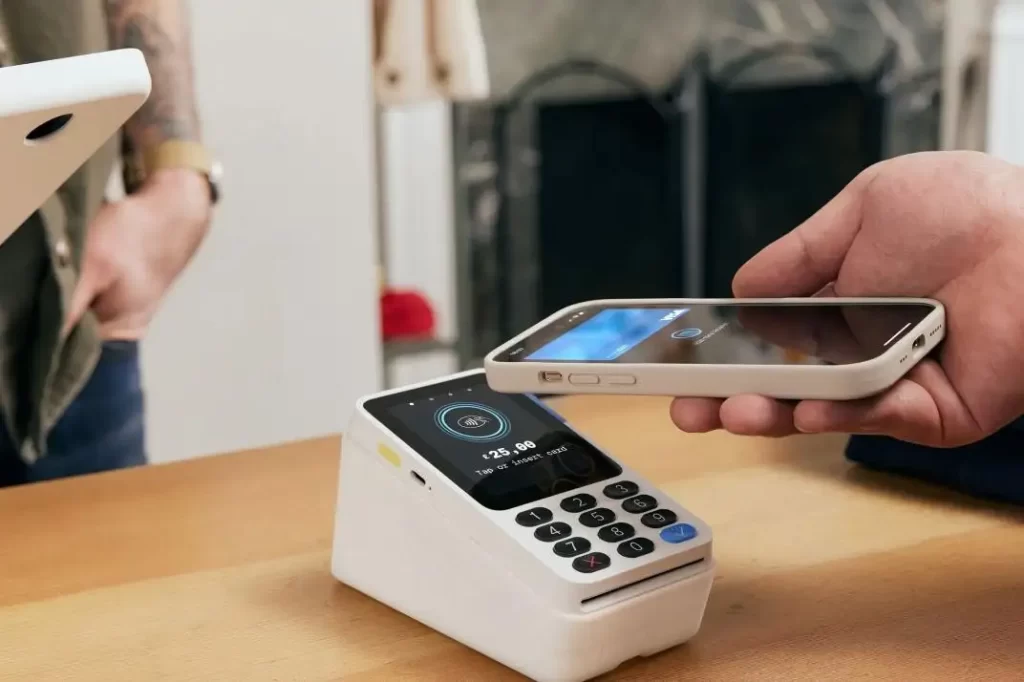
To combat the underperformance of POS terminals, service providers and POS terminal operators choose to implement POS terminals with serviceable battery options as a more environmentally-friendly alternative to replacing the entire POS terminal.
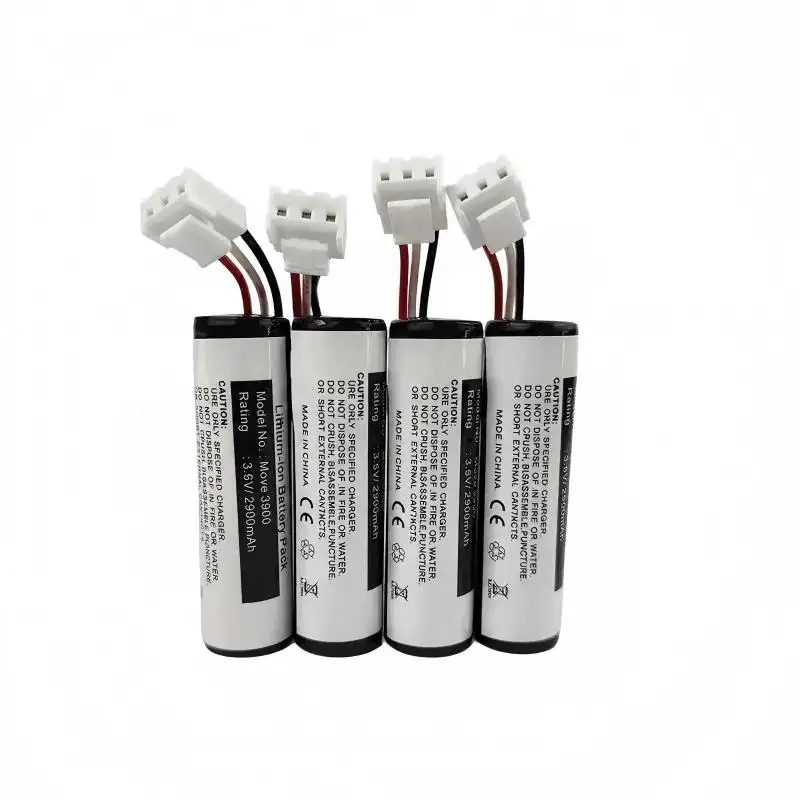
POS terminals come with unique wire configurations, mechanical layouts, and electronic characteristics, which makes it difficult to use retail battery packs as replacements. In these cases, the use of OEM and ODM services to create custom batteries helps integrate the old and new systems of POS terminals.
1. What Makes a POS Battery Pack Customizable
Rechargeable battery systems are not a single component and can be designed recursively to meet various system requirements. Battery systems can be rearranged to meet the geometric and design requirements for different POS terminals.
1.1 Cell Selection (Energy Core)
The core of a battery system establishes both the runtime of the system and the stability of the discharge. Common POS battery configurations are:
• Cylindrical Li-ion cells (18650 format)
• Capacity range: ~2,000mAh to 3,500mAh (typical for industrial applications and selection)
• Nominal voltage: 3.7V / 3.6V systems depending on chemistry (NMC/NCA/LCO variants)
�� Note: The standard capacity of an 18650 cell for POS applications is 2,900mAh, which falls within the range of standard cells.
1.2 Mechanical and Electrical Interface
To ensure compatibility with terminal hardware:
• Connectors: JST, Molex, or custom molded connections
• Wires: Choice of AWG depending on the requirement of the application
• Cables: Rerouting design dependent on the housing crafted with internal geometry of the case and the most efficient packing combination
• Strain relief: Engineered to avoid fatigue of connectors after prolonged use
1.3 Battery Protection Circuit (PCM/BMS)
To guarantee safe operation in the commercially applicable use, an individual protection board has been developed:
Typical protection limits are:
• Overcharge protection: 4.20 ± 0.05V
• Discharge protection: 2.8–3.0V
• Overcurrent protection: Dependant on the application
• Short-circuit protection: CUTOFF in the event of a short circuit

Further features could be:
• From an NTC, design and integration of temperature control
• Discharge balancing for multi-cell packs
1.4 Labeling and Packaging
For fleet management and the first original equipment manufacturer (OEM) branding:
• Tailored part numbers and barcodes
• Marks for certification of safety
• Codes for traceability of the batch
• Formats for retail or bulk industrial packaging
2. Key Engineering Customization Dimensions
The table below shows important dimensions for customization of variable POS batteries:
| Parameter | Engineering Options | Functional Impact |
| Connector system | JST / Molex / custom | Ensures compatibility of battery with device socket |
| Wire length & layout | Fixed-length, directional routing | Prevention of internal battery stress |
| Protection thresholds | 2.8–4.2V control window | Sets the limits of safety for operation |
| Cell capacity grade | 2000–3500mAh typical range | Determines the duration of operation per charge |
| Cell internal resistance | ≤40–60 mΩ (typical range) | Influences voltage stability during operation |
3. Why OEM/ODM Design Is Critical for POS Batteries
Batteries sold in the market may seem compatible, but can result in:
• Connector not fitting properly leading to intermittent/persistent connection issues
• Inconsistent charging and/or incorrect fuel gauge
• Thermal distortion during peak operation
• Decreased reliability for use in the field
The OEM/ODM method eliminates these problems by ensuring a match at the system level.
3.1 Mechanical Fit Accuracy
Custom housings provide:
• No internal stresses on battery casing.
• Secure mounting inside the terminal enclosure.
• Minimized wear from vibration.
3.2 Electrical Behavior Matching
Custom engineering to profile the original battery provides:
• A stable discharge curve while printing and during the wireless transmission load.
• Controlled voltage drop.
• Battery level indication with precision.
3.3 Fleet-Level Serviceability
Custom SKUs provide:
• Better control of inventory.
• Reduced cycle time for repairs.
• Reduced validation and testing for every new battery shipment arrival.
3.4 Compliance and Traceability
Meets the demands of commercial launch:
• CE or UN38.3 compliant labels available
• Design tracking for improved control of battery inventory
• Safety documents available and up to date.
4. Example Configuration: 3.6V 18650-Based POS Battery Pack
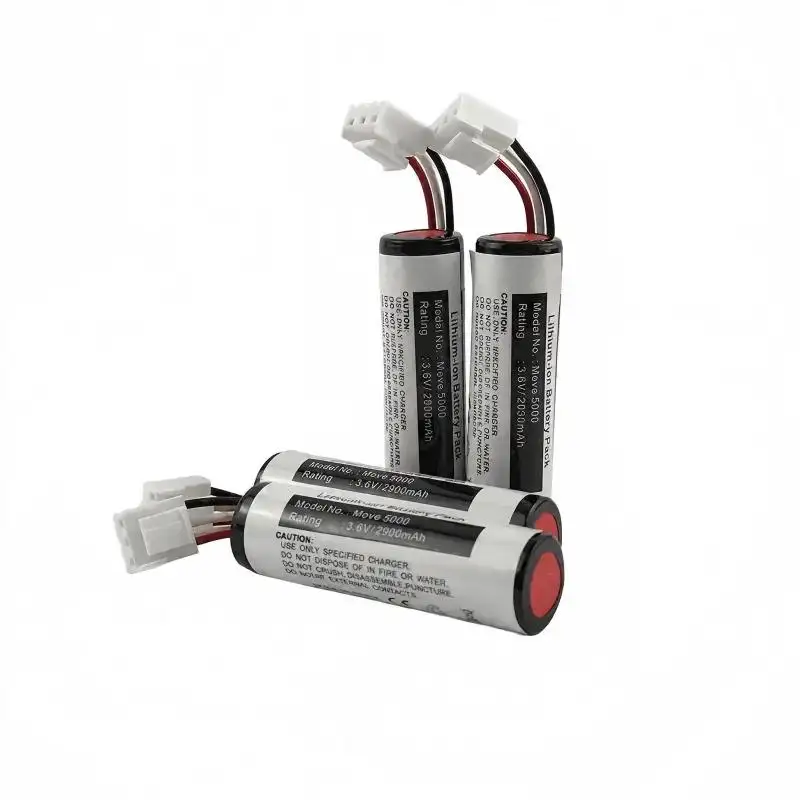
The typical configuration for portable POS systems is for a single 18650 Li-ion cell (1S1P).
Baseline Electrical Specifications
• Voltage: 3.6V
• Full charge voltage: 4.2V
• Capacity: ~2900mAh (varies by configuration)
• Internal resistance: ≤ 40 mΩ (new cells)
• Dimensions: 18.3 x 65.0 mm (standard 18650)
Performance Characteristics
• Excellent voltage profile for battery gauge estimation
• Stable pulse discharge to accommodate intermittent high loads (printing and RF transmissions)
• Excellent integration to compact POS systems
Mechanical Flexibility
We can customize (while maintaining a standardized cell format) the:
• Connector orientation
• Wire exit
• Protective sleeve
• Outer casing
5. Typical Application Scenarios
Customized POS battery packs can be found in:
Retail & Supermarkets
• Checkout systems that never stop
• Shifts that won't require charging in the middle of the day
Food Service & Hospitality
• Orders taken away from the point of sale (POS) terminal
• Payments processed on the POS terminal brought to the customer
Logistics & Field Services
• In-Transit delivery acceptance with a signed receipt
• POS terminal used to scan barcodes and create a sale invoice
Maintenance & Refurbishment Markets
• A uniform replacement for many types of POS terminals
• A cost-effective way to repair and extend the lifecycle of the POS terminals
OEM Device Manufacturing
• A POS terminal with a built-in battery
• The design allows the best use of the case's inner space.
6. Engineering Collaboration Workflow
Typically, a custom POS battery follows a defined OEM process:
1.User requirements (power profile, product dimensions, connector)
2.Engineering (selection of cell, design of PCM, mechanical design)
3.Prototypes (design validation)
4.Iteration (based on user feedback)
5.Production (set control for production batches and documentation)
Field feedback is then incorporated. This model balances electrical and mechanical design before committing to a large production run.
Conclusion
Specialized replaceable batteries for POS terminals are more than simple replacement parts--they are system-level engineering components that can impact device uptime, user experience, and efficiency of the operational fleet.
With OEM/ODM customization, businesses can achieve:
• Enhanced device compatibility
• Reliable power delivery for actual operating conditions
• Extended service life with lower total system maintenance
• Greater scalability for large terminal deployments
For companies with dispersed POS terminal fleets, or developing next generation payment devices, integrated/customized battery engineering will likely be a new focus area for product reliability.
FAQs
Q1. What kind of cells are used in POS batteries?
For the most part, designs utilize cells of the 18650 format, as they provide an optimal combination of battery energy density and reliability.
Q2. Are POS batteries able to have customized capacity?
Indeed, the capacity can be modified depending on the length of time the device needs to operate and the size limitations of the device.
Q3. What is the typical voltage of POS battery packs?
Typically, single-cell POS battery packs operate with a nominal voltage of 3.6V or 3.7V.
Q4. What protections come standard with a POS battery pack?
Protection from overcharging, over-discharging, overcurrent, and short-circuiting are typical with a POS battery pack.
Q5. Are custom connectors an option?
Yes, custom connectors are an option, and they can be of the JST or Molex type. Additionally, custom connectors can be designed for a specific terminal.
Talk to the Manufacturer
Resources & Insights

High Capacity Lithium Battery for Wearables: High-Voltage LiPo Cell Design
2026-10-19
Cylindrical Battery Packs for Laptops: 2S vs 3S vs 4S Battery Design
2026-10-19

Stage Lighting Battery Pack: Prevent Voltage Drop & LED Flicker
2026-10-19

Best Rechargeable Batteries for Smart Devices: Performance, Safety, and Selection Guide
2026-10-19


