


 Home /
 Is Lithium Polymer Battery Really Recyclable? A Detailed Look at the Full Recycling Process


Table of Contents
As portable electronics and medical devices become more advanced, the Recyclable Lithium Polymer Battery has moved from a niche concept to a mainstream necessity. But a common question persists: can these soft-packed power sources actually be recycled, or are they destined for landfills?
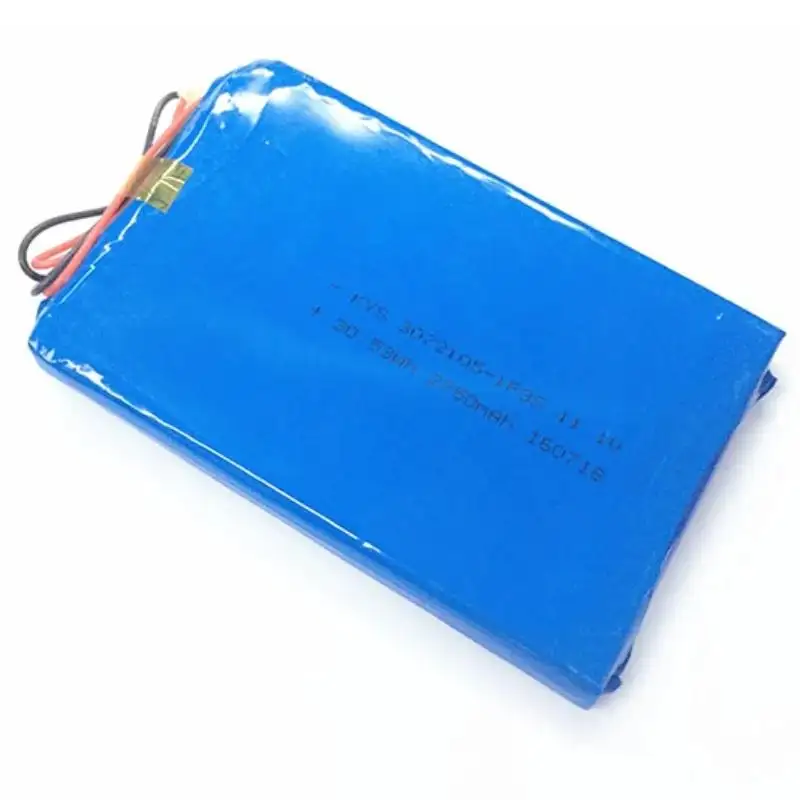
The short answer is yes. Below, we scientifically walk through the entire lifecycle—from understanding its internal structure to the final recovery of raw materials—using the 3075105-3S Li-ion Polymer Battery 850mAh as a practical example.
What Makes a Lithium Polymer Battery "Recyclable"?
Before discussing recycling, it helps to understand what's inside. A typical Recyclable Lithium Polymer Battery is not a single uniform object but a carefully engineered assembly.
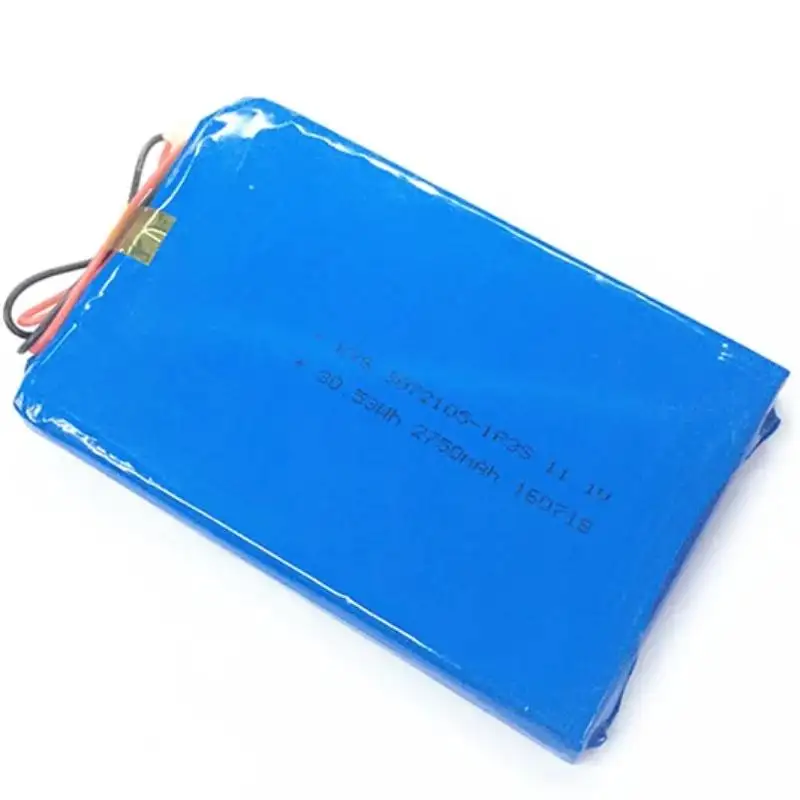
Take the 3075105-3S Li-ion Polymer Battery 850mAh:
•Cell Chemistry: Lithium Cobalt Oxide with a Carbon Based Anode
•Pack Structure: 3S Series Connected 3 Polymer Cells
•Outer Enclosure: Soft Pack (Aluminum-Plastic Laminated Film)
Why does this matter for recycling?
•Soft packs are easier to mechanically open than welded steel canisters.
•However, the layers are bonded with adhesives so you will need an alternate technique to separate those layers.
The Full Recycling Process – Step by Step
Recycling a Lithium Polymer Battery has many steps that are controlled for safety and material recovery. The steps below outline the most commonly accepted practices.
2.1 Collection and Sorting
•What Happens: Used batteries are collected through properly managed e-waste programs (e.g., Call2Recycle, local medical device take back programs).
•What to Look For: Batteries are grouped through chemistry (Li-polymer vs. LiFePO4) and size, e.g. 3075105-3S is 9*75*110mm.
•What is Checked: In order to ensure short circuit safety, any battery that is visibly damaged, swollen or leaking is removed from the collection.
2.2 Deep Discharging (Deactivation)
•What Happens: The electrical energy contained in the battery is eliminated to ensure that a fire is not caused by shredding.
•What Happens: Batteries are submerged in a conductive saline solution or resistive loads are connected to the battery until the battery pack voltage is equal to or less than 1.0V.
•Why is this Important: A Lithium Polymer Battery that is partially charged can cause a fire through puncture failure. For a pack that is nominally charged to 11.1V (fully charged to 12.6V), the pack must be fully discharged.
2.3 Mechanical Shredding and Separation
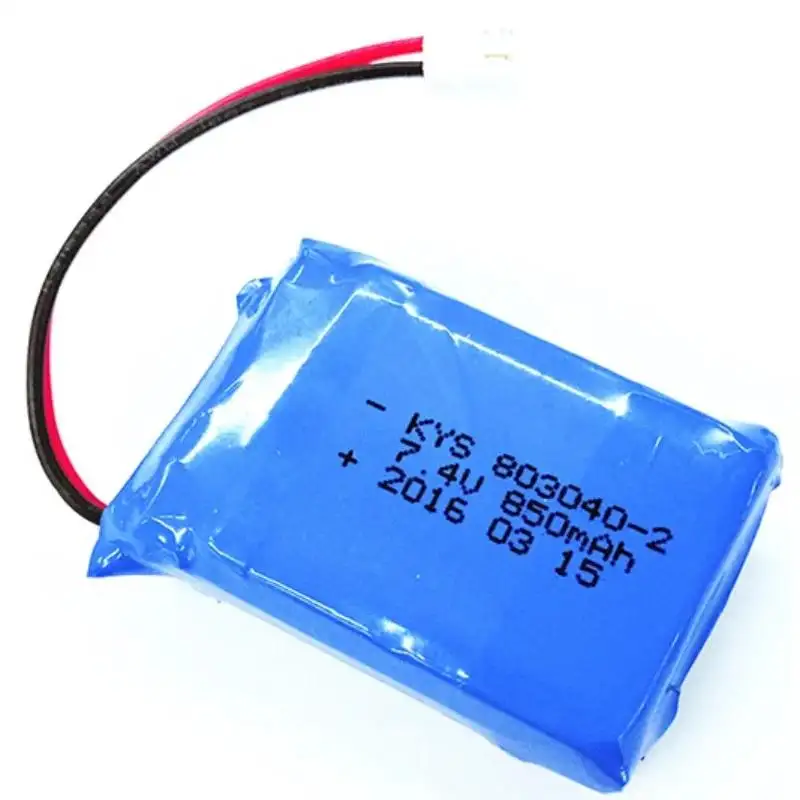
•What Happens: A highly controlled, but undeactivated battery is shredded in a low-speed shredder under an inert gas, e.g. nitrogen or argon, to prevent combustion.
•Output: A "black mass" is formed. This is a mixture of cathode and anode powders (both of which have copper and aluminum foils along with plastic waste).
Separation techniques
•Vibrating screens: separate large plastic and aluminum pieces from small anode/cathode powders.
•Magnetic separators: remove ferrous metals contained in tools and packaging.
•Eddy current separators: allow for recovery of non-ferrous metals, copper and aluminum.
2.4 Hydrometallurgical and Pyrometallurgical Recovery
This is the primary chemical stage of metal recovery.
Option A – Hydrometallurgy (this is the more preferred/typical for Li-polymer)
•Leaching: black mass is dissolved in sulfuric acid or any other leaching solution.
•Purification: other impurities (iron and copper) are removed by precipitation after pH is adjusted.
•Metal recovery: cobalt and nickel and lithium are precipitated in their respective salts (in the case of lithium, either lithium carbonate or lithium hydroxide).
Option B – Pyrometallurgy (this is the process of smelting)
•Process: black mass is subjected to heating in a furnace above 1400°C.
•Outcome: an alloy of cobalt and nickel is formed, while lithium is entrapped in a slag and thus is more difficult to recover.
•Disadvantage of the process: this process consumes high amounts of energy and has a lower recovery of lithium than the hydrometallurgical process.
2.5 Electrolyte and Separator Treatment
•Electrolyte: Lithium salts in the organic carbonates are either neutralized (converted to non-toxic harmless fluoride salts) or recovered by condensation in a closed-loop system.
•Separator: the microporous polymer membrane (most often of polypropylene or polyethylene) is washed, dried, and is then pelletized for usage in lower-grade plastic applications.
Why Is the 3075105-3S a Good Example of Recyclable Design?
Although primarily intended for medical devices, the design of the 3075105-3S Li-ion Polymer Battery 850mAh, incorporates design elements inspired by modern refrigerability principles.
Key Design Advantages for Recycling
•Compact soft-pack construction: Compared to cylindrical cells, the 9*75*110mm pouch can be readily opened without the use of high energy cutting tools.
•Standard cell matching: Engineers pre-match cells to make them consistent with each other with respect to voltage and internal resistance (internal resistance of 60 milliohms). The standard matching results in a consistent material composition of the cells in a pouch, making it less challenging to separate them in a recycling facility.
•No bulky potting compound: The use of insulating separators instead of rigid potting compound decreases shredding contamination.
•Compliance with international safety standards: The design and assembly of the batteries comply with IEC 62133 and UN38.3. Since the standards require documentation of the construction and labeling, recyclers will use that information to quickly identify the chemistry.
What Can You Do as a User or Business?
You don't need an industrial hydrometallurgical plant to contribute to a Recyclable Lithium Polymer Battery ecosystem.
For individual users:
•Never discard Li-polymer batteries in household trash or curbside recycling bins.
•Discharge fully using a resistor or a dedicated discharger before drop-off.
•Use electrical tape to cover the positive and negative tabs. This will help prevent short circuits.
For medical device manufacturers (using batteries like the 3075105-3S):
•Design devices with easily removable battery compartments (not glued-in cells).
•Provide end-of-life return labels in product packaging.
•Partner with licensed recyclers who accept small-volume Li-polymer packs.
Conclusion: Yes, Recycling Works
To directly answer the opening question: yes, lithium polymer batteries are recyclable. The entire procedure includes the secure disabling, mechanical segregation, and chemical extraction of lithium, nickel, and cobalt. The 3075105-3S Li-ion Polymer Battery 850mAh suggests that even miniature, advanced medical-grade battery packs, are designed with recyclability in their soft-pouch fabrication, explicit electrical specifications, and certified internationally for safety.
If you use or produce devices with 850mAh to 3000mAh Li-Polymer batteries, ask for the Material Safety Data Sheet (MSDS) from your supplier and identify local recycling options.
FAQs
Q1: Which materials can be recovered after recycling LiPo batteries?
When LiPo batteries are recycled, lithium, cobalt, nickel, copper, and aluminum separators can be retrieved and used in the making of new batteries and other new products.
Q2: Can a swollen or damaged LiPo battery be recycled?
Yes but with extra caution: never puncture or ship a swollen battery; take it to a hazardous waste facility that accepts damaged Li-ion units.
Q3: Do all recycling centers accept lithium polymer batteries?
No: many municipal centers only accept alkaline or lead-acid batteries; search for "certified Li-ion battery recycler" or use e-waste programs.
Talk to the Manufacturer
Resources & Insights
High Capacity Lithium Battery for Wearables: High-Voltage LiPo Cell Design
2026-10-19
Cylindrical Battery Packs for Laptops: 2S vs 3S vs 4S Battery Design
2026-10-19
Stage Lighting Battery Pack: Prevent Voltage Drop & LED Flicker
2026-10-19

Best Rechargeable Batteries for Smart Devices: Performance, Safety, and Selection Guide
2026-10-19


