


 Home /
 Smart Rechargeable Battery Packs: Powering Green Stages, Tracking Carbon


Table of Contents
- The Need for Sustainability in Stage Lighting
- What Constitutes a "Smart" Battery Pack?
- The Carbon Footprint Calculation Framework for Smart Battery Packs
- Decreasing the Carbon Footprint with Smart Battery Technology
- Real-World Carbon Savings: The Evidence
- OEM and ODM Customization
- The Future: Data-Aided Sustainability
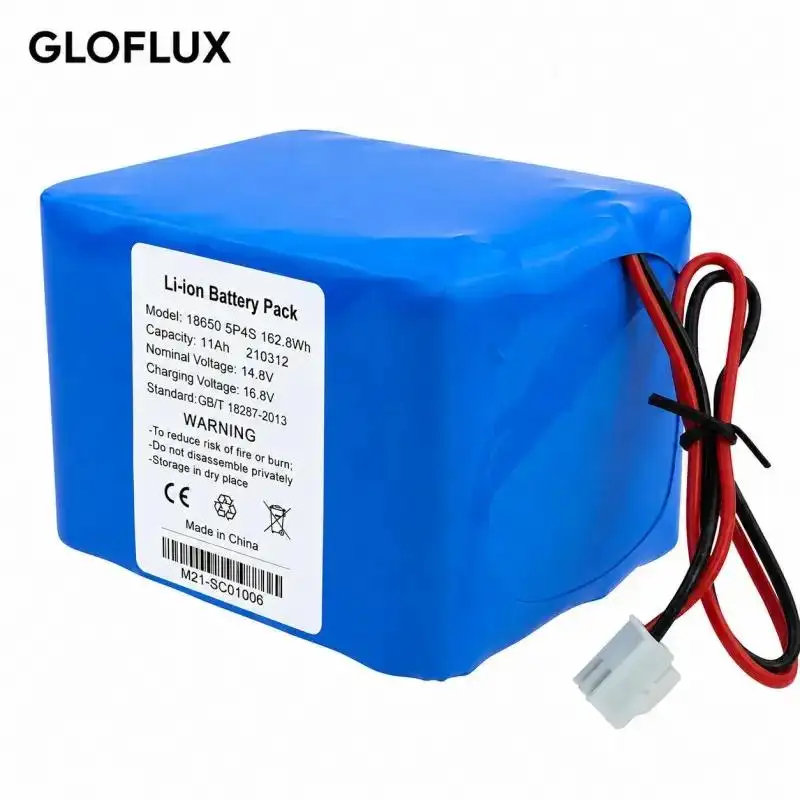
The move toward more sustainable stage lighting in the entertainment industry has made smart rechargeable battery packs a key component of the industry's sustainable power initiatives. These battery packs not only supply power, they also actively help to reduce carbon emissions. This article highlights the sustainability of 14.8V 11Ah Lithium-Ion battery packs and examines the carbon footprint of battery pack systems.
The Need for Sustainability in Stage Lighting
Stage lighting has always been an energy intensive component of set design. It has been estimated that stage lighting can contribute to 7% to 29% of a building's total environmental impact. The recent conversion to LED stage lighting has been the first step in addressing this issue. Many stage venues report energy usage decreases of 40% to 85% after converting to LED lighting. LED lights also last 150 times longer than traditional stage lamps.
The sustainability of stage lighting, however, cannot be solved with the conversion to LED lighting alone. LED lamps still need to be powered, and how they are powered is just as important. This is where smart rechargeable battery packs come into play.
What Constitutes a "Smart" Battery Pack?
Smart battery packs are those that contain an integrated Battery Management System (BMS), which is an added layer of intelligence to a battery pack that actively controls and monitors the performance of that battery. The BMS in a 14.8V 11 Ah Lithium-Ion Smart Battery Pack makes use of 4S5P ICR18650 Cells, and incorporates several key features, such as:
•Overcurrent protection: This feature avoids the danger of heating the cells and damaging the loads.
•Short circuit protection: This feature breaks the circuit in the event of a short, thus safeguarding the battery, as well as the Stage Lighting System.
These features are the basis for the battery's excellent performance in a given environment, as they anticipate and remove the unwanted conditions which would otherwise shorten the battery's usable life. This battery design also provides a clear environmental benefit, as it reduces the need for the fabrication of new batteries in the future.
The Carbon Footprint Calculation Framework for Smart Battery Packs
To define a systematic framework for assessing the environmental consequences associated with Smart Battery Packs, the Carbon Footprint Calculation framework will be used. Within the industry, Life Cycle Assessments (LCA) are increasingly used to assess the emissions associated with the various phases in the life of a product, beginning with the extraction of raw materials and continuing through the processing and use of the product, and ending with the final treatment of the product once it has reached the end of its useful life.
Emerging standards, such as the Chinese Group Standard T/DZJN 344-2024, provide details to assist with the carbon footprint calculation for Battery Management Systems (BMS), including definitions and assessment and calculation frameworks. On the other hand, international standards such as the IEC 63369-1:2026 provide assessment frameworks for industrial lithium-ion battery systems to be used for comparative evaluation of different rechargeable lithium-ion battery chemistries.
For a smart lithium-ion battery pack, the carbon footprint calculation includes the following:
•Emissions from the manufacture of the battery pack and BMS circuitry.
•Use phase emissions: How much electricity used to charge the battery, dependent upon the carbon intensity of the local electricity grid.
•Emissions once the battery is disposed and/or recycled after its useful life.
The reference flow is frequently calculated as the total mass of the battery divided by the total energy delivered throughout its life, in kg/kWh, to facilitate comparison of different battery options.
Decreasing the Carbon Footprint with Smart Battery Technology
1. Longer Battery Life Means Less Waste
An example of a smart, premium 4S5P ICR18650 cell-based, modular, rechargeable battery pack, may achieve a cycle life of 800. This cycle life number refers to a complete charge and discharge of a battery. With smart battery pack management systems (BMS) controlling charge, discharge and thermal management, many of these battery packs will exceed their 800 cycle number.
The carbon benefit: With longer battery life, the need and demand for replacement battery packs is decreased. The replacement batteries require mining, manufacturing, and transportation, all of which generate carbon footprint.
2. High Energy Density Means Low Material Density
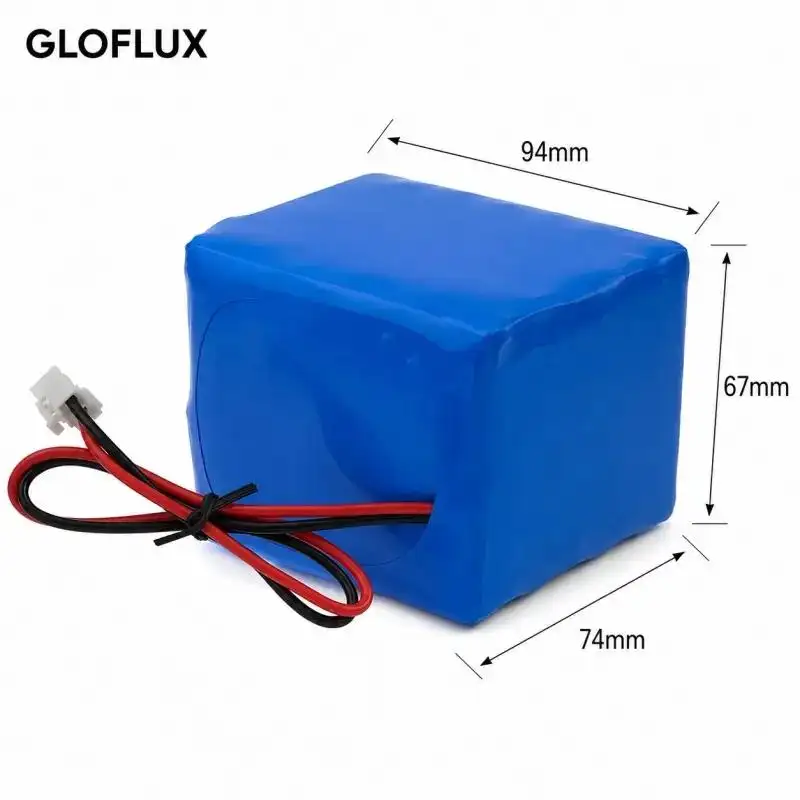
The 14.8V 11Ah lithium rechargeable packs, because of their NMC (Lithium Nickel Manganese Cobalt Oxide) chemistry have a great energy density and thus a small form factor and a light weight. Within a volume of 94×74×67mm and a weight of 1.3kg, they can store 162.8 Wh of energy.
The carbon benefit: Because more power can come from less material, less weight and less volume means less material. Batteries that are light and compact create less of a transportation footprint.
3. Smart Charging Always Maintains Optimal Energy Efficiency
The smart, modular, rechargeable battery pack is as intelligent in the charging as it is in the discharging. Dynamic charging policies that are optimized for battery life and battery performance are implemented by advanced BMS algorithms.
The carbon benefit: Charging optimally means less wasted energy. When battery packs use grid electricity for charging, a kilowatt-hour saved in charging means a kilowatt-hour saved in carbon emissions. Charging carbon intensity is determined by the grid mix, but the principle is clear. Smart charging is green charging.
4. Replacing Diesel Generators
One of the strongest potential carbon reductions with smart rechargeable battery packs is the substitution of diesel generators at outdoor events and at distant locations. Reliance on battery-powered solutions over generator-powered solutions is becoming the norm for event organizers.
The carbon benefit: Diesel generators on the move are polluters. Diesel generators alongside battery-powered stage lighting are fully emissions neutral. If, in the worst-case scenario, they needed to draw from the power grid, they would be fully renewable and emissions-free.
5. Smart Battery Packs Cut the Cables on Stage
Smart rechargeable battery packs make stage lighting entirely wireless and remove all large power cables. This has an extensive positive effect on material usage as well as less waste during the lifecycle.
Benefit to Carbon Footprint: Less cabling has a less negative effect on the carbon footprint. Wireless lighting is easier to set up and significantly lessens the negative effect on the carbon footprint of production and logistics.

Real-World Carbon Savings: The Evidence
There are many examples of the positive effect on the environment when going to an LED system powered with smart rechargeable battery packs.
•The new LED lights in the concert hall of the Royal College of Music have an annual carbon saving of 29 tonnes CO₂e and a reduction of 80% in energy use.
•Loughborough Town Hall's LED upgrade means a reduction in energy use of 65% and a reduction in the carbon footprint of 29.85 tonnes per year.
•Perth Concert Hall LED Lighting System means a reduction in energy use of 80% along with a reduction in the cost of lighting and an improvement in efficiency.
•After the introduction of high-power LED stage lighting, the Beijing Chang'an Grand Theatre improved their annual energy use by 602,500 kWh, equivalent to a reduction of 600.7 tonnes of CO2.
These numbers give a reasonable prediction as to how much could be saved. Integrating these LED systems with smart rechargeable battery packs, helps to produce energy- efficient lighting with the added benefit of smart, sustainable power, combining the lighting with rechargeable battery solutions, furthers the environmental efforts.
OEM and ODM Customization
GLOFLUX among others offers OEM and ODM customization for battery assembly. Examples of this include specific bearing pack sizes and shapes, cable and connector counts and lengths, housings and protection circuits. This level of battery customization supports energy sustainability thanks to the increased ability to tailor battery packs to specific devices.
1. Right-sizing Capacity
The ability to custom design battery packs with the appropriate capacity helps energy sustainability by balancing the impact of energy use vs the impact of material waste and the sustainability of the battery pack by reducing the frequency with which the battery pack needs to be replaced.
2. Standardized Connectors
The use of customized standard connectors helps battery packs to easily integrate with the existing equipment, thus minimizing the waste that results from the integration of new battery packs.
3. Custom, Durable Housings
Custom housings enable the design of battery packs in such a ways that the housings are strengthened and made easier to disassemble, thus extending the useful life of the housing and the battery pack while aiding recycling efforts.
The Future: Data-Aided Sustainability
With the literary assistance of the smart battery pack in the sustainability quest the entertainment industry is showing, the smart battery pack is becoming more and more prominent. Smart battery packs further assist the reduction of the carbon footprint while providing aids in meeting the carbon footprint standard and stipulations of sustainability.
For the manufacturers of stage lighting and suppliers and rental agencies, the smart battery technology aids in sound operational practices while offering assistance for sustainability.
The change to battery-operated stage lighting is in motion. The smart tech that allows for exact calculations of the carbon footprint means that the industry can track its progress towards sustainability—one charge cycle and one sustainable event at a time.
GLOFLUX offers a variety of Smart Rechargeable Battery Packs for stage lighting systems, packs for LED stage lights, and battery powered entertainment equipment. These Battery packs, built with high quality ICR18650 cells, Advanced Battery Management Protection, and customizable, can provide a long and stable power supply and support your sustainability goals.
FAQs
Q1: How do smart rechargeable battery packs limit stage lighting's carbon emissions?
A: They effectively remove diesel generators and grid power due to clean energies that are stored. The BMS offers realistic data for carbon calculability.
Q2: How much carbon emissions are associated with stage lighting's typical lithium-ion battery pack?
A: It varies by source, but there are international norms, for example, IEC 63369‑1 that provide standardized methodologies for lifecycle assessment.
Q3: How does BMS assist in carbon footprint measurement?
A: It accounts for the total energy passing through, the total number of cycles, and charge and discharge efficiencies and provides this data for emissions calculations.
Q4: What is the expected cycle life of the smart battery packs?
A: Battery packs of good quality offer ≥800 cycles, which increases the life span of the battery packs, and mitigates the ecological impact of cessation.
Q5: Do these battery packs offer end of life recycling?
A: Yes, recycling these battery packs offers metal recovery and is less than the cost of needed metals from the earth in a virgin state.
Talk to the Manufacturer
Resources & Insights

High Capacity Lithium Battery for Wearables: High-Voltage LiPo Cell Design
2026-10-19
Cylindrical Battery Packs for Laptops: 2S vs 3S vs 4S Battery Design
2026-10-19
Stage Lighting Battery Pack: Prevent Voltage Drop & LED Flicker
2026-10-19

Best Rechargeable Batteries for Smart Devices: Performance, Safety, and Selection Guide
2026-10-19


