


 Home /
 Durable Rechargeable Battery Pack for Robots for Daily Industrial Operation


Table of Contents
- Why Battery Durability is Important to Industrial Robotics
- What Makes a Rechargeable Battery Pack for Robots Durable?
- Why LiFePO₄ Is Suitable for Daily Robot Operation
- Stable Voltage Under Dynamic Robot Loads
- BMS Functions That Affect Safety and Service Life
- Mechanical Durability Under Vibration and Impact
- Frequent Charging and Battery Aging
- How Gloflux Designs Robot Battery Solutions
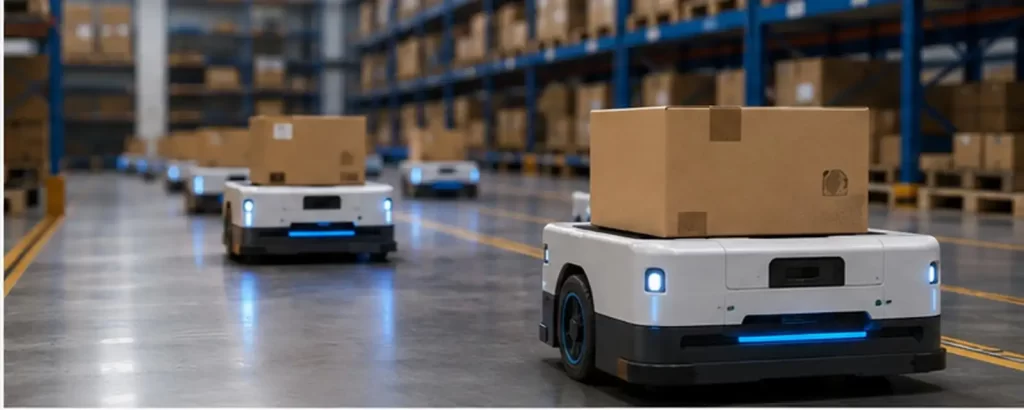
A Rechargeable Battery Pack for Robots needs to maintain voltage stability, provide adequate continuous and peak current, have a BMS protection system that works, and provide mechanical performance that withstands frequent charging, impact, and vibrations. For AGVs and AMRs, battery duration goes beyond battery chemistry. Battery architecture, thermal control, connectors and charging mechanisms, and system integration with the robot control system are all equally as important.
Why Battery Durability is Important to Industrial Robotics
AGVs, AMRs, and many automated materials handling robots (including forklifts) continuously perform a number of cycles (accelerating, braking, turning, lifting, docking, etc.) that require a great deal of battery power to:
• Drive motors and braking systems
• Control and manage system computers and motor systems
• Power viewing and collision avoidance safety systems, and communicate with the control system
• Contribute power to mechanical systems to lift and actuate ancillary systems
An inadequate Rechargeable Battery Pack for Robots may even allow continued functioning in light-duty applications, but may experience voltage over-sag, elevated temperatures and premature battery duration loss as well as unexpected shutdowns of the BMS protection system due to heavy loads.
Rated capacity or expected cycle life would suggest battery durability, but it is more appropriately assessed as being of consistent operation.
What Makes a Rechargeable Battery Pack for Robots Durable?
A durable battery pack for industrial robots must be stable over the duration of the service in its electrical, thermal, and mechanical domain.
| Performance Factor | Operational Impact | Key Evaluation Point |
| Cycle life | Determines replacement frequency | Capacity retention under specified DOD and temperature |
| Continuous discharge current | Supports normal robot movement | Average motor and auxiliary-system demand |
| Peak discharge current | Supports starting, turning, climbing, and lifting | Peak current value and allowable duration |
| Internal resistance | Influences voltage drop and heat generation | Cell consistency, connections, and pack layout |
| Thermal stability | Affects safety and aging rate | Temperature sensors and heat-dissipation design |
| Vibration resistance | Protects internal connections | Cell retention, busbars, wiring, and enclosure |
| Charging compatibility | Influences downtime and battery aging | Charging voltage, current, and communication logic |
A Rechargeable Battery Pack for Robots should be evaluated in the actual robot duty cycle, payload, route conditions, operating temperature, charging frequency, and acceleration profile.
Why LiFePO₄ Is Suitable for Daily Robot Operation
Low lithium iron phosphate battery weight, good thermal and chemical stability with a relatively stable discharge-voltage platform and robust cycling and durability against frequent charge-discharge cycles also makes it popular for industrial mobile robots.
Compared to some other nickel-rich lithium-ion chemistries, LiFePO₄ has a lower gravimetric energy density. However, for many AGVs and AMRs, Cycle Life and Thermal Stability are more important than low battery weight.
For this reason, a LiFePO₄ Rechargeable Battery Pack for Robots can be well suited to warehouses, factories, logistics centers, and automated production environments.
Stable Voltage Under Dynamic Robot Loads
Robot power demand is highly variable. Current rises sharply when an AGV starts moving, accelerates with a heavy payload, turns on a high-friction floor, travels up a ramp, or activates a lifting mechanism.
Excessive internal resistance can cause voltage sag during these peak-load events. The result may include:
• Motor-controller undervoltage alarms
• Reduced acceleration or lifting performance
• Sensor or communication instability
• Unexpected BMS protection activation
• Premature robot shutdown
To control voltage drop, engineers must evaluate cell discharge capability, busbar resistance, cable cross-section, connector rating, fuse selection, and BMS current limits.
Nominal energy can be estimated using:
Battery energy (Wh) = Nominal voltage (V) × Rated capacity (Ah)
However, usable runtime must also account for conversion losses, reserve capacity, battery aging, discharge-rate effects, temperature, and the permitted state-of-charge range.
BMS Functions That Affect Safety and Service Life
A robot battery with BMS protection should do more than disconnect the pack during a serious fault. It should continuously monitor and manage the operating condition of the battery.
Important BMS functions include:
• Cell-level voltage monitoring
• Overcharge and over-discharge protection
• Continuous and peak overcurrent protection
• Short-circuit protection
• Charge and discharge temperature protection
• Cell balancing
• State-of-charge estimation
• Fault recording and diagnostic reporting
• Communication with the robot controller or charger
BMS thresholds must match the robot's real current profile. Limits that are too low may interrupt normal acceleration, while limits that are too high may provide insufficient protection.
CAN, RS485, UART, or project-specific communication can also allow the robot controller to read SOC, voltage, current, temperature, alarms, and charging status.
Mechanical Durability Under Vibration and Impact
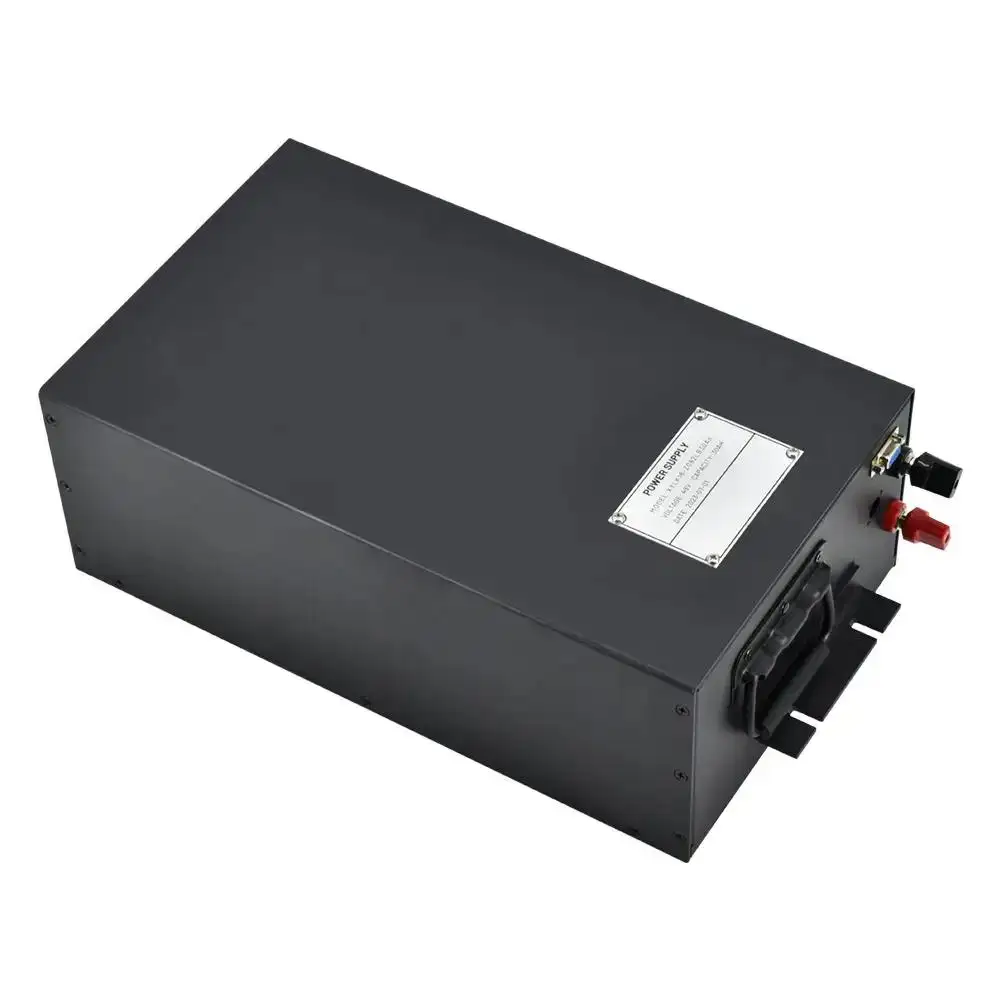
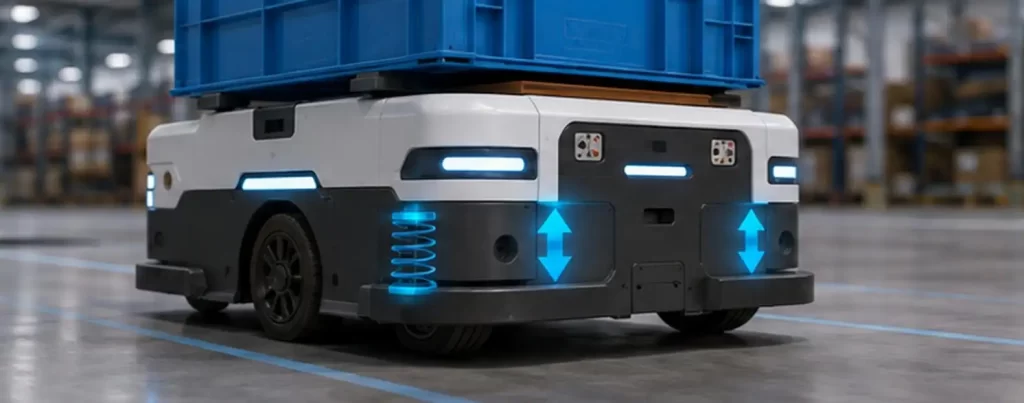
Industrial robots frequently cross floor joints, dock with charging stations, turn rapidly, and operate on uneven surfaces. Repeated mechanical stress can loosen terminals, fatigue cables, damage welds, or allow cells to move inside the enclosure.
When designing a durable Rechargeable Battery Pack for Robots, considerations may include:
• Compression of cells
• Vibration resistance in busbars and terminals
• Protection from strain and abrasions in cables
• Locking and anti-loosening features for connectors
• Conductive components separated by insulation
• Strength and protection of enclosures
• Properly paired robot chassis mounting points
• Airflow and heat pathways as needed
Prioritize functionality over aesthetics for enclosure selection. Choice of material and the type of sealing used are impacted by dust, moisture, oil mist, the types of cleanings used, and the ambient temperature.
Frequent Charging and Battery Aging
Many AGV fleets use opportunity charging during short breaks instead of waiting for deep discharge. This can increase availability, but charging strategy must be coordinated with cell limits and thermal conditions.
Battery aging may accelerate because of:
• Repeated deep discharge
• Excessive charging current
• Charging below or above the permitted temperature range
• Long periods at very high SOC
• Inaccurate charger voltage
• Poor cell balancing
• Insufficient capacity for the actual workload
A correctly sized Rechargeable Battery Pack for Robots should retain sufficient reserve energy at the end of each route. Oversizing should not be excessive, but consistent operation near the battery's current and capacity limits should also be avoided.
How Gloflux Designs Robot Battery Solutions
Gloflux develops customized LiFePO₄ battery packs based on the electrical and mechanical requirements of AGVs, AMRs, and industrial mobile equipment.
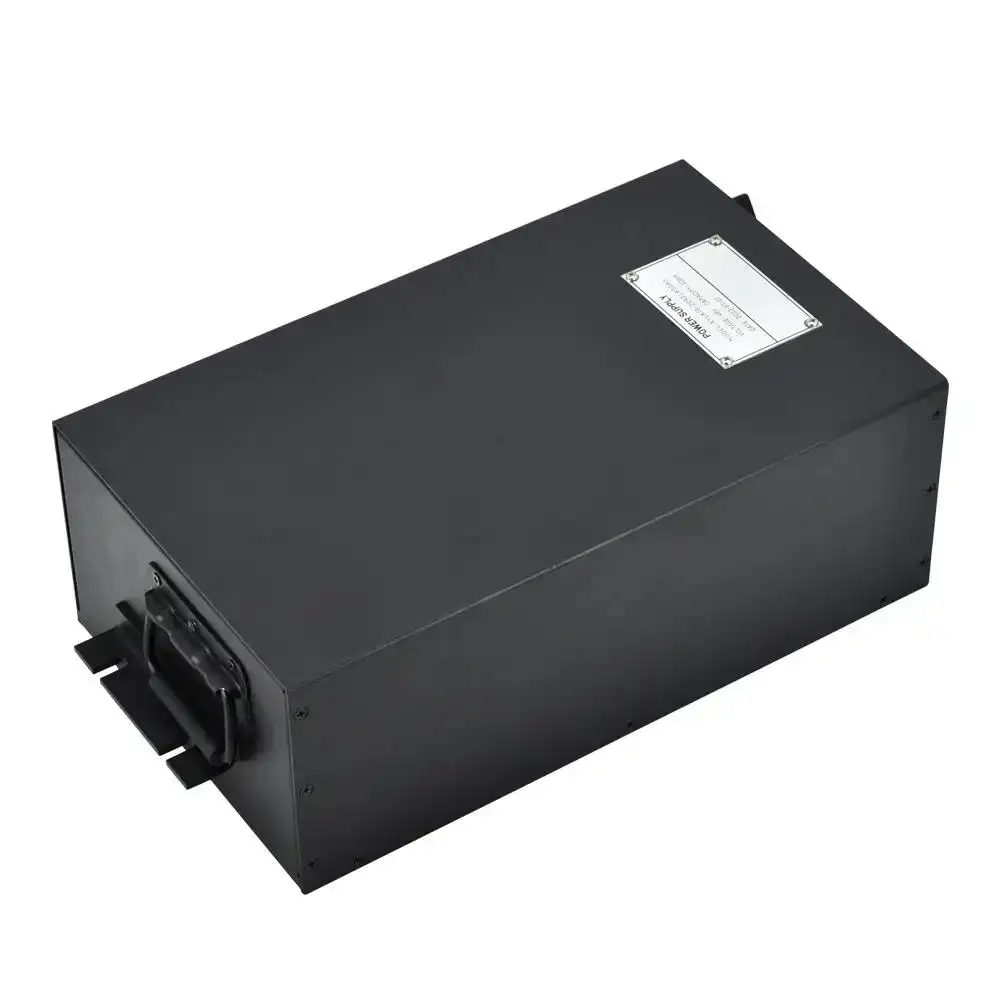
A 48V 30Ah configuration provides approximately 1.44kWh of nominal energy and can offer a practical balance among runtime, battery dimensions, weight, and charging frequency. The final operating time depends on average power demand, payload, route conditions, temperature, and usable depth of discharge.
The Gloflux Rechargeable Battery Pack for Robots design can include:
• 48V nominal voltage and 30Ah capacity
• LiFePO₄ cells for stable daily cycling
• 54.75V charging-voltage compatibility
• Built-in protection against overcharge, over-discharge, overcurrent, short circuit, and abnormal temperature
• Customized battery dimensions and mounting structure
• Application-specific enclosure and internal cell retention
• Custom connectors, terminals, cable lengths, and cable directions
• CAN, RS485, UART, or other agreed communication interfaces
• OEM and ODM labeling, branding, and packaging
These options help match the battery to the robot platform instead of forcing the equipment design to accommodate a generic pack.
Building Reliable Power for Continuous Robot Operation
A durable rechargeable battery pack for robots results from coordinated cell chemistry, electrical sizing, BMS configuration, thermal management, vibration-resistant construction, charging control, and robot-system communication.
Gloflux provides customized LiFePO₄ battery solutions for AGVs, AMRs, automated forklifts, warehouse transport systems, inspection robots, cleaning robots, and other mobile industrial equipment. Contact Gloflux to discuss your robot's battery compartment, current profile, runtime target, charging method, and communication requirements.
FAQs
Q1. Which communication protocols can Gloflux support?
We can develop battery communication solutions via CAN, RS-485, UART, or other mutually agreed interfaces. Communication can carry voltage, current, temperature, SOC, charging status, alarms and/or diagnostic information.
Q2. Why does Gloflux use LiFePO₄ cells for industrial robot batteries?
Within the appropriate operational limits, LiFePO₄ offers long cycling, stable discharge, and a stable platform. This is well suited to robot applications where there is frequent charging and usage on a daily basis.
Q3. Can Gloflux customize the voltage and capacity of a Rechargeable Battery Pack For Robots?
Yes. Gloflux carries out OEM and ODM customization of battery voltage, capacity and cell arrangement, charging and discharging. For example, AGV applications can be done with a 48V 30Ah configuration, and other requirements can be addressed if necessary.
Q4. What protection functions are included in the battery management system?
Battery protection includes overcharge, over-discharge, overcurrent, short-circuit, and abnormal temperature protection. According to the project, it can also include balancing of cells, SOC reporting, fault reporting, and communication to the robot controller and/or charger.
Q5. Can Gloflux customize the battery enclosure and dimensions?
Yes. We can lay out the battery according to the mechanical design of the robot, including the battery retention enclosure, cable locations, and the preferred mounting and installation method.
Talk to the Manufacturer
Resources & Insights
High Capacity Lithium Battery for Wearables: High-Voltage LiPo Cell Design
2026-10-19
Cylindrical Battery Packs for Laptops: 2S vs 3S vs 4S Battery Design
2026-10-19
Stage Lighting Battery Pack: Prevent Voltage Drop & LED Flicker
2026-10-19
Best Rechargeable Batteries for Smart Devices: Performance, Safety, and Selection Guide
2026-10-19


