

 Home /
 Home Energy Storage Lithium Battery
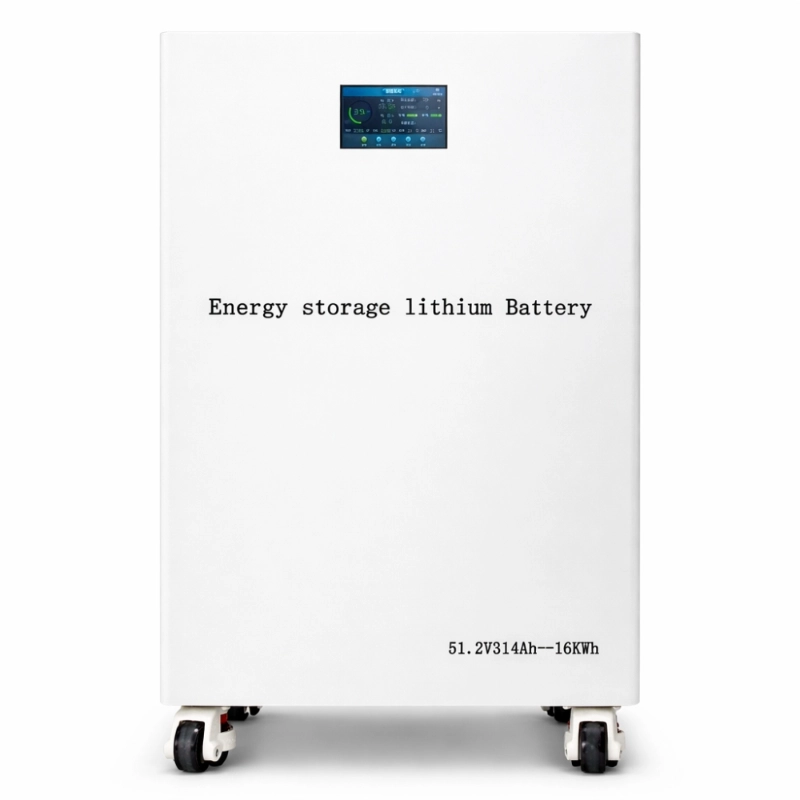
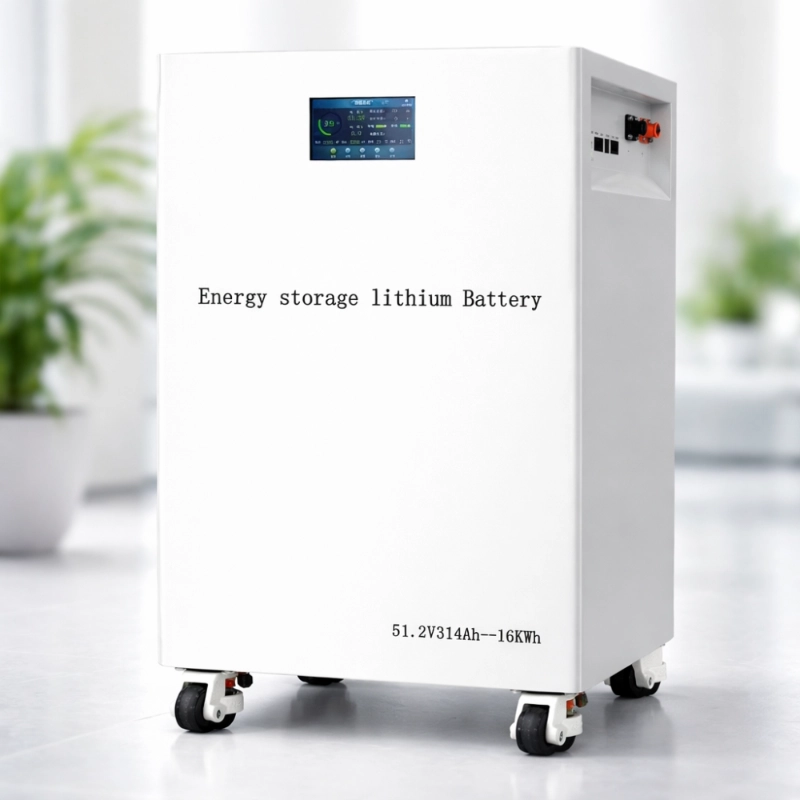
Home batteries are high-capacity energy storage systems that are used to supply homes during power outages or peak hours. They combine well with renewable energy sources, including solar or wind, maximizing self-consumption and minimizing utility expenses. These systems are designed to be long-lasting and safe, with automated energy control, real-time monitoring, and flexible installation. Small and tough, they can be used to sustain basic household operations, ensure comfort, and offer backup power to the household when necessary. High-capacity residential batteries enable homeowners to be more energy-independent and have consistent daily operation by maximizing energy consumption and encouraging sustainability.
- Battery Type:LiFePO4 (Lithium Iron Phosphate)
- Nominal Voltage:51.2V
- Voltage Range:40–57.6V
- Nominal Capacity:314Ah
- Rated Energy:16.07 kWh
 Get Free Quote
Back to Product List
Overview
The home energy storage lithium battery contains modular lithium-ion cells arranged for high-density storage. The system is designed by engineers to provide regulated current and voltage. Each module is constantly monitored by internal sensors. Circuitry safeguards against overcharge, over-discharge, and short-circuit. Heat is controlled by fans or passive air channels, maintaining constant internal temperatures. Meanwhile, wiring harnesses are used to interconnect modules effectively, facilitating safe flow of energy.
Materials and Cell Composition
High-quality lithium-ion chemistry is employed by the manufacturers with graphite anodes and lithium metal oxide cathodes. The anodes are connected to copper foil, and the cathodes are supported by aluminum foil. A microporous polymer separator permits the passage of ions and does not allow any electrical contact between electrodes. The outer casing is made of reinforced steel or aluminum alloy. Thermal-resistant layers ensure that the modules have the same temperature. To avoid the degradation of the coating due to humidity or heat, engineers use a corrosion-resistant coating.
Electrical Assembly and Management
Technicians use series and parallel arrangements of cells to obtain the necessary voltage and capacity. They use precision spot welding to weld electrode tabs, minimizing resistance at connections. Then they add a battery management system (BMS), which measures voltage, current, and temperature. Cells are automatically balanced by the BMS, enhancing long-term cycle reliability. Signal cables are strain-relieved to avoid disconnection during vibration or motion.
Application Areas
Solar and wind energy systems are combined with home energy storage lithium batteries to provide stable power storage. They stabilize residential microgrids and supply backup power in case of outages. These systems are also used in commercial buildings to control peak energy demand. They are modular and can be used in different residential and small business applications. The system can be scaled by engineers to meet power needs, thereby being flexible and reliable.
Standards and Quality Assurance
Production is in line with international safety standards like IEC, UL, and UN38.3. Electrical and thermal testing of each battery is performed under controlled conditions. Cycle tests check the retention of capacity and stability during repeated charges. Technicians perform insulation resistance and leakage tests. Traceability of every unit is provided through documentation. These measures ensure uniform quality and compliance with accepted standards.
Product Details
Product Features
- Rapid Energy Response - Instantly provides power to appliances when there is a sudden increase in demand.
- Quiet Operation - Operates silently and is appropriate to be installed indoors or at home.
- Small Size - Space-saving design can be easily placed in homes or small storage spaces.
- Eco-Friendly Materials – Uses materials that are sustainable and have little impact on the environment.
- Adaptive Load Balancing - Dynamically allocates stored energy to optimize household use.
Technical Parameters
| Item | Specification |
| Battery Type | LiFePO4 (Lithium Iron Phosphate) |
| Nominal Voltage | 51.2V |
| Voltage Range | 40–57.6V |
| Nominal Capacity | 314Ah |
| Rated Energy | 16.07 kWh |
| Continuous Charging Current | 150A |
| Standard Discharge Current | 150A |
| Continuous Discharge Current | 300A |
| LED Indicator | Battery Level Indicator |
| Communication | RS485 / RS232 / CAN |
| Scalability | Parallel Expansion (Max 6 Units / 96 kWh) |
| Dimensions | 480 × 350 × 758 mm (±1 mm) |
| Protection Level | IP20 (Indoor Use) |