

 Home /
 Air Cooled Energy Storage System
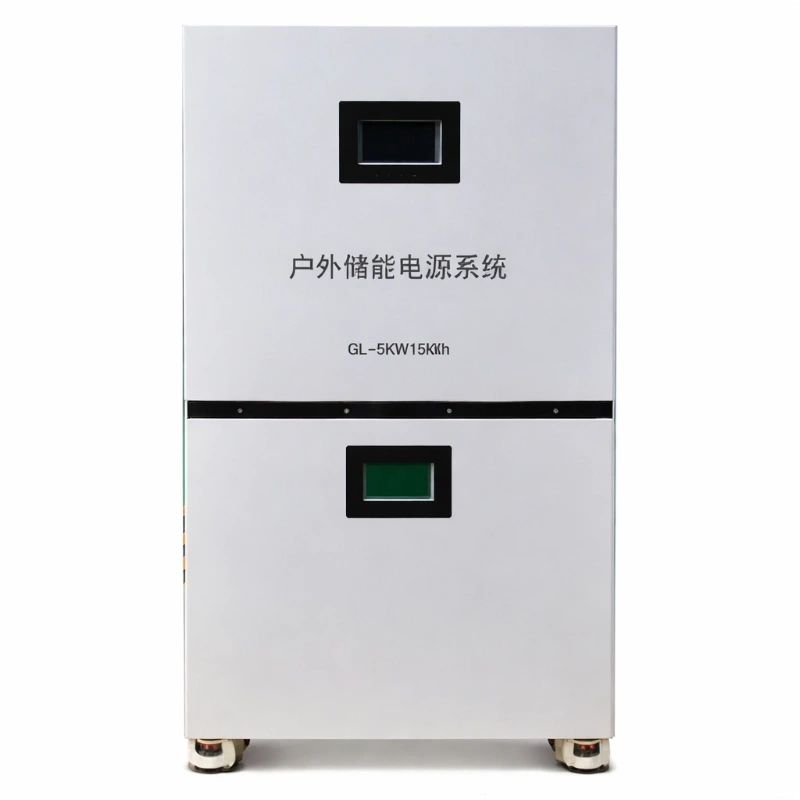
The air-cooled energy storage system is a high-efficiency lithium iron phosphate (LiFePO4) energy storage solution that is used in commercial backup power, industrial energy management, and off-grid applications. The system has a sophisticated air-cooling thermal control architecture, which guarantees steady performance, a long battery life, and consistent operation in continuous charge-discharge mode.
- System Efficiency:≥89% (Without internal consumption)
- Charge/Discharge Ratio:≤0.5C
- Discharge Depth:0–99% DOD
- Cycle Life:>8000 cycles&70%
- Protection Degree:IP54
- Cooling Method:Liquid Cooling
- Corrosion Resistance Level:C4
 Get Free Quote
Back to Product List
Overview
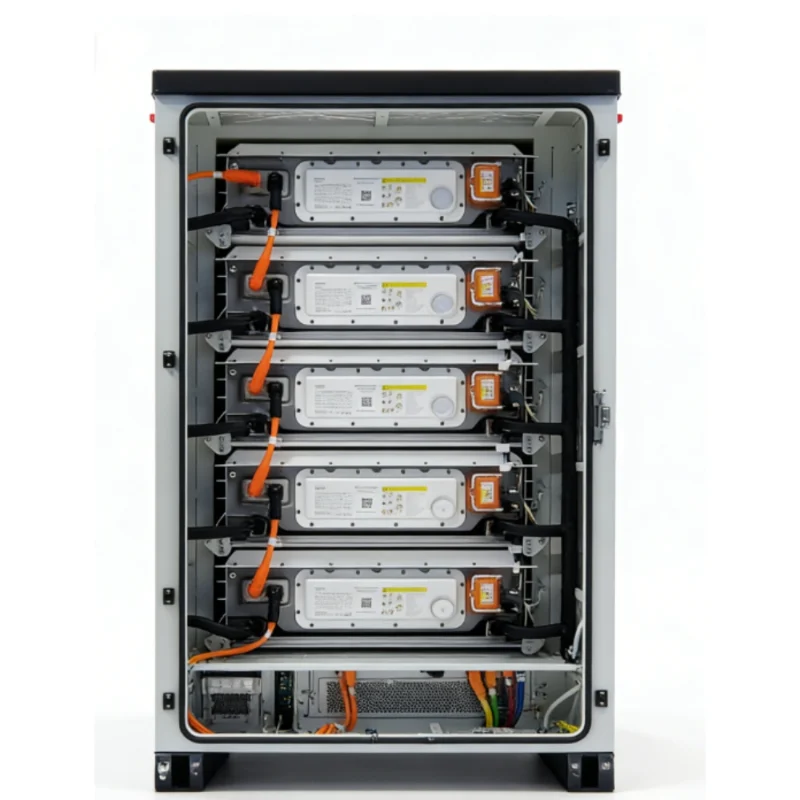
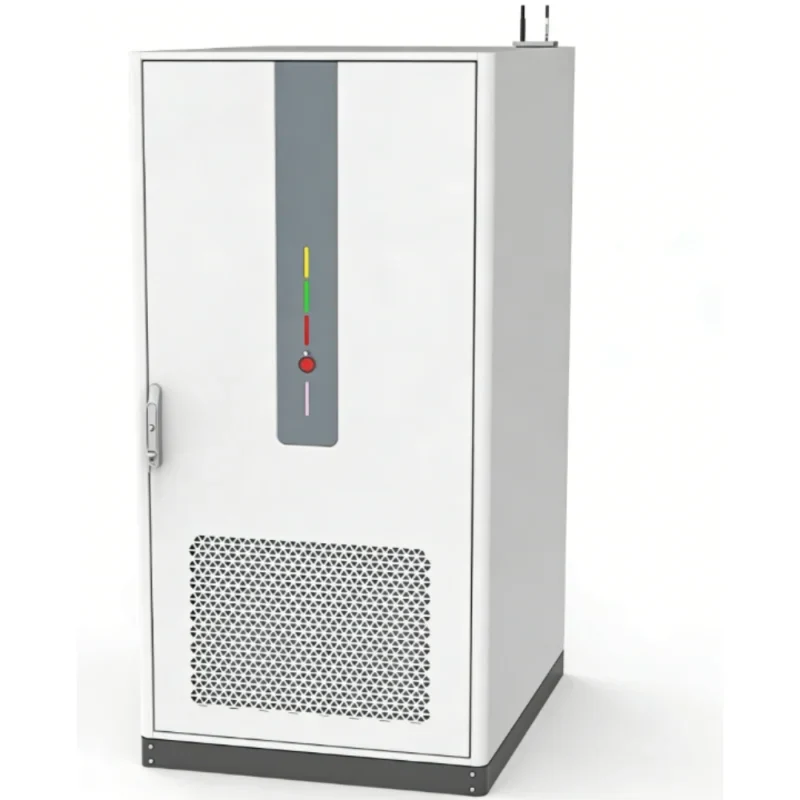
The Air-Cooled Energy Storage System is made up of airflow-efficient lithium-ion cell modules. The system is designed by engineers to ensure a controlled temperature and to store electrical energy. There are internal fans that circulate air to cool it down during operation. Moreover, voltage and current monitoring guarantees uniformity of the output throughout the system. Protective circuitry helps avoid overcharge, over-discharge, and over-current and ensures safe operation.
Materials and Module Construction
High-grade lithium-ion cells with aluminum and copper current collectors are used by manufacturers. A polymer separator is used to avoid short circuiting but transfer of ions. The casing is made up of reinforced steel and aluminum panels to safeguard internal modules. Airflow channels and thermal insulation ensure that there are constant temperatures in the cells. In the meantime, internal sensors constantly check the voltage, temperature, and current. These are design options that enhance structural stability and efficiency.
Electrical Configuration and Monitoring
Technicians also interconnect cells in series and parallel to achieve voltage and capacity needs. They combine a battery management system (BMS) that measures cell voltages separately. The BMS regulates the parameters of charging and discharging. It also balances the cells to avoid degradation and maximize performance. Signal wires and connectors are strain-relieved to prevent loosening when subjected to vibration. Frequent calibration guarantees proper monitoring and quality information.
Application Areas
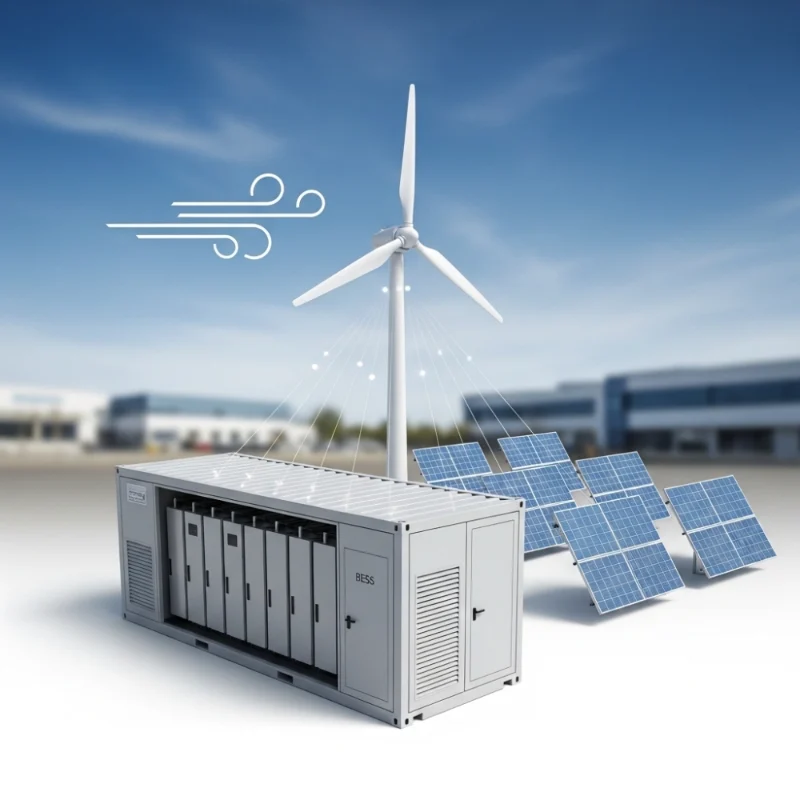
The Air-Cooled Energy Storage System is used in renewable energy systems, where it stores electricity produced by solar panels or wind turbines. It is also compatible with microgrid networks, which assist in stabilizing voltage and providing backup power. It can be used by industrial facilities to level peak demand and to control load. Moreover, it is designed with a modular structure, which enables it to be deployed flexibly in commercial buildings or remote locations. The system allows engineers to scale it to the energy needs, which guarantees the same performance in different situations.
Standards and Quality Assurance
Production is in line with IEC, UL, and UN38.3 standards for transport and safety. Manufacturers perform electrical and thermal testing to ensure that they can perform under load. Capacity retention is checked by cycle testing, which checks the retention during repeated charges and discharges. Further tests guarantee mechanical integrity, insulation resistance, and reliability of airflow. These measures ensure uniformity in quality per unit.
Product Details
Product Features
- Battery: LFP 3.2V 314Ah cells, 7.2–936V operating range, 52.249kWh PACK (1P52S), 261.248kWh rack system (1P260S), DC breaker + fuse protection
- AC Output: 100kW rated power, 120kW max power, 400V 50Hz, <3% THD, >0.99 power factor, -105% to 105% reactive power regulation
- System Performance: 89% or higher efficiency, 0.5C or less charge/discharge rate, 0-99% DOD, over 8000 cycles, IP54 protection, liquid cooling system.
- Safety and Environment: C4 corrosion resistance, active alarm + aerosol + PACK immersion fire protection.
- Communication: RS485 / CAN / Ethernet interface to support real-time monitoring and system integration.
Technical Parameters
DC Side Specification:
| Project / Parameter | Main Parameter / Specification |
| Rated Voltage | LFP 3.2V / 314Ah |
| Voltage Range | 7.2–936 V |
| Battery PACK Configuration | 52.249 kWh / 1P52S |
| Battery System Configuration (Rack) | 261.248 kWh / 1P260S |
| DC Protection | Breaker + Fuse |
AC Side Specification:
| Project / Parameter | Main Parameter / Specification |
| Rated AC Power | 100 kW |
| Maximum AC Power | 120 kW |
| Rated AC Voltage | 400 V |
| Rated Frequency | 50 Hz |
| Harmonic Distortion | <3% (At Rated Power) |
| Power Factor | >0.99 (At Rated Power, >20% Load) |
| Reactive Power Adjustment Range | -105% – 105% |
System Specification:
| Project / Parameter | Main Parameter / Specification |
| System Efficiency | ≥89% (Without internal consumption) |
| Charge/Discharge Ratio | ≤0.5C |
| Discharge Depth | 0–99% DOD |
| Cycle Life | > 8000 cycles&70% |
| Protection Degree | IP54 |
| Cooling Method | Liquid Cooling |
| Corrosion Resistance Level | C4 |
| Fire Protection System | Active Alarm + Aerosol + PACK Immersion |
| Operating Temperature Range | -30℃ ~ 50℃ (Derating above 45℃) |
| Operating Altitude | ≤4000 m (Derating above 2000 m) |
| Operating Humidity | 0–95%, Non-Condensing |
| Communication Interface | RS485, CAN, Ethernet |