


 Home /
 Lithium Battery for Portable Dental Equipment: Compact Power Solutions


Table of Contents
- Why Portable Dental Equipment Needs a Purpose-Built Lithium Battery Pack
- Choosing the Right Chemistry: Li-Ion, Li-Polymer, and LiFePO4
- Specifying the Battery Pack: Voltage, Capacity, Energy, and Current
- BMS, Protection, Charging, and Integration
- What Documentation Is Needed for Worldwide Shipment?
- From Prototype to Production: What to Validate With Your Supplier
- RFQ Checklist for a Portable Dental Equipment Battery
-
Frequently Asked Questions
- What type of battery is used in portable dental equipment?
- Is Li-ion or LiPo better for compact dental equipment?
- What documents are needed to ship lithium battery packs for dental equipment internationally?
- How long will a dental equipment battery last in cycles?
- Why does my dental device shut down under load even with a full charge?
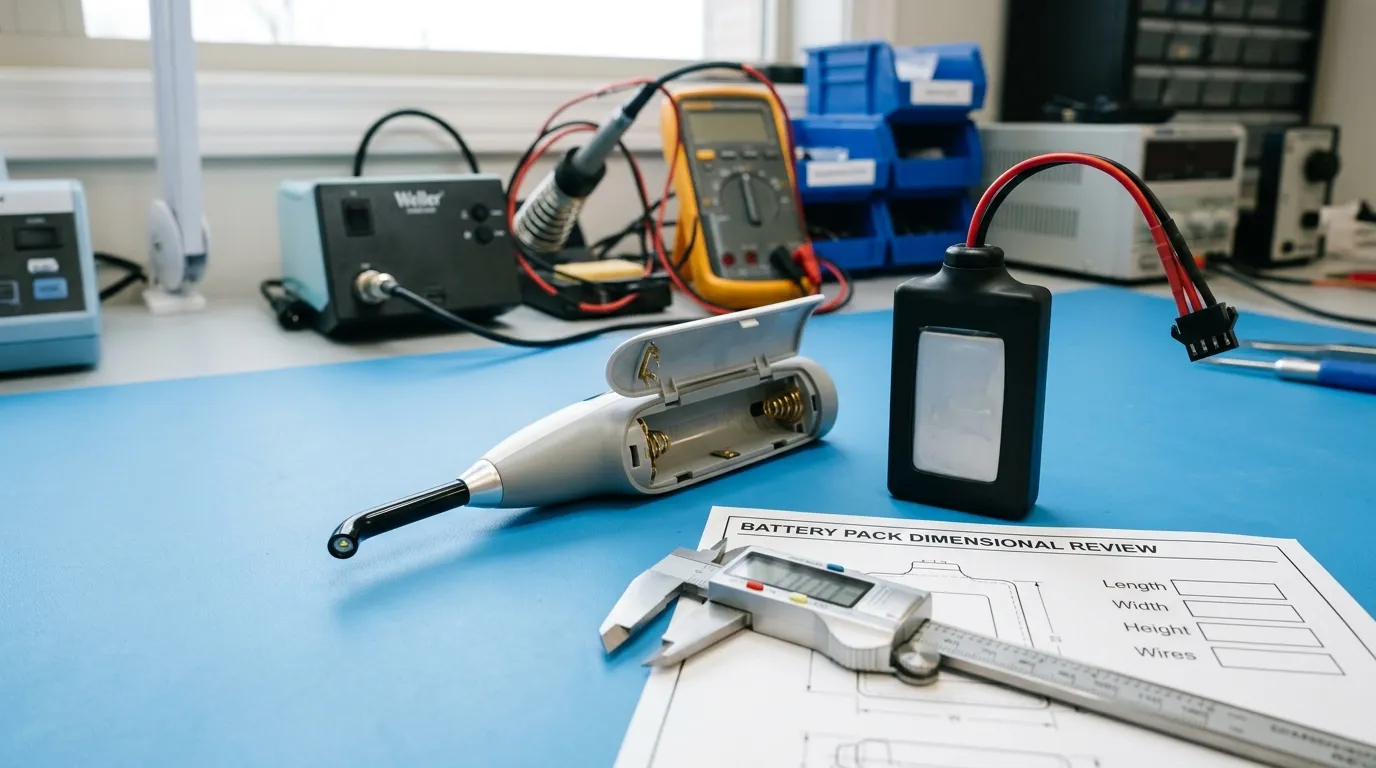
A lithium battery for portable dental equipment is a rechargeable lithium-ion or lithium-polymer battery pack engineered to meet the specific voltage, current, runtime, mechanical, charging, and documentation requirements of a handheld or portable dental device. Selecting the right pack is not a capacity-only decision; it requires matching the complete load profile, physical envelope, protection circuitry, and worldwide shipping documentation to the device's design.
Portable dental equipment places demands on battery packs that consumer electronics rarely face. Devices such as cordless handpieces, ultrasonic scalers, LED curing lights, headlights, and portable imaging or diagnostic units each have unique load profiles. A motor-driven scaler may draw high peak current during startup, while a curing light may demand stable voltage for consistent light output. Designing for these conditions requires a purpose-built pack rather than a generic off-the-shelf battery.
Gloflux develops custom medical device battery pack solutions for OEMs across the clinical equipment landscape, including portable and diagnostic applications. This guide explains how to specify the right lithium battery for a portable dental device, from chemistry selection through to supplier validation and transport documentation.
Why Portable Dental Equipment Needs a Purpose-Built Lithium Battery Pack
A dental device's battery is not an isolated component. It is a system that includes cells, protection circuitry, a connector, an enclosure, and charger compatibility. The battery must work as part of the device's electrical and mechanical design, not simply fit into a cavity.
Different dental devices impose different demands:
- Motor-driven handpieces and scalers may require high peak current during startup and sustained current during operation.
- LED curing lights and headlights need stable voltage to maintain consistent light output and predictable runtime.
- Portable imaging and diagnostic units often require higher energy capacity and more robust protection circuitry because of longer duty cycles and higher system-level sensitivity.
The device's load profile determines the minimum continuous and peak current the battery pack must deliver. The available enclosure determines the physical format. The charging method determines the charger interface. And the destination markets determine the documentation required for transport and sale.
A pack that meets all of these requirements must be specified by the OEM, not selected from a generic catalogue.
Choosing the Right Chemistry: Li-Ion, Li-Polymer, and LiFePO4
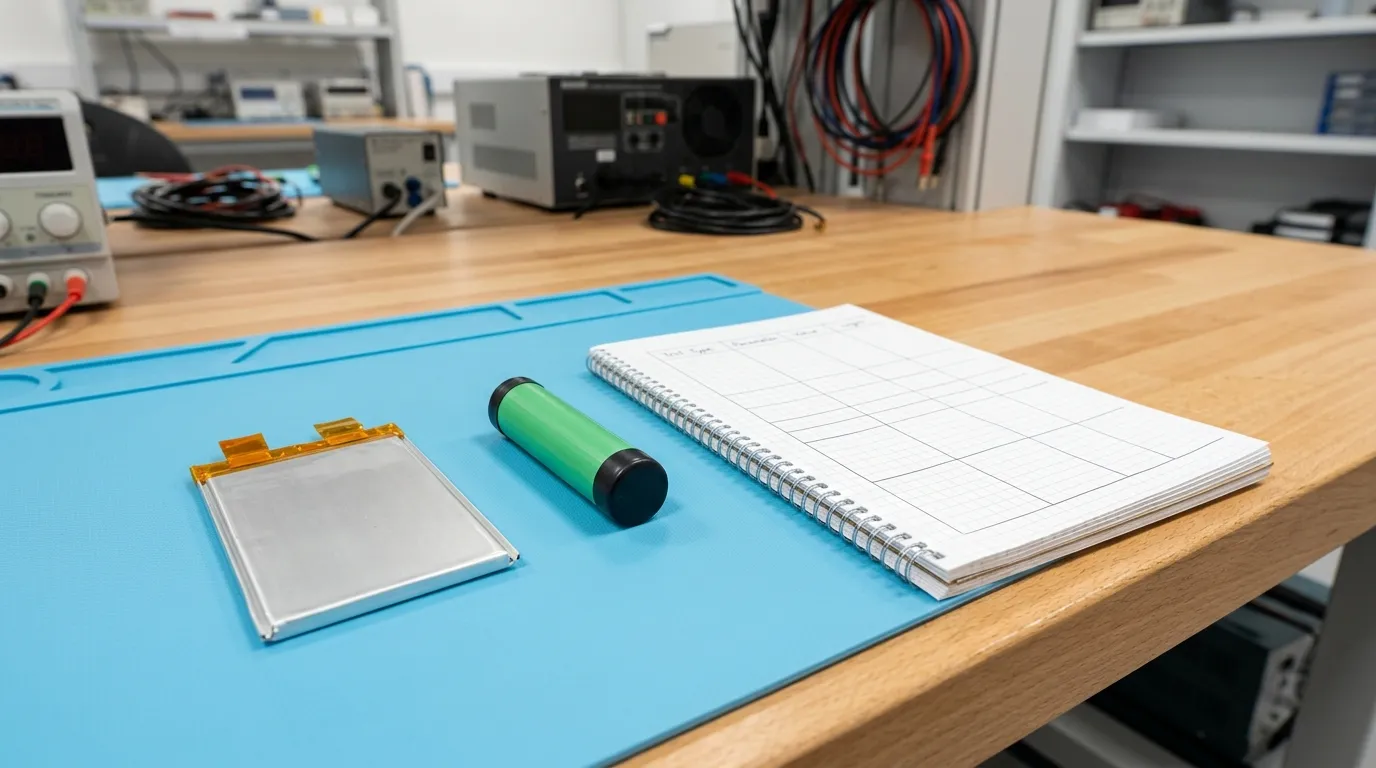
Most portable dental equipment uses rechargeable lithium chemistry because of its high energy density, stable voltage, and acceptable cycle life in a compact format. Within the lithium family, there are meaningful differences between chemistries and cell constructions.
| Chemistry / Construction | Typical Strengths | Typical Trade-offs | Best Fit |
|---|---|---|---|
| Lithium-ion (Li-ion), cylindrical cells | Robust mechanical construction; standardized formats | Less flexible shaping; may be larger for a given capacity | Devices with space for cylindrical cells and a need for mechanical robustness |
| Lithium-polymer (LiPo), pouch cells | Thin or custom shapes; lighter weight for a given capacity | Requires mechanical support and enclosure design to manage swelling and impact | Handheld, ergonomic dental devices with tight or irregular enclosures |
| Lithium iron phosphate (LiFePO4) | Strong safety profile; long cycle life | Lower nominal voltage and lower energy density | Devices where safety and longevity outweigh compact energy density |
For a broader look at how lithium chemistry applies across medical device categories, see our guide to the lithium ion battery for medical devices.
LiFePO4 should be considered only when the device's voltage architecture and space constraints can accommodate its lower energy density. For most compact dental equipment, Li-ion or LiPo represents the more practical starting point.
Why Pouch Li-Polymer Cells Are Common in Compact Dental Devices
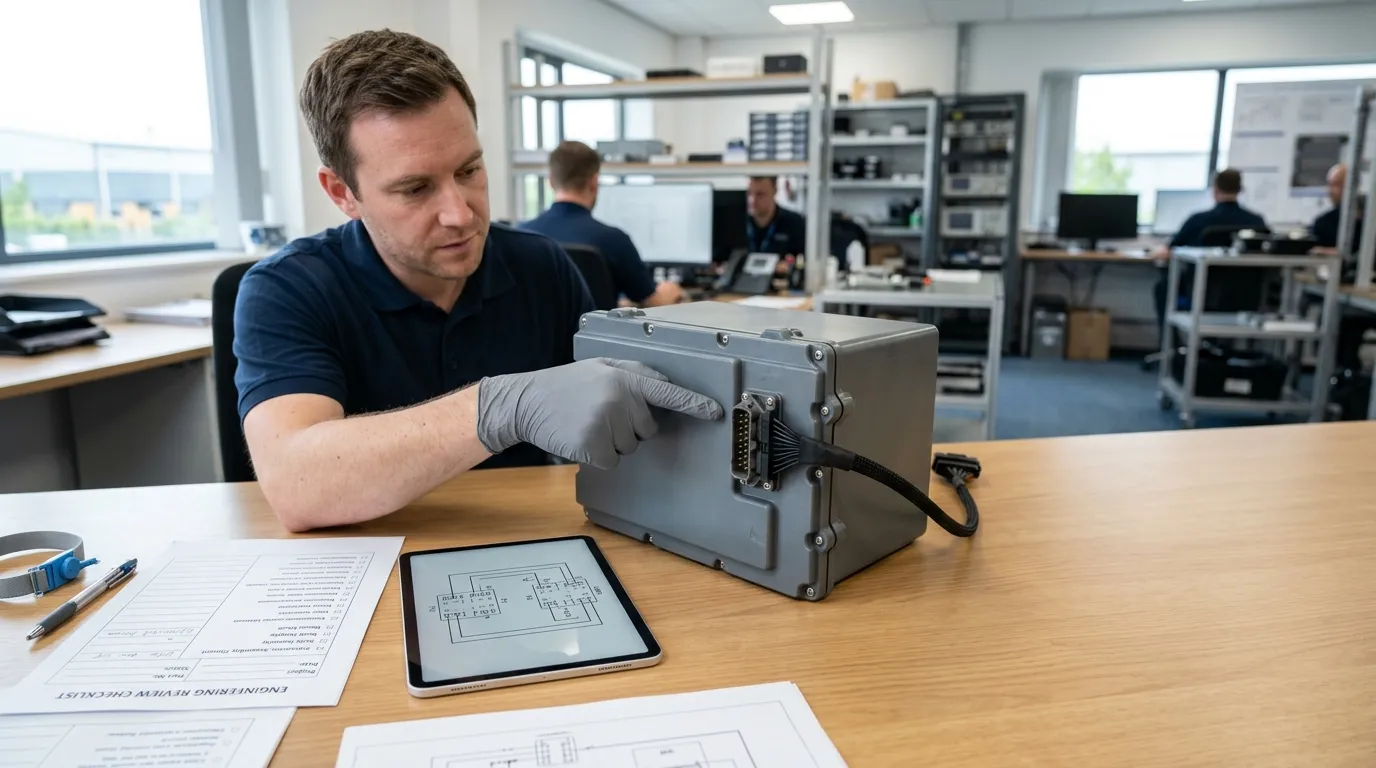
Pouch (Li-polymer) cells are frequently used in handheld dental equipment because they can be manufactured in thin or custom shapes that fit ergonomic handpiece housings. Their lighter weight also supports comfortable use over long procedures.
The trade-off is mechanical. Pouch cells have no rigid metal casing, so they require careful enclosure design to protect them from impact and to manage the slight swelling that can occur over charge and discharge cycles. A well-designed pack provides pressure management and thermal pathways within the housing.
Specifying the Battery Pack: Voltage, Capacity, Energy, and Current
To specify a battery pack correctly, the OEM must distinguish between several electrical parameters that are often confused.
Nominal voltage is the pack's rated operating voltage, determined by the number of cells in series. Maximum charge voltage is the upper limit applied by the charger. These are not the same value.
Capacity is measured in mAh or Ah and represents the amount of charge the pack can store. Energy is measured in watt-hours (Wh) and equals capacity multiplied by nominal voltage. Energy is the more useful figure for comparing packs of different voltages because it directly relates to runtime.
The International Air Transport Association (IATA) defines rated capacity as the capacity of a cell or battery measured under specific load, temperature, and voltage cut-off conditions. This is an important distinction: a capacity figure without stated test conditions is incomplete.
Continuous current is the current the pack can deliver steadily. Peak current is the higher current the pack can deliver for short periods, such as motor startup. C-rate describes current relative to capacity; a 1C rate for a 2 Ah pack is 2 A. C-rate is not the same as amperage.
A common specification error is calculating runtime from rated capacity alone. Runtime depends on the device's actual load and duty cycle. A dental device that draws 2 A on average for 30 minutes per day does not have the same battery requirement as one that draws 2 A continuously.
Voltage sag is another factor. When high current is drawn, internal resistance causes the pack voltage to drop. If the voltage drops below the device's cutoff, the equipment may shut down even though the pack still contains charge. This is why continuous and peak current ratings must be specified alongside capacity.
BMS, Protection, Charging, and Integration
Safety and integration are as important as chemistry and capacity. The battery management system (BMS) or protection circuit module (PCM) controls the pack's operating limits.
Gloflux states that medical equipment requires protection against overcharge, over-discharge, and short circuit. These are the minimum protection functions for a medical battery pack. A more advanced BMS may also provide:
- Overcurrent protection.
- Temperature protection during charge and discharge.
- Cell balancing for multi-cell packs.
- Fuel gauging so the device can estimate state of charge and remaining runtime.
For a deeper look at BMS design and rechargeable pack architecture in clinical applications, refer to our guide to the medical device rechargeable battery pack.
Charging must also be specified correctly. The charger profile must match the pack's chemistry, series cell count, and maximum charge voltage. A charger designed for one chemistry or configuration can overcharge or undercharge the pack, leading to reduced life or safety issues.
Mechanical integration includes the connector, wiring, and enclosure. The connector must match the device's polarity, current rating, and mating mechanism. Wire gauge must be sufficient for the expected current. The enclosure must protect the cells, provide thermal pathways, and fit the device's mechanical constraints. An IP rating, where specified, refers to a defined ingress-protection standard — it is not the same as a general claim that a pack is "waterproof."
What Documentation Is Needed for Worldwide Shipment?
Lithium batteries are regulated as dangerous goods for transport. Before a pack can be shipped by air or sea, the cells and packs must pass the UN 38.3 test sequence, which is described in Section 38.3 of the United Nations Manual of Tests and Criteria. A test summary in accordance with subsection 38.3 must be made available to the transporter.
In the United States, the Pipeline and Hazardous Materials Safety Administration (PHMSA) regulates lithium batteries as hazardous materials under the Hazardous Materials Regulations.
UN 38.3 is a transport test, not a product-safety certification. It proves that the battery has passed specific transport-related tests. It does not demonstrate compliance with IEC 62133, UL, or other product-safety standards, which apply to a defined model and construction and are certified by the appropriate issuing body. SDS/MSDS documents provide safety and handling information and are separate from transport test summaries.
For a medical device, the battery pack is one component. Certification of the complete medical device is the OEM's responsibility and depends on the device's design, target market, and applicable medical device regulations.
From Prototype to Production: What to Validate With Your Supplier
A custom battery pack should follow a controlled development process:
- Requirements capture — define voltage, capacity, energy, currents, dimensions, connector, charger, BMS, temperature, and documentation needs.
- Design — the supplier proposes a chemistry, S/P configuration, BMS, enclosure, and charging plan.
- Sample — the supplier builds and delivers prototype packs.
- Verification — the OEM tests the samples against the requirement specification.
- Pilot production — the supplier produces a small batch to confirm process control.
- Mass production — the approved design moves to volume production with ongoing quality control.
Traceability and change control are essential. The OEM should know the cell source, the approved bill of materials, and the process for notifying and approving any substitution. A supplier that changes a cell or BMS without approval can invalidate the entire device qualification.
RFQ Checklist for a Portable Dental Equipment Battery
When requesting a quotation from a battery supplier, provide the following information:
- Device type and application.
- Nominal voltage and maximum charge voltage.
- Average continuous current and peak current (with duration).
- Runtime target and duty cycle.
- Desired capacity and energy.
- Maximum dimensions and weight.
- Connector type, wiring, polarity, and wire gauge.
- Charger input and charging method.
- BMS and protection requirements, including any communication or state-of-charge display needs.
- Operating, charge, and storage temperature ranges.
- Target certifications and documentation.
- Shipping destinations and required transport documents.
- MOQ, sample requirements, lead time, and quality agreement expectations.
A complete RFQ reduces the risk of mismatched specifications and helps the supplier propose the right pack on the first attempt.
For portable clinical equipment such as a Custom lithium battery for portable ultrasound machines, the same specification discipline applies. Each device type has its own load profile, mechanical constraints, and documentation requirements.
Frequently Asked Questions
What type of battery is used in portable dental equipment?
Most portable dental equipment uses a rechargeable lithium-ion or lithium-polymer battery pack. The pack must be designed to meet the device's voltage, current, runtime, mechanical, charging, and documentation requirements.
Is Li-ion or LiPo better for compact dental equipment?
Pouch Li-polymer cells are often used in compact handheld dental devices because they can be shaped to fit tight enclosures and are lighter than cylindrical cells. Cylindrical Li-ion cells are a robust alternative when space permits.
What documents are needed to ship lithium battery packs for dental equipment internationally?
A lithium battery test summary in accordance with UN 38.3 must be available for transport. Depending on the destination, an SDS/MSDS and product-safety certifications may also be required.
How long will a dental equipment battery last in cycles?
A battery's cycle life depends on the cell chemistry, the depth of discharge, the charge and discharge conditions, and the operating temperature. The correct approach is to specify a cycle-life requirement with a stated retention threshold and test conditions, rather than relying on a single figure.
Why does my dental device shut down under load even with a full charge?
The most likely cause is voltage sag. When the device draws high current, internal resistance causes the pack voltage to drop below the device's cutoff threshold. This indicates that the pack's continuous or peak current rating may be insufficient for the device's actual load profile.
To discuss your specific requirements, contact the Gloflux engineering team with your device specifications and this RFQ checklist. A custom battery pack can be designed to meet your portable dental equipment's electrical, mechanical, and documentation needs.
Talk to the Manufacturer
Resources & Insights
High Capacity Lithium Battery for Wearables: High-Voltage LiPo Cell Design
2026-10-19
Cylindrical Battery Packs for Laptops: 2S vs 3S vs 4S Battery Design
2026-10-19

Stage Lighting Battery Pack: Prevent Voltage Drop & LED Flicker
2026-10-19

Best Rechargeable Batteries for Smart Devices: Performance, Safety, and Selection Guide
2026-10-19


