


 Home /
 Custom Medical Device Rechargeable Battery Pack Design: A Technical Guide for OEMs


Table of Contents
For medical OEMs, the Medical Device Rechargeable Battery Pack is not a secondary component but a core subsystem that directly determines device safety, operational stability, and lifecycle performance.
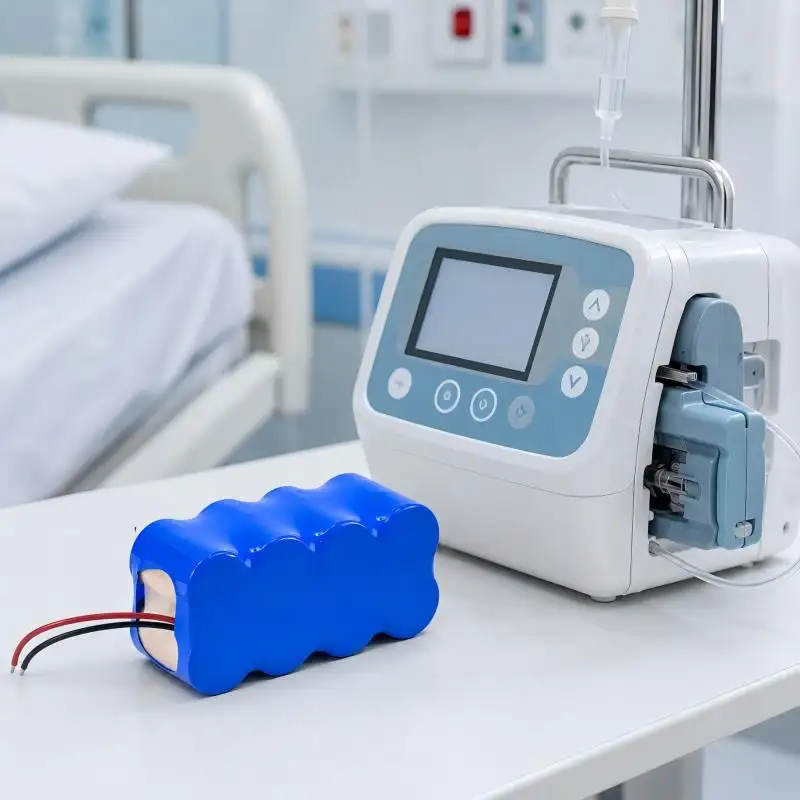
While standard battery packs can meet general applications, many medical systems require a custom Medical Device Rechargeable Battery Pack designed specifically around device architecture, regulatory constraints, and clinical usage profiles.
This guide explains the key engineering considerations behind a Medical Device Rechargeable Battery Pack design process, with an example from infusion pump applications.
1. Necessity of the Custom Medical Device Rechargeable Battery Pack
Stock battery packs limit design flexibility. For this reason, Custom Medical Device Rechargeable Battery Packs permit OEM engineering to optimize power delivery in accordance with the Medical Device's specifications.
Some of the benefits are:
• Greater flexibility for enclosure integration
• Predictable behavior in terms of runtime
• Elevated safety design for clinical use
• Lowered cost for future maintenance and replacements
The Medical Device Rechargeable Battery Pack is considered a subsystem in the device as integrated for use in modern device engineering, as an accessory in a plug-and-play format, is readily obsolete.
2. Design Aspects of a Medical Device Rechargeable Battery Pack
The design of the Medical Device Rechargeable Battery Pack requires compliance with numerous domains of engineering including but not limited to the cross-disciplinary domains of electrical, mechanical, and safety systems.
2.1 Electrical Design Aspects
The Medical Device Rechargeable Battery Pack must be designed to ensure electrical predictability for its reliability.
Some of the key design aspects include:
1.Nominal voltage & capacity
Must be aligned with the device's power architecture to guarantee the Medical Device Rechargeable Battery Pack's functionality throughout the discharge cycle.
2.Discharge stability
An optimal Medical Device Rechargeable Battery Pack should be capable of maintaining a voltage plateau during typical operational conditions.
3.Charging profile
For Ni-MH-based Medical Device Rechargeable Battery Pack systems, charge control typically relies on:
• Constant current charging
• ΔV detection or temperature cutoff
• Controlled overcharge termination logic
Incorrect charging strategy directly impacts Medical Device Rechargeable Battery Pack lifespan and safety performance.
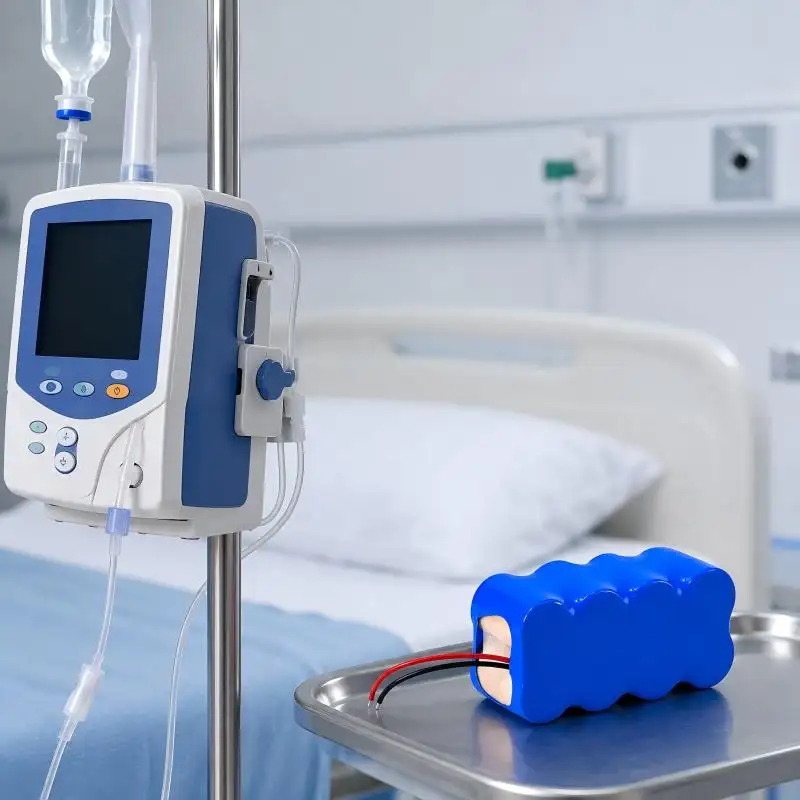
2.2 Mechanical Design Integration
Mechanical design is critical for any Medical Device Rechargeable Battery Pack, especially in compact medical devices.
- Form factor matching
The Medical Device Rechargeable Battery Pack must fit within the allocated enclosure with tolerance for insulation, wiring, and connector structure.
2.Cell configuration design
Example structure for a Ni-MH Medical Device Rechargeable Battery Pack:
• Cell type: SC Ni-MH cells (23 × 43 mm)
• Configuration: 8S1P
• Final pack envelope: 95 × 45 × 46 mm
This configuration is widely used in portable medical systems where space efficiency and serviceability are required.
2.3 Safety Architecture of Medical Device Rechargeable Battery Pack
Safety is the most critical requirement for any Medical Device Rechargeable Battery Pack.
| Protection Function | Role in Medical Device Rechargeable Battery Pack |
| Overcharge Protection | Prevents excessive voltage during charging and protects cell integrity |
| Over-discharge Protection | Prevents deep discharge damage in Medical Device Rechargeable Battery Pack systems |
| Overcurrent / Short Circuit Protection | Ensures immediate shutdown during abnormal load conditions |
| Structural Safety Design | Improves internal isolation and reduces failure risk in Medical Device Rechargeable Battery Pack assemblies |
2.4 Chemistry Selection in Medical Device Rechargeable Battery Pack Design
The chemistry selection directly defines the performance profile of a Medical Device Rechargeable Battery Pack.
- Ni-MH Systems
• Highly robust with full fault tolerance
• Long term cycling behavior remains stable
• Commonly found in older generation medical systems
• Good for use in infusion pumps and for use in service replacement packs
2.Li-ion Systems
• Greater energy density
• Smaller footprint for Medical Device Rechargeable Battery Pack
• Requires sophisticated Battery Management System (BMS) integration
• Greater challenges for compliance in medical settings
When choosing a Medical Device Rechargeable Battery Pack chemistry, generally, it is a compromise of energy density, regulatory acceptance, and safety margin.
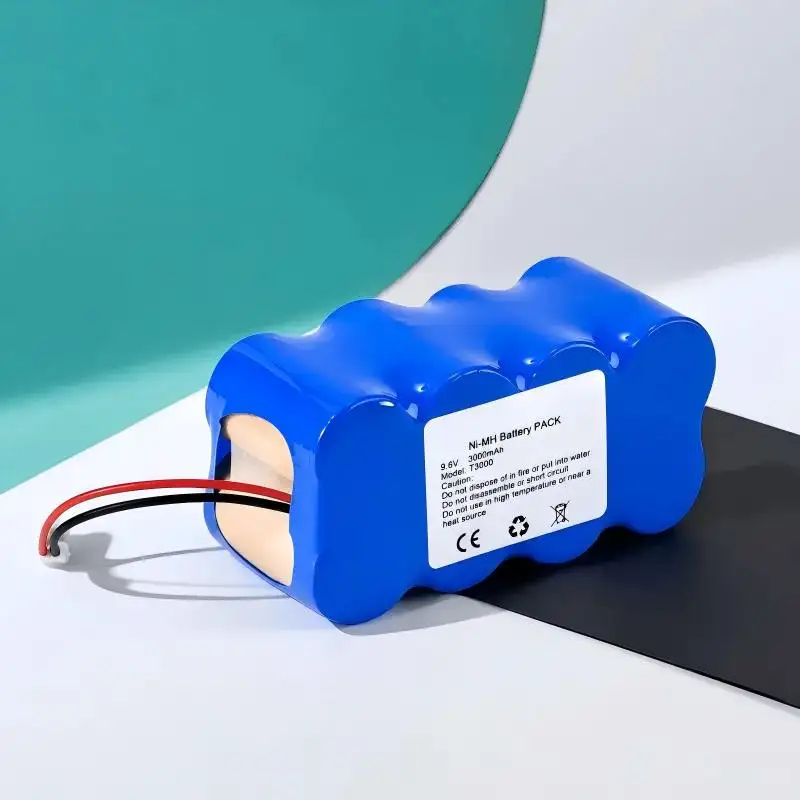
3. Case Study: Infusion Pump Medical Device Rechargeable Battery Pack
To provide an example of a Medical Device Rechargeable Battery Pack, consider the pack designed for replacement in Terumo TE-171 / TE-172 infusion pumps. This type of Medical Device Rechargeable Battery Pack is typically utilized in hospital maintenance and as an OEM-compatible replacement.
Manufacturer Gloflux has designed replacement Ni-MH packs that are drop-in compatible for use in the clinical environment.
3.1 Application Requirements
The Medical Device Rechargeable Battery Pack should exhibit:
• Drop-in replacement for original part numbers (e.g., 8N-1200SCK)
• Consistent avoidance of unexpected runtime while continuously infusing
• High cycle reliability in a clinical environment
• Safe operation across multiple charge and discharge cycles
3.2 Engineering Design Implementation
A sample Medical Device Rechargeable Battery Pack solution is:
• Chemistry: Ni-MH
• Configuration: 8S1P SC cells
• Nominal Voltage: 9.6V
• Capacity: 3000 mAh
• Design focus: stable discharge and safe replacement compatibility
This Medical Device Rechargeable Battery Pack design emphasizes reliability over energy density.
3.3 Technical Specification Overview
| Parameter | Specification (Medical Device Rechargeable Battery Pack) |
| Model | Ni-MH SC 8S1P |
| Cell Size | 23 × 43 mm |
| Pack Dimension | 95 × 45 × 46 mm |
| Nominal Voltage | 9.6 V |
| Capacity | 3000 mAh |
| Internal Resistance | ~150 mΩ |
| Charge Voltage | System-defined (pack-level control dependent) |
| Application | Infusion Pump (TE-171 / TE-172 compatible systems) |
4. Engineering Collaboration for Medical Device Rechargeable Battery Pack Development
Selecting a supplier for a Medical Device Rechargeable Battery Pack requires evaluation of engineering depth and compliance capability.
A competent partner generally offers:
4.1 System Design Support
• Analysis of load profiles
• Optimization of cell topologies
• Integration of rechargeble battery pack systems within medical devices
4.2 Validation & Prototyping
• Testing of medical devices rechargeable battery packs for fit, performance, and functionality
• Safety validation with the use of fault simulations
• Testing and validation of the cycle life and capacity of components
4.3 Regulatory Documentation
• Preparation of certification reports for components of the medical devices rechargeable battery pack
• Creation of regulatory submission documentation for medical devices
• Provision of test data for regulatory compliance
4.4 Custom Engineering Capability
• Design of custom connectors and wiring harnesses
• Design of custom enclosures
• Incorporation of custom battery monitoring and identification systems
Final Words
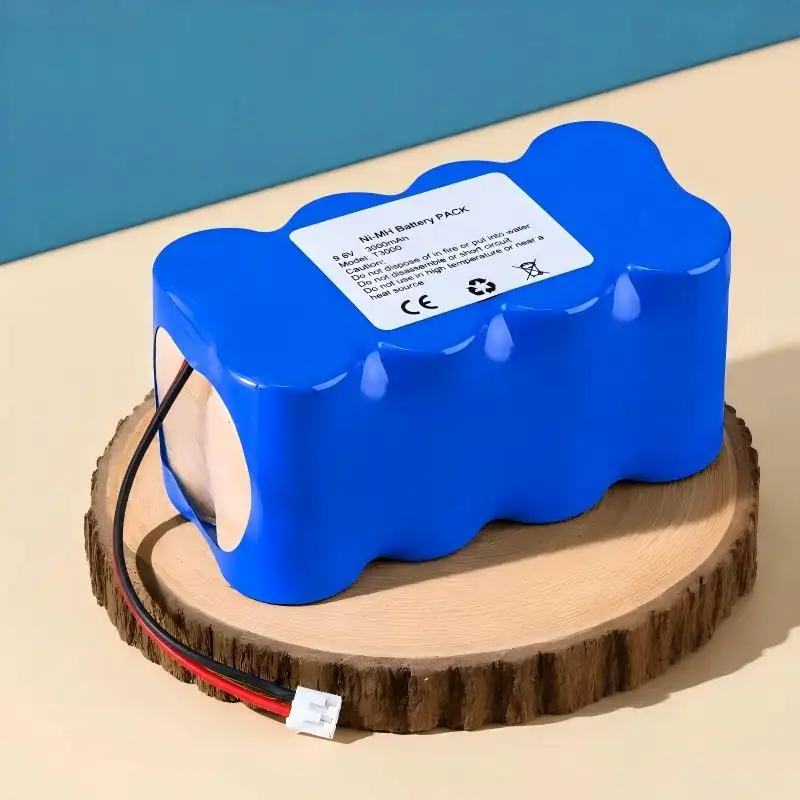
An optimally designed Medical Device Rechargeable Battery Pack contributes to device dependability, safety of the patient, and intentional long-term use of the medical device.
For the OEM, the key to success of a Medical Device Rechargeable Battery Pack is:
• Correct electrical and mechanical system integration
• Design of a safety system of multiple safety layers
• Cooperation and collaboration of engineers of the design team and of the supplying team
The Medical Device Rechargeable Battery Pack, in fact, should be considered a regulated subsystems of the engineering design of a medical device and not an expendable component.
FAQ — Medical Device Rechargeable Battery Pack
Q1. What is a Medical Device Rechargeable Battery Pack?
This is a specially engineered battery system that serves the specifics of the medical devices safety, runtime, and reliability demands.
Q2. Why is a custom battery pack necessary?
Standard packs would not satisfy the medical device safety, size, and regulatory demands.
Q3. What are the chemistries of medical battery packs?
These battery packs typically utilize Ni-MH or Li-ion chemistries depending on the safety and energy-density requirements.
Q4. Are there possibilities to customize the size of the Medical Device Rechargeable Battery Pack?
Yes, the size is fully customizable within the limits of the device enclosure.
Q5. What safety features are designed into the Medical Device Rechargeable Battery Pack?
The Medical Device Rechargeable Battery Pack is designed to include safety protections for overcharge, over-discharge, overcurrent, and short-circuit.
Talk to the Manufacturer
Resources & Insights
High Capacity Lithium Battery for Wearables: High-Voltage LiPo Cell Design
2026-10-19
Cylindrical Battery Packs for Laptops: 2S vs 3S vs 4S Battery Design
2026-10-19

Stage Lighting Battery Pack: Prevent Voltage Drop & LED Flicker
2026-10-19

Best Rechargeable Batteries for Smart Devices: Performance, Safety, and Selection Guide
2026-10-19


