


 Home /
 18650 Low-Temperature Li-Ion Battery, -40°C, 3000mAh, 10A Discharge, 3.7V, for Cold-Climate Devices and Outdoor Electronics


Table of Contents
- Why Standard Lithium-Ion Batteries Struggle in Cold Conditions
- 3000mAh Capacity for Extended Operating Time
- 10A Discharge for Demanding Equipment
- Stable 3.7V Power in a Standard 18650 Format
- Applications in Cold-Climate Environments
- Customized Battery Pack Options
- Charging and Safety Considerations
- A Reliable Power Solution for Extreme Cold
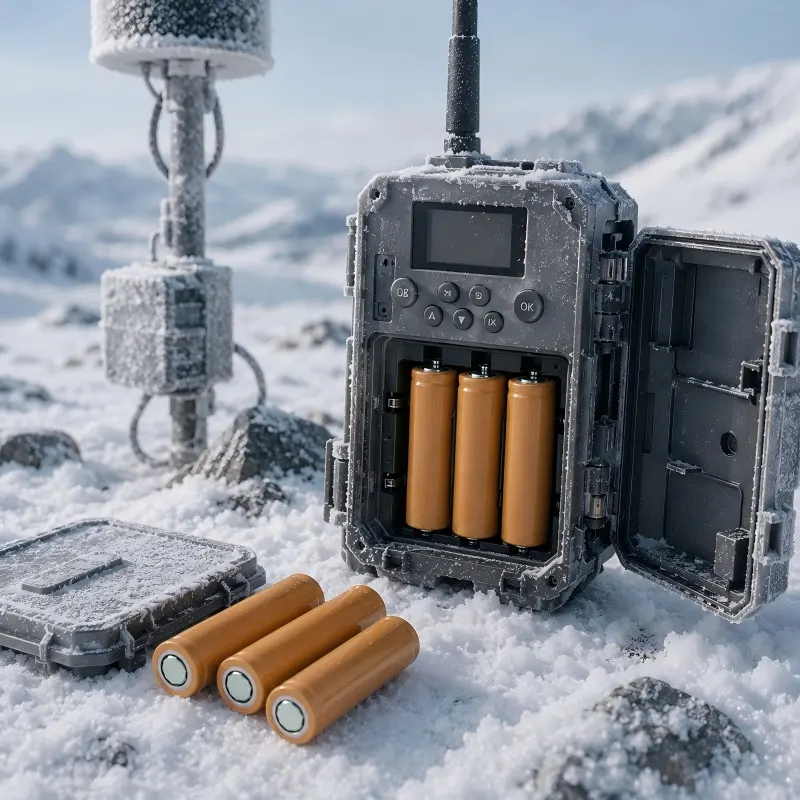
Electronic devices used in freezing environments require a dependable power source that can continue operating when standard batteries lose efficiency. The 18650 low-temperature battery is designed for cold-climate equipment, outdoor electronics, monitoring systems, and portable devices that must function in temperatures as low as -40°C. With a nominal voltage of 3.7V, a 3000mAh capacity, and a discharge current of up to 10A, this rechargeable lithium-ion cell combines compact dimensions with stable power delivery.
Its standard 18650 cylindrical format makes it suitable for individual use or integration into customized battery packs. Manufacturers can use the cell in equipment operating in winter, refrigerated areas, high-altitude regions, and other demanding locations where conventional lithium-ion cells may experience rapid voltage drops or reduced available capacity.
Why Standard Lithium-Ion Batteries Struggle in Cold Conditions
Low temperatures slow the internal electrochemical reactions of a lithium-ion battery. As the temperature decreases, the battery’s internal resistance increases, ion movement becomes less efficient, and the available discharge capacity may fall. A standard cell that performs normally at room temperature may deliver less operating time, unstable voltage, or insufficient starting current in extreme cold.
These limitations can create serious problems for equipment installed in remote locations. A weather station, outdoor security camera, communication device, or emergency instrument may need to start immediately and continue operating without frequent battery replacement.
A low-temperature 18650 cell uses an optimized battery structure and material system to improve discharge performance under freezing conditions. It is designed to provide more dependable output at temperatures down to -40°C, supporting devices used in harsh winter and cold-storage environments.
3000mAh Capacity for Extended Operating Time
The battery offers a rated capacity of 3000mAh, providing a practical balance between energy storage, physical size, and weight. This capacity can support portable electronics, monitoring instruments, tracking devices, data collection equipment, and other systems that require extended runtime.
Actual operating time depends on the device’s current consumption, working temperature, discharge rate, voltage cutoff, and system efficiency. However, the 3000mAh capacity allows manufacturers to develop compact products without sacrificing essential runtime.
For applications requiring greater voltage or capacity, several 18650 cells can be connected in series, parallel, or series-parallel configurations. A customized battery pack can therefore meet the electrical requirements of different devices while retaining the advantages of low-temperature cell technology.
10A Discharge for Demanding Equipment
Some outdoor devices require more than basic energy storage. Motors, communication transmitters, lighting systems, heating components, and equipment with high startup currents may place a significant load on the battery.
This low-temperature 18650 lithium-ion cell supports discharge currents of up to 10A, making it suitable for applications with moderate to relatively high power requirements. Its discharge capability helps the connected device receive sufficient current during startup and operation.
The actual allowable continuous current should always be matched with the product design, thermal conditions, battery pack configuration, protection circuit, and manufacturer specifications. Correct current selection helps control heat generation, reduce excessive voltage drop, and improve the service life of the battery system.
Stable 3.7V Power in a Standard 18650 Format
The cell has a nominal voltage of 3.7V and uses the widely adopted 18650 cylindrical format. This standardized size simplifies integration into portable electronics, industrial instruments, and customized battery modules.
A single cell can power compatible low-voltage devices, while multiple cells can create higher-voltage battery packs. For example, cells connected in series increase pack voltage, while cells connected in parallel increase capacity and available current.
The cylindrical metal housing also offers mechanical stability for equipment exposed to transportation, vibration, or repeated handling. A proper battery holder, insulating structure, enclosure, and protection system should still be included to prevent movement, short circuits, and physical damage.
Applications in Cold-Climate Environments
The 18650 low-temperature battery can be used in a wide range of commercial and industrial equipment. Common applications include outdoor monitoring devices, portable radios, GPS trackers, security cameras, environmental sensors, weather stations, emergency lighting, inspection instruments, and remote data collection systems.
It is also suitable for electronics used in refrigerated warehouses, frozen-food logistics, winter transportation, mountainous areas, and high-latitude regions. In these environments, the battery may need to deliver power after remaining outdoors or in storage for long periods.
Other possible applications include handheld test equipment, field communication systems, winter sports electronics, cold-chain tracking devices, search-and-rescue equipment, and portable scientific instruments.
Customized Battery Pack Options
Battery requirements vary according to the device, operating current, installation space, charging method, and target runtime. The 18650 low-temperature cell can be assembled into customized battery packs with different voltage and capacity configurations.
Available customization options may include a protection circuit module, battery management system, temperature sensor, connector, wire length, terminal type, insulation material, housing, and external label. Pack designers can also adjust the cell arrangement to fit available installation space.
Before developing a customized battery pack, the manufacturer should confirm the required nominal voltage, maximum charging voltage, continuous discharge current, peak current, operating temperature, product dimensions, expected runtime, and charging method. These details help ensure that the final battery solution is compatible with the equipment.
Charging and Safety Considerations
Low-temperature discharge capability does not automatically mean the battery should be charged at the same minimum temperature. Charging lithium-ion cells below the specified charging temperature can cause lithium plating, capacity loss, internal damage, or safety risks.
Users should follow the recommended charging temperature and use a compatible lithium-ion charger with accurate voltage and current control. Battery packs should include appropriate protection against overcharging, over-discharging, overcurrent, and short circuits.
The battery should also be protected from crushing, puncturing, fire, water exposure, incorrect polarity, and unsuitable chargers. Proper storage, transportation, and pack design contribute to safer operation and longer battery life.
A Reliable Power Solution for Extreme Cold
The 3.7V 3000mAh low-temperature 18650 battery provides a practical power solution for devices operating in demanding winter environments. Its ability to support operation at temperatures down to -40°C, combined with a discharge capability of up to 10A, makes it suitable for outdoor electronics and cold-climate equipment.
With customized pack configurations, protection circuits, wiring, and connectors, the battery can be adapted to many industrial and portable applications. Selecting the correct cell and battery pack design helps equipment maintain stable operation, dependable starting performance, and practical runtime in locations where ordinary lithium-ion batteries may not meet application requirements.
Talk to the Manufacturer
Resources & Insights

High Capacity Lithium Battery for Wearables: High-Voltage LiPo Cell Design
2026-10-19
Cylindrical Battery Packs for Laptops: 2S vs 3S vs 4S Battery Design
2026-10-19
Stage Lighting Battery Pack: Prevent Voltage Drop & LED Flicker
2026-10-19

Best Rechargeable Batteries for Smart Devices: Performance, Safety, and Selection Guide
2026-10-19


