


 Home /
 What Is the Difference Between an OEM and ODM Battery Manufacturer?


Table of Contents
- What Is an OEM Battery Manufacturer?
- What Is an ODM Battery Manufacturer?
- OEM vs ODM Battery Manufacturer: Key Differences
- When Should You Choose OEM Battery Manufacturing?
- When Should You Choose ODM Battery Manufacturing?
- OEM and ODM Are Often Combined in Real Battery Projects
- What Should You Check Before Selecting a Battery Manufacturer?
- Conclusion
-
Frequently Asked Questions
- What is the main difference between OEM and ODM battery manufacturing?
- Can a battery manufacturer provide both OEM and ODM services?
- Is ODM battery manufacturing more expensive than OEM?
- What information should I provide for a custom battery project?
- Can an ODM manufacturer help with battery certification?
- Which option is better for a new product: OEM or ODM?
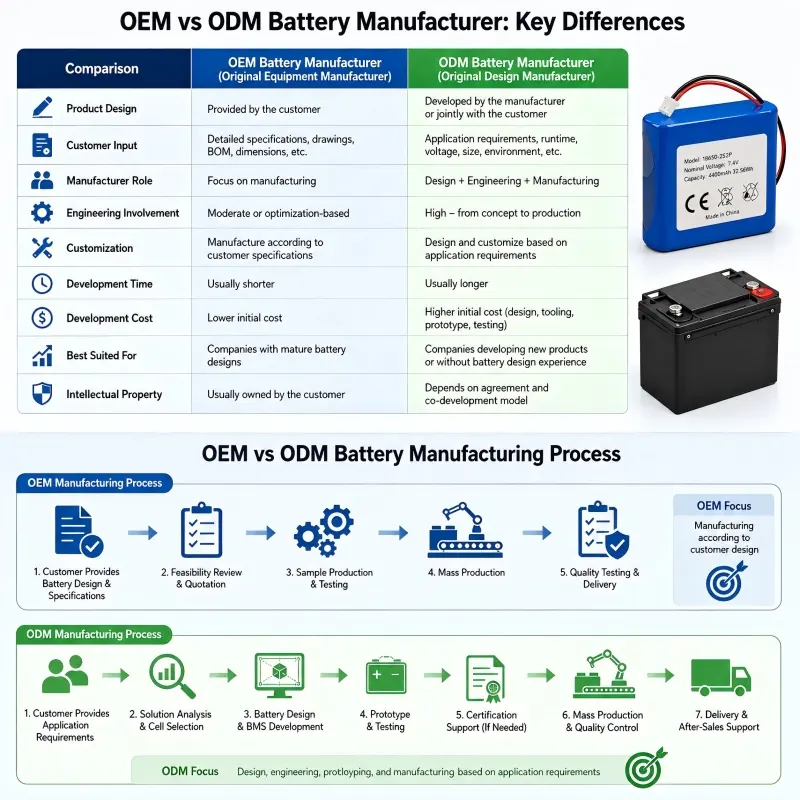
Choosing the right battery manufacturer is not only about comparing price, capacity, voltage, or production volume. For companies developing medical devices, industrial equipment, consumer electronics, energy storage systems, POS terminals, power tools, or other battery-powered products, another important question is whether they need an OEM battery manufacturer or an ODM battery manufacturer.
The two models may look similar because both involve customized battery production. However, the difference lies mainly in who develops the battery design, how much engineering support the manufacturer provides, and how the project moves from an idea to mass production.
Understanding these differences can help buyers choose a manufacturing model that better matches their technical capabilities and product development stage.
What Is an OEM Battery Manufacturer?
OEM stands for Original Equipment Manufacturer.
In an OEM battery project, the customer normally already has a relatively complete battery design or technical specification. The battery manufacturer is responsible for producing the battery according to these requirements.
For example, a medical equipment company may already know that its device requires a 14.8V lithium-ion battery pack with a specific capacity, enclosure, connector, communication interface, and dimensions.
The customer may provide:
- Battery drawings
- Voltage and capacity requirements
- Cell specifications
- Pack dimensions
- BMS requirements
- Connector type
- Cable length
- Housing design
- Label artwork
- Testing requirements
The OEM battery manufacturer then converts these specifications into a repeatable production process.
In simple terms, OEM manufacturing can be described as:
Customer Design → Battery Manufacturing → Testing → Mass Production
The manufacturer's main responsibility is to manufacture the battery accurately and consistently according to the approved design.
What Is an ODM Battery Manufacturer?
ODM stands for Original Design Manufacturer.
An ODM battery manufacturer becomes involved earlier in the development process. Instead of receiving a completed battery design, the manufacturer may receive only the customer's application requirements.
For example, a company developing a portable industrial device may tell the battery supplier:
“We need the equipment to operate for approximately eight hours, but the available battery compartment is limited.”
The customer may not yet know which cell format, pack configuration, BMS, connector, or enclosure should be used.
An ODM battery manufacturer can help convert those requirements into a workable battery solution.
The development process may include:
Application Requirements → Cell Selection → Battery Pack Design → BMS Development → Prototype → Testing → Certification Support → Mass Production
ODM manufacturers therefore act not only as production suppliers but also as engineering and product-development partners.
OEM vs ODM Battery Manufacturer: Key Differences
| Comparison | OEM Battery Manufacturer | ODM Battery Manufacturer |
|---|---|---|
| Product design | Mainly provided by customer | Developed by manufacturer or jointly |
| Customer input | Detailed specifications and drawings | Application and performance requirements |
| Engineering involvement | Moderate | High |
| Battery design support | Limited or optimization-based | Full or extensive development support |
| Prototyping | Usually based on existing design | Often part of the development process |
| Development time | Usually shorter | Usually longer |
| Customization | According to customer specifications | Designed around customer application |
| Best suited for | Mature battery projects | New product development |
| Manufacturer role | Production partner | Design + engineering + production partner |
Neither approach is automatically better. The correct choice depends on how much of the battery system has already been developed.
When Should You Choose OEM Battery Manufacturing?
OEM battery manufacturing is generally more suitable when your company already has a proven battery specification.
For example, you may already have a battery used in an existing device and need a new supplier to manufacture an equivalent or updated version.
OEM is also useful when engineering teams want strict control over key design elements.
A typical OEM project may involve an existing specification such as:
7.4V / 4400mAh / defined connector / fixed housing / approved BMS / customer label
The battery manufacturer evaluates whether the design is suitable for production, develops samples, performs testing, and prepares for volume manufacturing.
OEM projects can often move faster because fewer fundamental design decisions need to be made.
However, an experienced manufacturer may still recommend changes if it identifies issues related to cell availability, manufacturability, thermal performance, structural design, or supply-chain stability.
When Should You Choose ODM Battery Manufacturing?
ODM is more suitable when the battery is still being developed together with the end product.
Suppose a company is developing a handheld scanner, wearable device, portable medical instrument, robot, smart appliance, or new industrial product.
The engineering team may know:
- Device operating voltage
- Expected runtime
- Maximum battery dimensions
- Charging requirements
- Operating environment
- Estimated power consumption
- Target market
But they may not know the exact battery architecture.
An ODM battery manufacturer can evaluate these requirements and recommend a solution.
For example, engineers may determine whether cylindrical lithium-ion cells, lithium-polymer pouch cells, LiFePO4 cells, or another chemistry is more appropriate.
They may also design the pack configuration, protection circuit, communication functions, enclosure, wiring, connectors, and charging interface.
This reduces the amount of battery-specific engineering work the customer needs to manage internally.
OEM and ODM Are Often Combined in Real Battery Projects
In practice, many custom battery projects are not completely OEM or completely ODM.
A customer might already have the battery voltage, capacity, dimensions, and connector specification but need help redesigning the BMS or changing the cell because the original component is no longer available.
Another customer may have an existing battery pack but want better runtime or a different enclosure for a new generation of equipment.
These projects combine elements of both models.
A capable battery manufacturer may therefore provide:
OEM manufacturing + ODM engineering + customization support
This flexible approach is particularly useful for long-life industrial, medical, and commercial equipment where battery designs may need to evolve over several product generations.
What Should You Check Before Selecting a Battery Manufacturer?
Whether you choose OEM or ODM, manufacturing capability should not be evaluated by price alone.
Battery buyers should review the supplier's experience with cell selection, battery pack assembly, BMS integration, welding, production testing, traceability, quality control, and relevant certification requirements.
The manufacturer should also understand the final application.
A battery designed for a POS terminal has different requirements from one used in a drone, medical monitor, energy storage system, heated garment, or industrial robot.
Providing detailed application information early can help the battery supplier identify potential design and production risks before the project reaches mass production.
Conclusion
The main difference between an OEM and ODM battery manufacturer is the manufacturer's level of involvement in product development.
An OEM battery manufacturer primarily manufactures batteries according to an existing customer design.
An ODM battery manufacturer can help develop the battery solution from application requirements through engineering, prototyping, testing, and production.
For companies with a mature battery specification, OEM manufacturing may provide a faster route to production. For companies developing a new battery-powered product, ODM support can reduce development complexity and provide access to specialized battery engineering expertise.
Ultimately, the best battery manufacturing partner is one that can support the project from the customer's current development stage through reliable mass production.
Frequently Asked Questions
What is the main difference between OEM and ODM battery manufacturing?
OEM manufacturing normally follows an existing battery design supplied by the customer, while ODM manufacturing includes greater involvement in battery design, engineering, prototyping, and customization.
Can a battery manufacturer provide both OEM and ODM services?
Yes. Many experienced custom battery manufacturers provide both models. Customers can choose full OEM production, ODM development, or a combination depending on their project.
Is ODM battery manufacturing more expensive than OEM?
ODM projects may involve higher initial development costs because they can require engineering, prototypes, BMS development, tooling, and testing. However, costs depend heavily on the complexity of the battery.
What information should I provide for a custom battery project?
Useful information includes operating voltage, required capacity or runtime, battery dimensions, device power consumption, connector requirements, charging method, operating temperature, target market, and estimated order quantity.
Can an ODM manufacturer help with battery certification?
Many ODM battery manufacturers can provide certification support and documentation for standards or transportation requirements applicable to the battery. The exact requirements depend on battery chemistry, application, and destination market.
Which option is better for a new product: OEM or ODM?
ODM is generally more suitable when the battery design has not yet been finalized. If your engineering team already has complete drawings and specifications, OEM manufacturing may be more efficient.
Talk to the Manufacturer
Resources & Insights
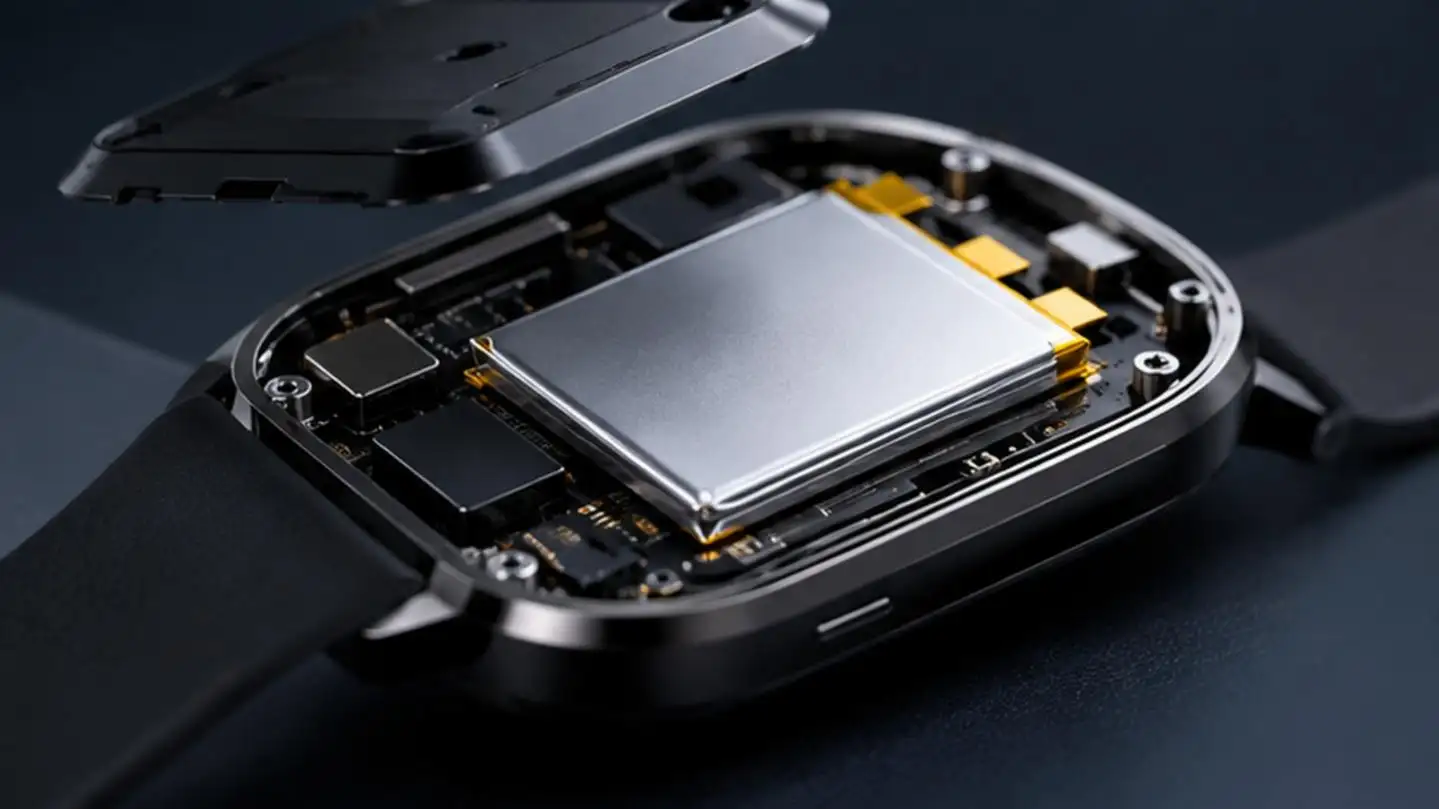
High Capacity Lithium Battery for Wearables: High-Voltage LiPo Cell Design
2026-10-19
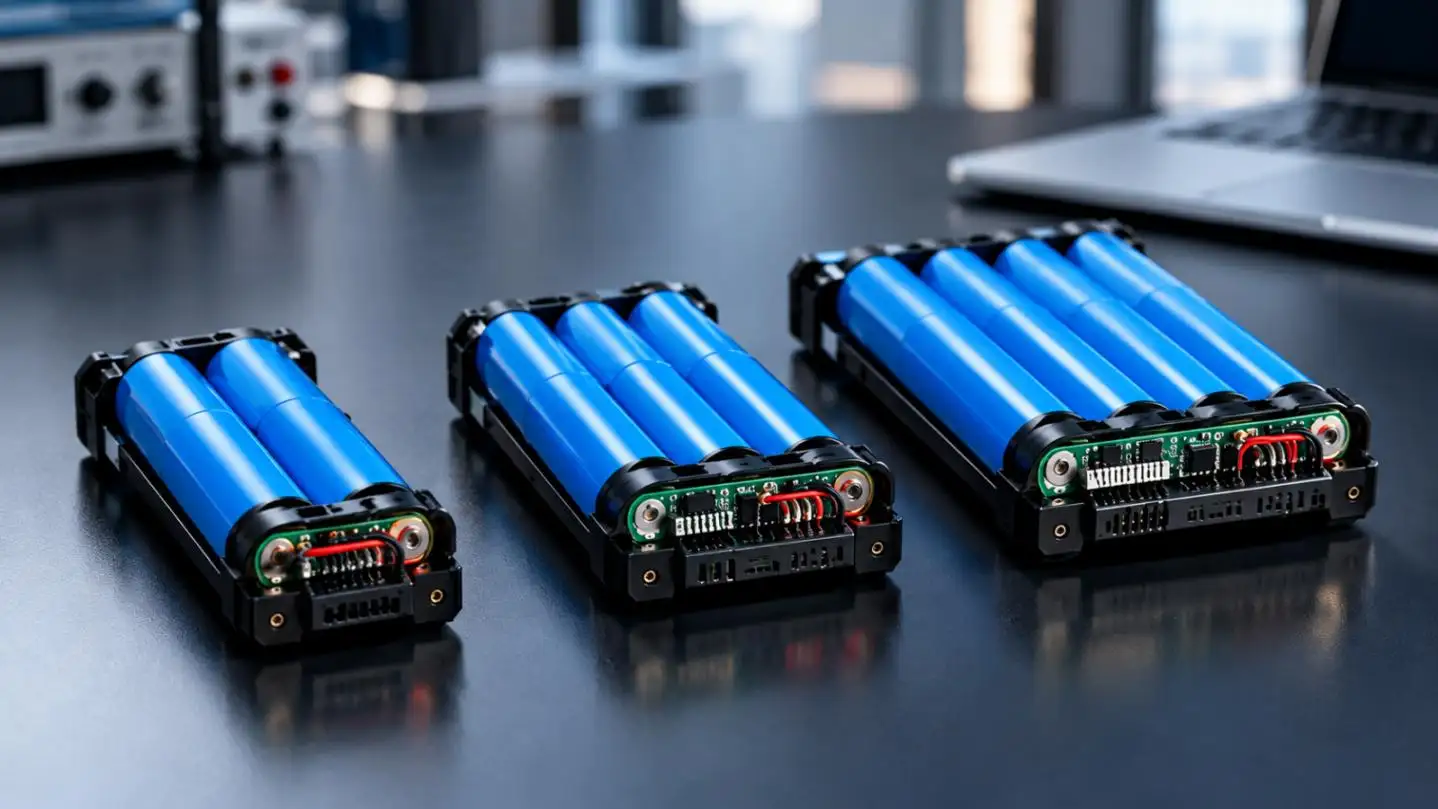
Cylindrical Battery Packs for Laptops: 2S vs 3S vs 4S Battery Design
2026-10-19
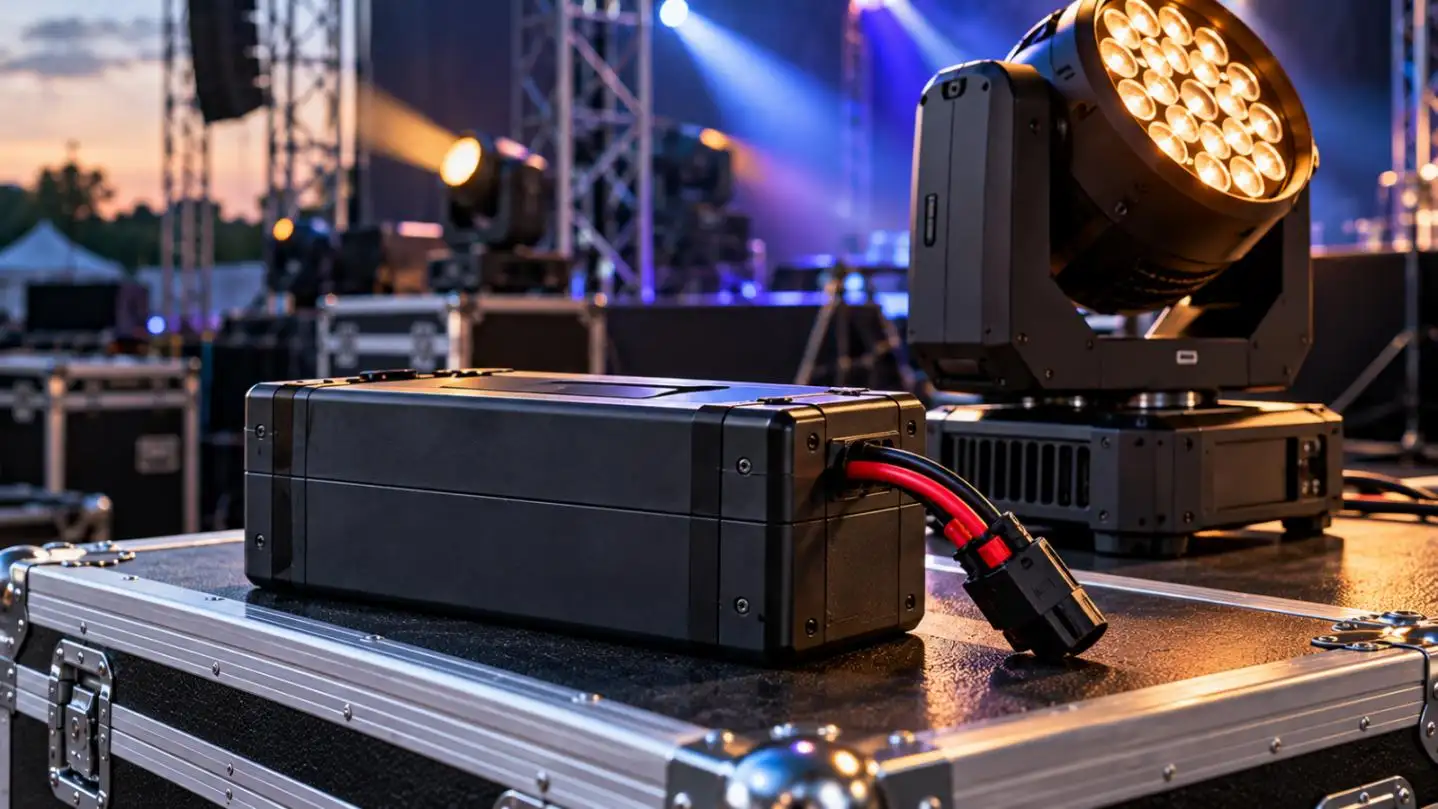
Stage Lighting Battery Pack: Prevent Voltage Drop & LED Flicker
2026-10-19

Best Rechargeable Batteries for Smart Devices: Performance, Safety, and Selection Guide
2026-10-19


