


 Home /
 Customising Your Lithium ion Battery for Wearable Devices – "One Device, One Cell"


Table of Contents
Wearable technology – from smartwatches and fitness trackers to medical patches and true wireless earbuds – has redefined how we interact with electronics. Yet, one component remains the biggest bottleneck to innovation: the power source. Unlike smartphones, which accommodate standardised prismatic or cylindrical cells, wearables demand a fundamentally different approach. The emerging industry standard is "one device, one cell" – a philosophy that tailors each Lithium ion Battery for Wearable Devices to the unique geometry, usage pattern, and safety requirements of its host product. This article explains why off-the-shelf batteries fall short, and how advanced engineering, exemplified by Gloflux's design methodology, turns customisation into a performance enabler.
The Form Factor Dilemma – Why Size and Shape Matter
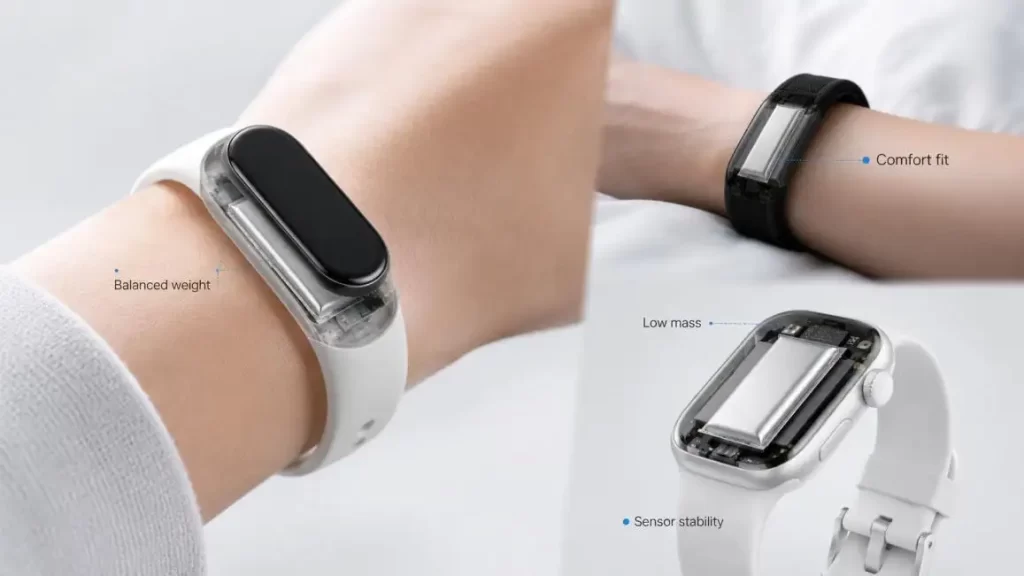
Wearable devices are defined by their intimate contact with the human body. This physical closeness imposes extreme constraints that standard battery formats simply cannot satisfy.
• Spatial inefficiency is the primary enemy: The internal cavity of a smart ring may be less than 3 mm thick, while a hearing aid must curve along the ear canal. A rigid, rectangular cell wastes precious millimetres, forcing designers to compromise on either battery capacity or product ergonomics.
• Weight distribution affects wearability: Every extra gram becomes noticeable during prolonged use. For sports bands and sleep trackers, a heavy battery shifts the centre of gravity, reducing comfort and potentially affecting sensor accuracy. A custom-shaped cell can be positioned to balance the device perfectly.
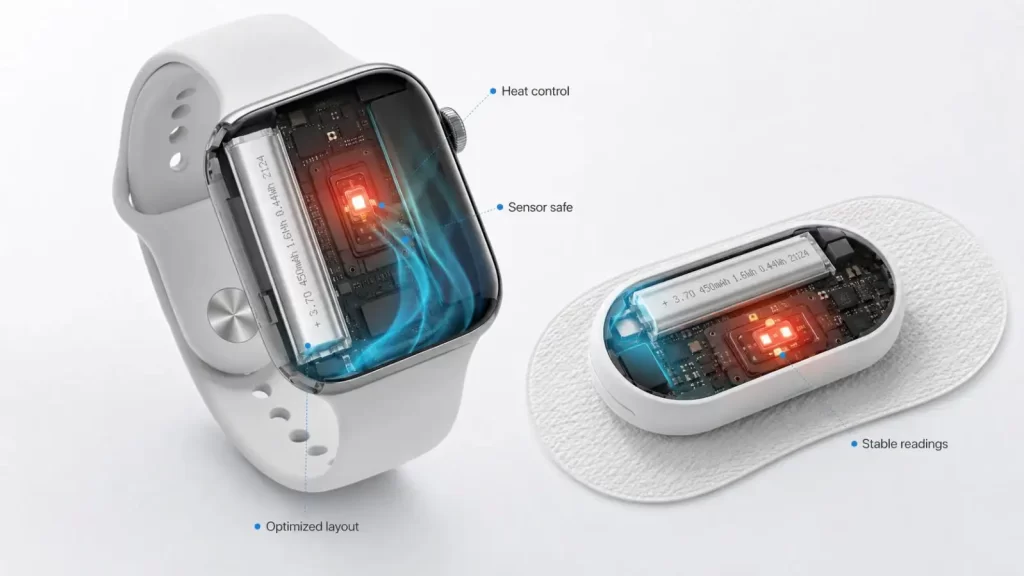
• Thermal management becomes critical in confined spaces: When a standard cell is squeezed into an unconventional compartment, hot spots may develop. Tailored cells allow engineers to place the Lithium ion Battery for Wearable Devices away from heat-sensitive components, such as optical heart-rate monitors, improving both safety and measurement stability.
Gloflux addresses these issues by offering flexible OEM customisation that adjusts not only dimensions but also connector types and circuit layouts. This ensures that the cell integrates seamlessly into the device's mechanical architecture, rather than forcing the device to adapt to the battery.
Safety and Reliability – More Than Just Electrical Performance
Wearables are worn against the skin, often during sleep or exercise, where sweat and movement create harsh operating conditions. A generic battery may lack the protective features needed for such environments.
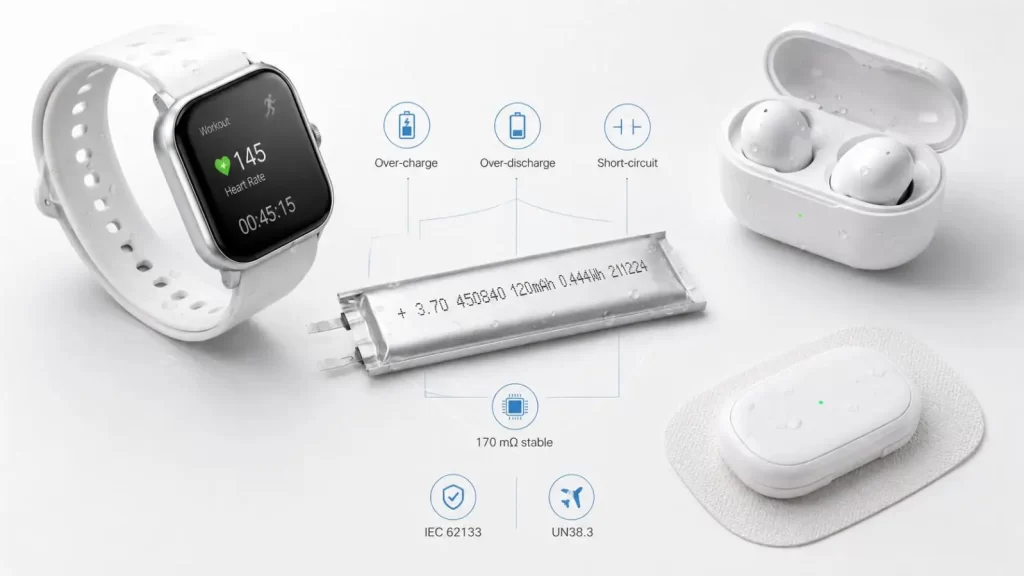
• Over-discharge and over-charge protection are non-negotiable: User behaviour varies widely – some charge nightly, others sporadically. A well-designed Lithium ion Battery for Wearable Devices incorporates multi-layer safeguards against voltage excursions, preventing premature aging or dangerous thermal events.
• Mechanical robustness under bending and twisting: Many wearables particularly smart garments and flexible patches are subjected to repeated deformation. Gloflux uses a pouch-cell design and reinforced aluminum-plastic laminate films which do not delaminate and do not develop internal short circuits when the device is flexible.
• Rational runtime thanks to constant internal resistance: the performance of wearable lithium ion batteries is closely related to the internal impedance. Gloflux's manufacturing process – including precise calendaring of electrodes and strict moisture control during electrolyte injection – yields cells with stable internal resistance (typically around 170 mΩ for compact formats), enabling accurate fuel-gauge readings and reliable low-battery warnings.
• Safety compliance is another pillar. All Gloflux cells undergo formation cycling, aging tests, and insulation verification, meeting IEC 62133 and UN38.3 standards – essential for global shipping and consumer peace of mind.
Customisation as a Performance Multiplier – Beyond Simple Fit
"One device, one cell" is not merely about geometric matching; it is about optimising the electrochemical system for real-world usage profiles.
• Capacity can be balanced against cycle life: A fitness band that charges daily may prioritise high cycle count (over 500 cycles) over ultimate capacity. Conversely, a medical patch that must last 72 hours on a single charge may accept a slightly shorter lifespan in exchange for higher energy density. Gloflux adjusts electrode composition and stacking pressure to meet these trade-offs.
• Charge voltage can be fine-tuned to the application: While 4.2 V is standard, some devices benefit from a lower cut-off to extend longevity. Customisation allows the battery management system (BMS) to be pre-configured for the device's specific charging algorithm.
• Connector and wiring options simplify assembly: Gloflux supports adding wires, PCBAs, and various connectors directly to the cell tabs. This reduces the number of interconnections in the final product, lowering failure rates and assembly costs – a critical advantage for high-volume wearables.
Furthermore, the ability to choose between different anode materials (e.g., graphite with silicon blends) and cathode chemistries (high-voltage or high-power variants) gives device designers a palette of performance characteristics, all within the same compact form factor.
The Manufacturing Edge – How Gloflux Delivers Consistency
Customisation is only valuable if it does not compromise quality. Gloflux's production line combines automated coating, precision stacking, and in-line inspection to ensure that every Lithium ion Battery for Wearable Devices meets stringent specifications.
• Electrode slurry mixing and coating are computer-controlled: Active materials, conductive additives, and binders are blended to a uniform viscosity, then applied evenly onto copper and aluminium foils. This homogeneity results in uniform capacity and reduced self-discharge.
• Lamination and pouch forming remove voids: After pouching, a cell is laminated, which means it is stacked with a separator and two electrodes, then laminated at a specific pressure and temperature. This step inhibits layer shifting, a major point of failure for thin batteries.
• Unlike others, every cell is formation tested and aged: Formation cycling is a way to fine the SEI and to anchor the anode and aging at high temperatures is used to clear the weak cells that are leaking high current. This step insures that the cells that are sent to customers have the lowest chance of failure.
When combined with Gloflux's flexible OEM service, this extensive process enables fast prototyping—samples can be sent out in a matter of weeks—favoring fast repeated product releases for both the established and fledgling brands in the wearable market.
Conclusion – The Future Is Custom, Not Compromise
As wearable devices become more specialised – from continuous glucose monitors to AR glasses – the demand for bespoke power solutions will only intensify. The standardised battery is a relic of an era when devices were rectangular boxes. Today, the Lithium ion Battery for Wearable Devices must be an integral part of the industrial design, not an afterthought.
Gloflux's approach to customisation – offering variable dimensions, connector options, safety circuits, and electrochemical tuning – embodies the "one device, one cell" paradigm. Manufacturers can create wearables that provide a better user experience by having longer runtimes, improved safety, and better comfort by having a better philosophy. The next time you put on a smart ring or a fitness patch, don't be surprised by the fact that the battery was made for you and not a display shelf.
Frequently Asked Questions
Q1: Will custom batteries be as safe as standard batteries?
A: Yes, custom batteries also include built in protections for over charge, over discharge, over current, and short circuit. They are also tested to the IEC 62133 and UN38.3 standards.
Q2: Will these batteries sustain flexing and bending during usage?
A: Flexing and bending is reliant on the dimensions and how the cell is built on the inside. The pouch-cell design encased in Aluminium-Plastics Laminate films provides good flexibility.
Q3: What options are available for cabling and connectors?
A: Gloflux provides additional wires, PCBs, and other connectors that can be attached directly to the tabs, making the last steps in assembly easier, as well as reducing failure points in interconnections.
Q4: What is the self-discharge rate of these small cells?
A: Small cell batteries self-discharge at a lower rate, however, it is best practice to charge every 6-12 months for long term storage.
Q5: Is this battery safe for transiting air trade internationally?
A: Yes, these batteries can be traded internationally as they have passed the UN38.3 transportation tests and certified safe per the standard tests of IEC 62133.
Talk to the Manufacturer
Resources & Insights
High Capacity Lithium Battery for Wearables: High-Voltage LiPo Cell Design
2026-10-19
Cylindrical Battery Packs for Laptops: 2S vs 3S vs 4S Battery Design
2026-10-19
Stage Lighting Battery Pack: Prevent Voltage Drop & LED Flicker
2026-10-19
Best Rechargeable Batteries for Smart Devices: Performance, Safety, and Selection Guide
2026-10-19


