


 Home /
 Partnering with a LiPo Battery Manufacturer for Wearables with Custom Curved Cells


Table of Contents
Wearable devices are increasingly defined by organic form factors—curved, ultra-thin, and designed to sit naturally on the body. As product geometries move away from rigid rectangles toward wrist-conforming, ring-shaped, and skin-adaptive designs, the battery can no longer remain a standard block component.
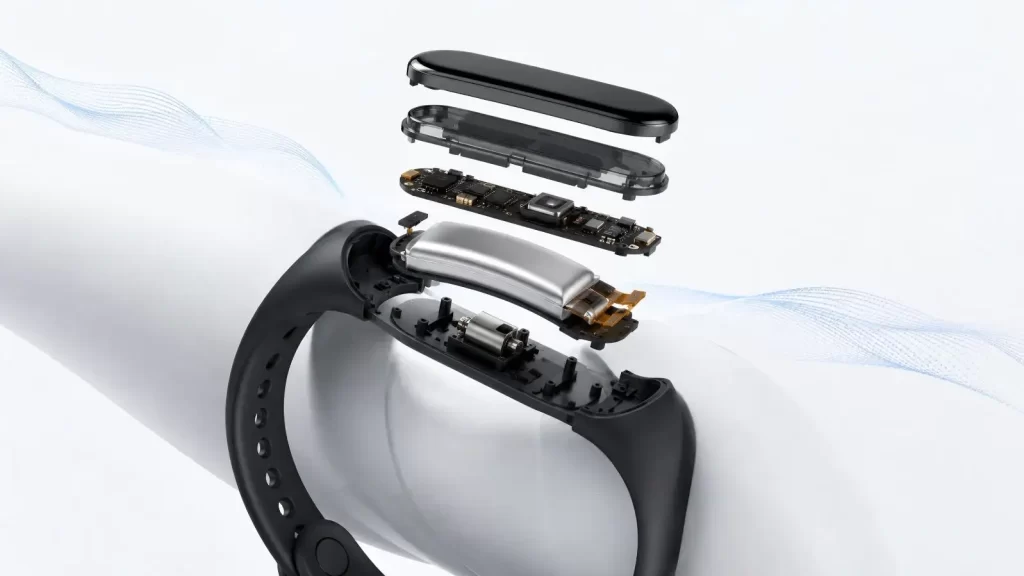
This shift is driving OEMs to collaborate directly with specialized LiPo battery manufacturers for wearables that can develop custom curved lithium-polymer cells, engineered specifically for constrained and non-linear spaces.
Gloflux uses application-driven design to manufacture custom Li-polymer batteries. Gloflux collaborates with OEMs to customize the battery architecture to meet the industrial design specifications, which enables customers to design around the requirements rather than using standard modular batteries.
Why Curved LiPo Cells Are Key in Wearables
Wearable technology in 2026 will continue the trend of smaller, lighter, and more compact designs. Along with research on wearables, it can be seen a trend towards using form-adaptive and flexible battery designs in smart rings, medical patches, and compact IoT devices.
Curved LiPo cells address three key engineering aspects that support this trend.
1. Ergonomics
Curved cells conform to the natural contours of the wrist, finger, and chest, which support design goals of:
•Comfortable to wear for long periods of time
•Minimally intrusive design
•Stable fit under motion
2. Better Use of Internal Volume
Curved cells open design spaces to more internal volume that can be used for:
•Wearable sensors (PPG, ECG, Temp)
•Antennas
•Haptic components
3. Better Function in Devices that Touch the Skin
Curved cells help ensure:
•Stable alignment of electrodes
•Stable contact of the adhesive
•Simple, clear signal output with no interference
•Co-engineering Approach: Battery as Part of Product Architecture
In the design of next-generation wearables, batteries are no longer a post-design consideration. Instead, they are an integrated part of the design and are co-engineered as a distinct subsystem with the other components.
Working with a dedicated LiPo battery manufacturer enables OEMs to align electrical, structural, and packaging constraints in parallel.

Key Design Collaboration Dimensions
1. Cell Geometry and Form Factor
Curved LiPo cells can be customized across:
•Length / width / thickness ratios
•Bending radius and arc profile
•Terminal placement and exit direction
Baseline wearable formats often used as starting points include compact cells in the ~13–16 mm width range with 30 mm length structures, which are then adapted to enclosure geometry.
2. Capacity Optimization
Micro-wearable curved cells generally operate on the lower end of the energy range. Typical values are:
•18 mAh to 22 mAh (baseline wearable configurations)
•Tuning for specific applications may be performed based on the duty cycle and transmission frequency.
The curvature design is a compromise against thermal limitations and the thickness of the enclosure.
3. Electrical Architecture
Traditional specifications on wearable LiPo batteries include:
•Nominal voltage: 3.7V (single cell Li-ion chemistry)
•Possibility of integration of a Protection Circuit Module (PCM)
•Customization of lead wires tabs (FPC) or connectors.
Internal resistance is highly design specific but generally falls in the range of 100 to 200 mΩ. This range is highly dependent on the method of packaging used as well as the rate of discharge and electrode surface area.
4. Prototype Iteration and Validation
Before mass production, manufacturers typically provide:
•Form-fit physical samples
•Electrical baseline testing
•Mechanical insertion validation within housings
•Bend or flex cycle reliability testing (for curved configurations)
This ensures the battery design is verified under real assembly and usage conditions.
Reference Curved Cell Design Baselines
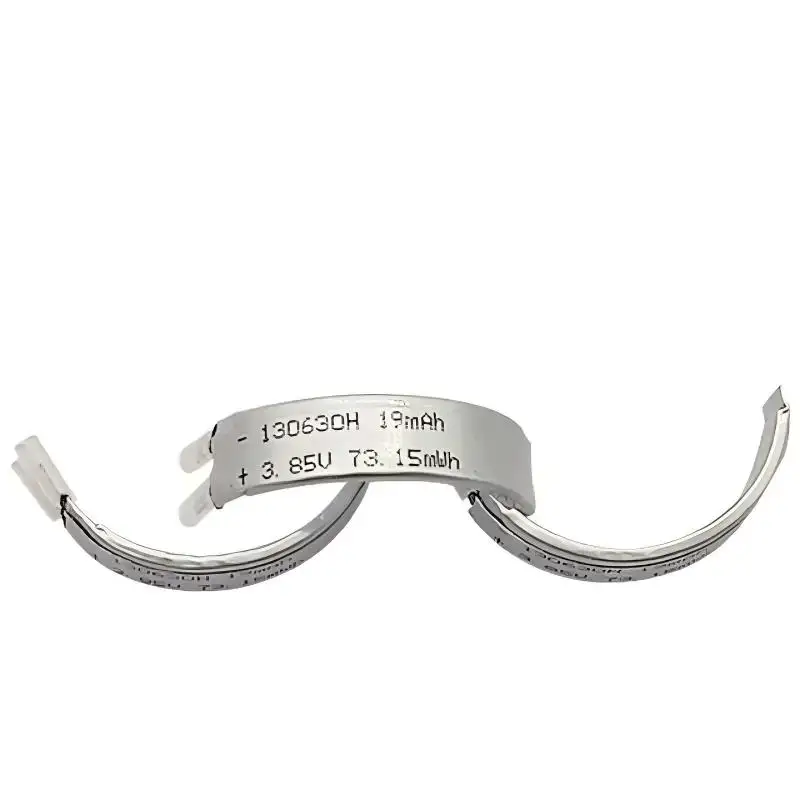
The following table summarizes commonly referenced wearable LiPo structures used as engineering starting points. All parameters are customizable depending on enclosure geometry and power requirements.
| Model | Typical Dimensions (mm) | Capacity Range (mAh) | Nominal Voltage | Customizable Elements |
| 150630 | 1.5 × 6 × 30 | ~20 mAh | 3.7V | Tab position, wire direction, PCM integration |
| 130630 | 1.3 × 6 × 30 | 19–22 mAh | 3.7V | Bend radius, connector type, lead length |
| 160630 | 1.6 × 6 × 30 | 18–22 mAh | 3.7V | Thickness tuning, protection circuit, casing fit |
�� Note: These are baseline engineering formats. Final geometry is always adjusted based on enclosure CAD, thermal constraints, and system-level power budgets.
Structured Development Process with a Battery Partner
A typical professional workflow for the development of a battery for wearables will adopt a staged validation strategy.
1. Requirement & Feasibility Review
•Analysis of the device geometry and internal layout
•Analysis of the device's power consumption
•Feasibility assessment of the integration of curved or non-standard cells
2. Prototype Development
•Manufacture of sample cells in the agreed geometry
•Testing of the cell fit in the device enclosure
•Tabs, connectors, and cell curvature will be adjusted iteratively
3. Performance Validation
•Testing of the cells' capacity and discharge curves
•Testing the stability of the cell under load and the effect of mechanical stress of curvature
4. Scalable Production
•A planned increase of production volume with in-process validation of quality
•Testing of cells for consistency of voltage and impedance and for dimensional tolerance
Application Scenarios for Curved Wearable Cells
There are numerous applications for curved batteries in compact, body-adaptive electronics due to the limitations of standard prismatic cells.
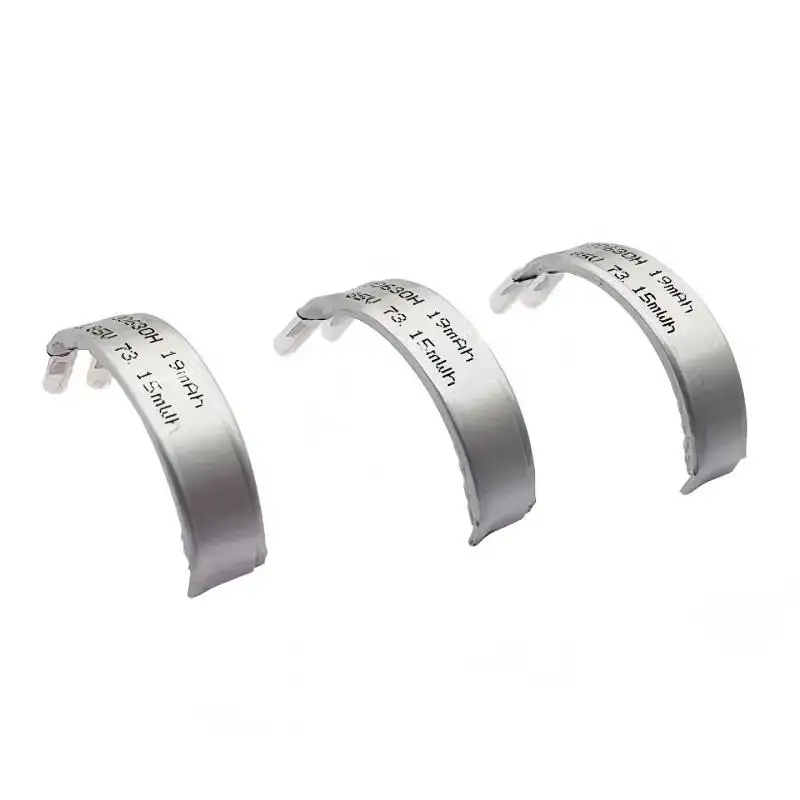
Smart Rings
These require curved micro cells to provide spaces for:
•PPG and gesture detection sensors
•NFC and BLE modules
Medical Wearable Patches
These require curved, flexible batteries to provide:
• Continuous contact with the skin for biosensing
• Comfortable wear for many days
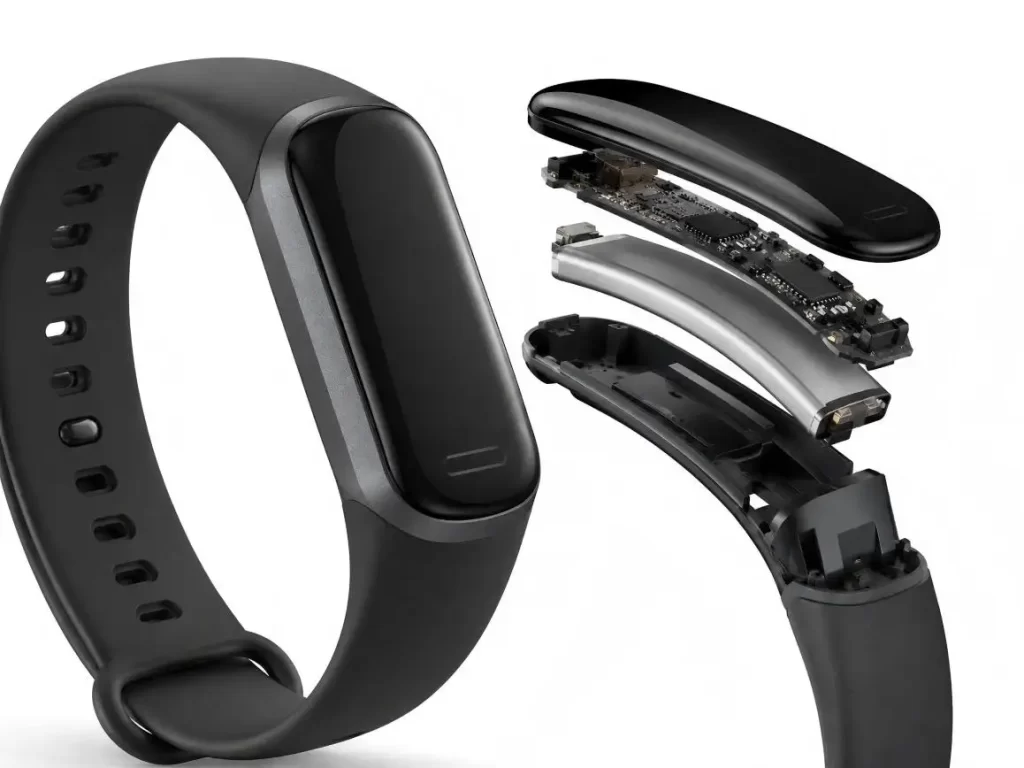
Compact Tracking Devices
These require curved, flexible batteries to provide:
• A slim form factor and a low-profile design
• An ideal energy-to-size ratio
Miniaturized IoT Sensors
These require curved, flexible batteries to provide:
• A reduced form factor for embedded use
• A long duration, low power consumption
Conclusion: Designing Around the Battery Changes Everything
As wearable devices continue to shrink and conform more closely to the human body, battery design becomes a defining constraint in product design.
A partnership with a custom LiPo battery producer for wearables allows design teams to shift toward an integrated design philosophy where the energy system accommodates the product shape.
If your project needs custom battery solutions that are curved and extremely compact, the custom LiPo cell families—130630, 150630, and 160630—are good examples for initial design collaboration.
The earlier collaboration begins, the more product teams are free to enhance user comfort and optimize the internal structure of the device for better performance in the long run.
FAQ
Q1. What are the advantages of using curved batteries in wearables?
Curved batteries help improve the comfort of the user and help with the design of compact and integrated body-worn devices.
Q2. Can Lithium Polymer batteries bend?
Lithium Polymer batteries are not like rubber and cannot be easily bent, but they can be designed to have a curve or a semi-flexible shape.
Q3. What is the voltage of wearable Lithium Polymer cells?
The typical voltage of wearable Lithium Polymer cells is a nominal value of 3.7V.
Q4. What is the typical capacity of wearable curved cells?
The typical capacity of wearable curved cells is between 18 mAh and 22 mAh with ultra-compact devices and depending on the design of the device.
Q5. Can curved Lithium Polymer batteries be customized?
Curved Lithium Polymer batteries can be customized for size, connectors, protection circuits, and capacity.
Talk to the Manufacturer
Resources & Insights
High Capacity Lithium Battery for Wearables: High-Voltage LiPo Cell Design
2026-10-19
Cylindrical Battery Packs for Laptops: 2S vs 3S vs 4S Battery Design
2026-10-19

Stage Lighting Battery Pack: Prevent Voltage Drop & LED Flicker
2026-10-19

Best Rechargeable Batteries for Smart Devices: Performance, Safety, and Selection Guide
2026-10-19


