


 Home /
 Li-Polymer Battery Pack for Tablets: How to Balance Slim Design and High Capacity


Table of Contents
- What Controls Tablet Battery Thickness and Capacity?
- Why Li-Polymer Batteries Fit Thin Tablets
- Main Trade-Offs Between Slimness and Capacity
- Ultra-Thin Does Not Mean Zero Clearance
- Battery Placement Affects Thermal Performance
- Standard-Voltage vs. High-Voltage Li-Polymer Cells
- PCM and Intelligent BMS Design
- Cycle Life, Fast Charging, and Capacity Retention
- Gloflux Custom Li-Polymer Battery Pack for Tablets
Tablet manufacturers face a difficult combination of design targets: a thinner enclosure, lower product weight, longer operating time, faster charging, and stable battery life. These requirements compete for the same limited internal space.
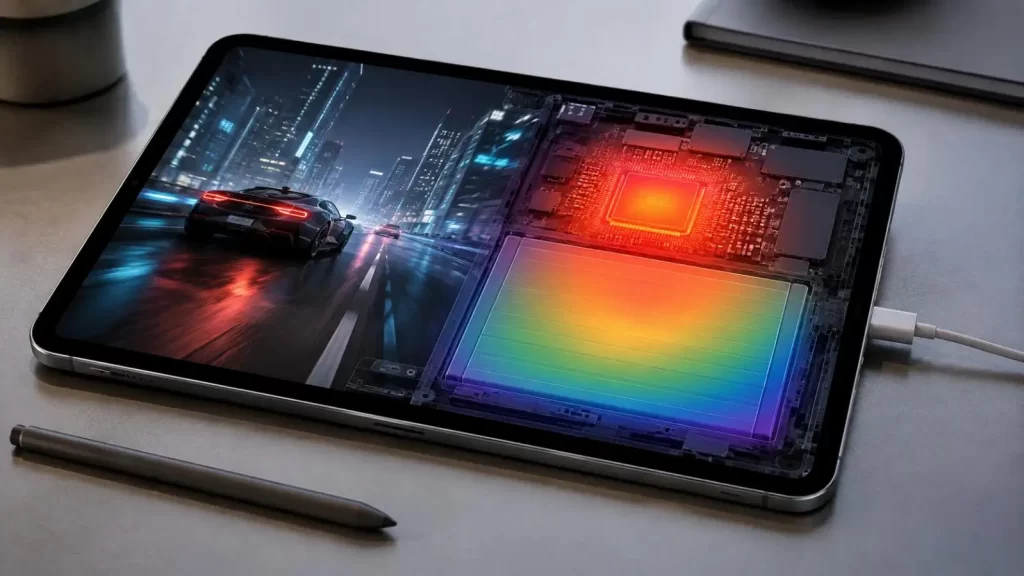
A well-engineered Li-Polymer Battery Pack for Tablets must balance cell volume, volumetric energy density, discharge efficiency, thermal behavior, mechanical clearance, charging architecture, and expected service life. Simply selecting the highest-capacity cell is not enough. The battery must operate safely alongside the processor, display, antennas, speakers, charging circuit, and structural frame.
What Controls Tablet Battery Thickness and Capacity?
Battery capacity is closely related to three physical dimensions:
• Thickness
• Width
• Length
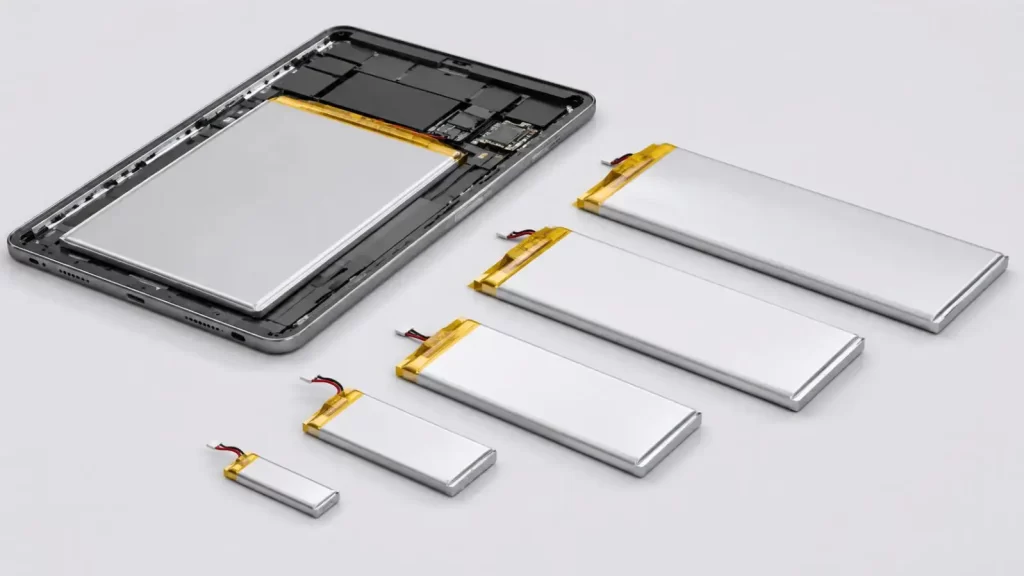
Reducing thickness usually removes active electrode material and lowers capacity. One practical approach is to increase the battery's width or length, provided the tablet has a sufficiently large, uninterrupted internal area.
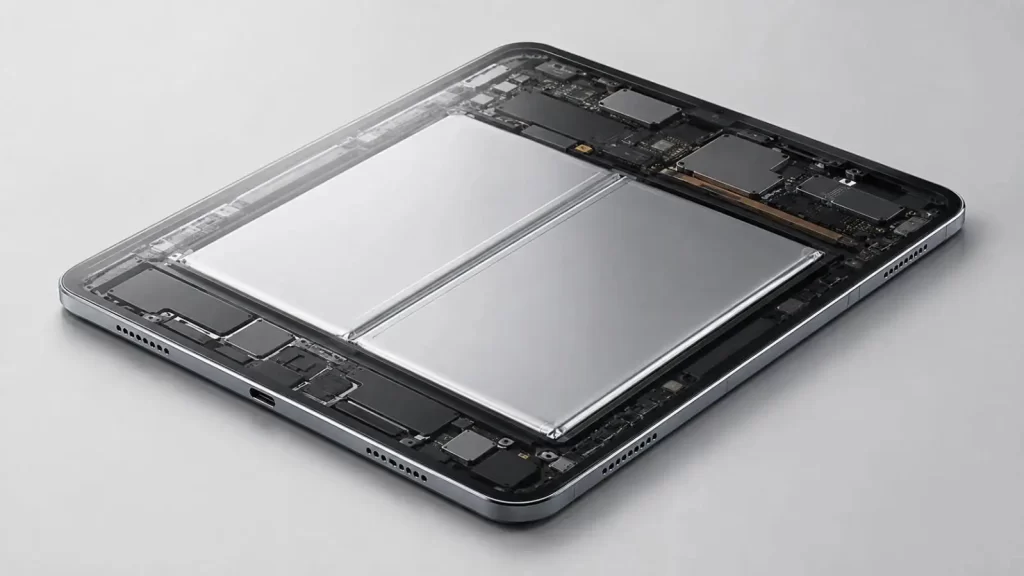
A pouch-type Li-Polymer Battery Pack for Tablets is well suited to this layout. Unlike cylindrical cells, it can be manufactured as a wide, flat power source positioned beneath the display or rear housing.
Volumetric Energy Density
Volumetric energy density indicates how much energy can be stored within a given battery volume. It is important for slim devices, but it should not be evaluated independently.
A higher-density cell must still meet project requirements for:
• Cycle life
• Charging voltage
• Internal resistance
• Heat generation
• Cell expansion
• Discharge current
• Safety margin
The usable battery compartment must also account for the mainboard, cameras, antennas, display electronics, speakers, USB interface, thermal materials, and reinforcement structures. For this reason, custom battery development should begin with the actual three-dimensional chassis layout.
Why Li-Polymer Batteries Fit Thin Tablets
A Li-Polymer Battery Pack for Tablets uses a flexible pouch construction rather than a rigid cylindrical metal shell. This allows engineers to adapt the cell and pack structure to the available enclosure.
Key design advantages include:
• Thin and wide cell geometry
• Custom thickness, width, and length
• High internal-space utilization
• Lower packaging weight
• Flexible cable and connector positions
• Single-cell or multi-cell configurations
• Compatibility with flat electronic enclosures
The advantage is not simply that Li-Polymer technology is "better." Its geometry is more compatible with the broad, shallow internal structure of a tablet.
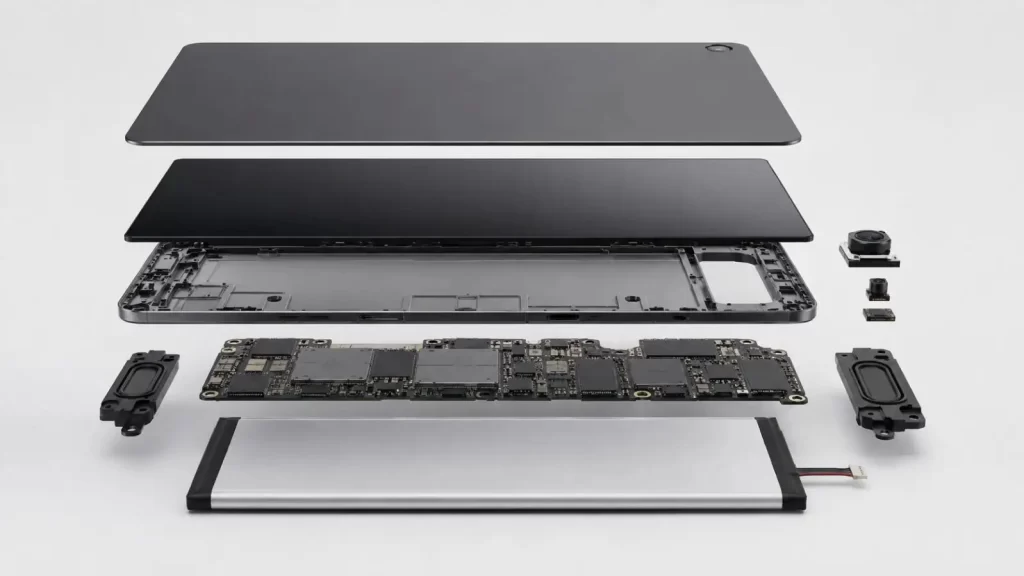
Main Trade-Offs Between Slimness and Capacity
| Design Decision | Engineering Benefit | Main Limitation |
| Reduce cell thickness | Supports a slimmer tablet | Lowers active-material volume |
| Increase width or length | Recovers capacity without added thickness | Requires more continuous chassis space |
| Use high-voltage chemistry | Increases usable energy within a similar footprint | Requires compatible charging and protection |
| Increase electrode loading | Improves energy density | Can raise resistance and thermal stress |
| Reduce clearance | Improves space utilization | Limits tolerance for swelling and impact |
| Increase total capacity | Extends runtime | Adds weight and charging time |
Ultra-Thin Does Not Mean Zero Clearance
A thin tablet battery still requires mechanical allowance for:
• Normal cell expansion
• Adhesive and insulation thickness
• Cushioning materials
• Manufacturing tolerances
• Enclosure deformation
• Drop and impact protection
Placing the pouch cell directly against the display, frame, or rear cover can create localized pressure. Over time, even normal dimensional changes may affect the battery or surrounding components.
Battery Placement Affects Thermal Performance
The battery should not be positioned directly against concentrated heat sources such as the processor, charging controller, or wireless communication module.
Thermal validation should cover realistic high-load conditions, including:
• Gaming while charging
• Video streaming at high brightness
• Continuous wireless communication
• Navigation or positioning applications
• Outdoor use under direct sunlight
• Fast charging with simultaneous system load
These conditions often reveal thermal problems that are not visible during standby testing.
Standard-Voltage vs. High-Voltage Li-Polymer Cells
High-voltage systems can increase the available energy in a similar cell volume, making them useful for slim tablets with demanding runtime targets.
| Cell System | Main Characteristic | Typical Application |
| Standard-voltage Li-Polymer | Mature charging architecture and stable cycle performance | General-purpose tablets |
| 4.35V system | Higher usable energy within a similar footprint | Slim consumer and education tablets |
| 4.4V system | Greater energy-density potential | Premium tablets with advanced power management |
Higher charging voltage is not automatically the best option. A high-voltage Li-Polymer Battery Pack for Tablets requires compatible:
• Charging IC settings
• Charge cut-off voltage
• Fuel-gauge calibration
• Protection thresholds
• Thermal-control logic
• Cycle-life targets
• Cell qualification procedures
The final chemistry should be selected according to the full device architecture rather than energy density alone.
PCM and Intelligent BMS Design
Even a single-cell Li-Polymer Battery Pack for Tablets requires electrical protection. A basic Protection Circuit Module typically provides:
• Overcharge protection
• Over-discharge protection
• Over-current protection
• Short-circuit protection
• Temperature monitoring
• Cell-voltage supervision
Some consumer tablets use a simple PCM while placing the fuel gauge on the mainboard. Commercial, industrial, medical, or premium tablets may use an intelligent Battery Management System.
Optional communication and monitoring functions include:
• I²C, SMBus, or HDQ communication
• State-of-charge reporting
• Remaining-capacity estimation
• Cycle-count recording
• Temperature data
• Battery identification
• Fault and diagnostic reporting
The protection architecture should match the charger, operating system, power-management IC, and service requirements.
Cycle Life, Fast Charging, and Capacity Retention
A well-made Li-Polymer Battery Pack for Tablets should maintain at least 80% capacity after 500 charge-discharge cycles, ideally more. This represents reference design goals and is not to be interpreted as a definitive guarantee.
Virtually every factor that impacts the useful life of a cell or pack can be attributed to:
• Chemistry of the cell
• Top voltage for charging
• Charge and discharge rate
• Depth of discharge
• Temperature of the battery
• Charge state of the battery at rest
• Time spent at high voltage
• Combined charging and accessing the plug while the system is under heavy load
Faster charging speeds improve convenience, but come at a cost to cell health with a thermally limited, time-of-charge optimized charging profile being necessary for retention of capacity over a long usage cycle.
Gloflux Custom Li-Polymer Battery Pack for Tablets
Gloflux delivers custom designed solutions for Li-Polymer Battery Packs for Tablets based on the available chassis space, functional need, charging requirements, usage conditions and select regulatory constraints.
The battery pack can be customized in:
• Thickness, width, and length
• Cable direction and length
• Connector type and position
• Protection-board dimensions
• Standard, 4.35V, or 4.4V cell systems
• PCM or intelligent BMS configuration
• I²C, SMBus, or HDQ communication
Gloflux can also engineer the battery around capacity retention, low self-discharge, thermal monitoring, and application-specific protection thresholds. Production is managed under an ISO9001 quality system, while safety and transport testing can be prepared according to the final design and destination market.
Conclusion
The optimum Li-Polymer Battery Pack for Tablets is not simply the thinnest cell or the highest-capacity option. It is a system-level solution that balances internal volume, runtime, weight, charging speed, heat generation, mechanical protection, cycle life, and regulatory requirements.
Gloflux provides battery design evaluations for tablet manufacturers by considering many factors including space available in battery compartments, voltage, power consumption, charging/communication requirements, and desired runtime. From a space-constrained manufacturing perspective, an engineering solution for a custom battery has greater value.
FAQs
Q1. Does Gloflux make custom Li-Polymer Battery Packs for tablets?
Yes. Gloflux can customize battery size to include the tablet's internal design, along with battery thickness, width, length, capacity, voltage, cable direction, connector placement, the size of the protection board, and the enclosure.
Q2. What information does Gloflux need to create customized tablet batteries?
The information Gloflux needs includes battery compartment dimensions, the battery capacity, volts, maximum charging volts, operation current, the connector, length of time battery should operate, and the targeted customer segment.
Q3. How thin can a tablet battery pack be from Gloflux?
Gloflux can begin the design of ultrathin Li-Polymer batteries from a minimum of about 1.5 mm. The final thickness of the battery would depend on capacity, cell chemistry, the protection components, and also other safety considerations.
Q4. Does Gloflux provide tablets with high voltage Li-Polymer cells?
Yes. Gloflux can evaluate 4.35V or 4.4V Li-Polymer cell systems. The protection and charging ICs need to be set along with the fuel gauge.
Q5. What other protection functions can Gloflux provide?
Some of the protection functions that we can integrate into a custom battery design include overcharge, over-discharge, voltage monitoring, temperature control, and protection against short circuit.
Talk to the Manufacturer
Resources & Insights
High Capacity Lithium Battery for Wearables: High-Voltage LiPo Cell Design
2026-10-19
Cylindrical Battery Packs for Laptops: 2S vs 3S vs 4S Battery Design
2026-10-19

Stage Lighting Battery Pack: Prevent Voltage Drop & LED Flicker
2026-10-19

Best Rechargeable Batteries for Smart Devices: Performance, Safety, and Selection Guide
2026-10-19


