Home /
Breast Pump Battery Protection Circuit: BMS and Charging Safety Guide


Table of Contents
- 1. Why Breast Pump Battery Protection Matters
- 2. What Is a Breast Pump Battery Protection Circuit?
- 3. Essential Battery Protection Functions
- 4. Charging Circuit Design for Rechargeable Breast Pumps
- 5. Battery Protection for 1S and 2S Designs
- 6. Safety Testing Before Mass Production
- 7. OEM Battery Protection Design with Gloflux
- Conclusion
- Frequently Asked Question
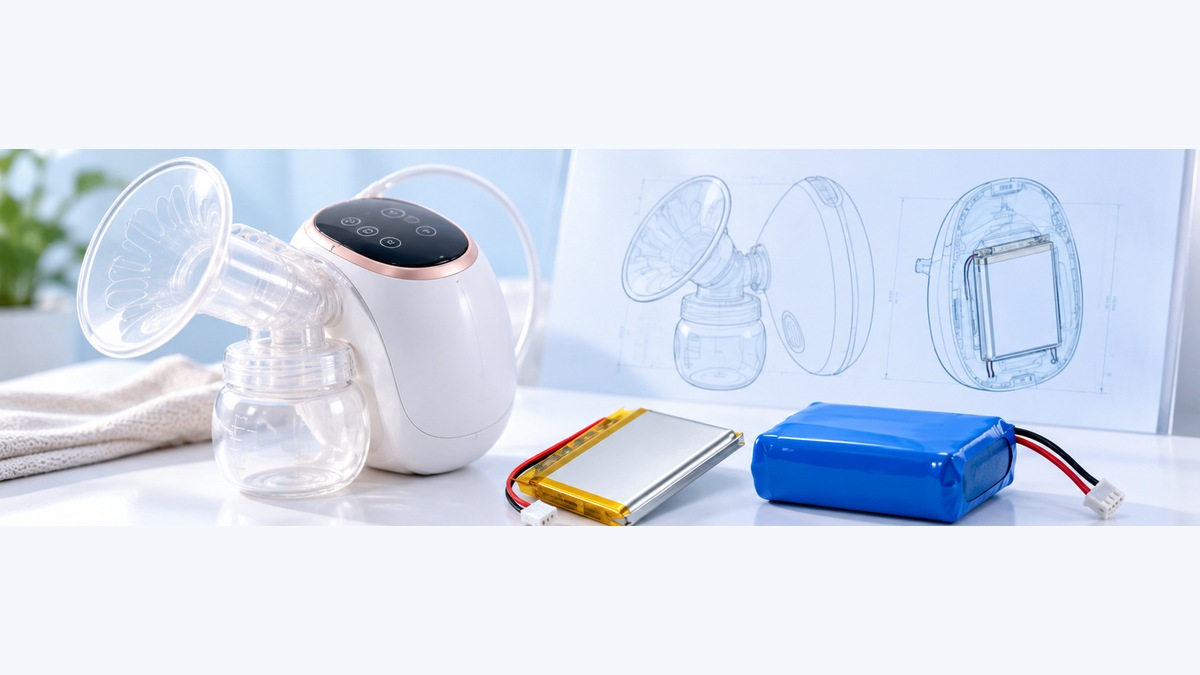
Rechargeable breast pumps require more than a battery with suitable voltage and capacity. A properly designed breast pump battery protection circuit helps control electrical risks during charging, discharging, and everyday operation.
For OEM breast pump manufacturers, battery safety involves coordination between the lithium-ion cells, protection circuit, charging electronics, and device control system. Poor integration can cause unexpected shutdowns, excessive heating, or reduced battery life.
This guide explains the functions of battery protection circuits, BMS and PCM solutions, charging management, and essential safety considerations for rechargeable breast pump development.
1. Why Breast Pump Battery Protection Matters
Electric breast pumps combine a motor, control electronics, and rechargeable battery inside a relatively compact housing.
During operation, motor startup and changes in suction settings can create varying current demands. During charging, the cells must remain within their specified voltage and temperature limits.
A suitable protection system helps address several potential problems:
- Cell overcharging during abnormal charging conditions
- Excessive battery discharge
- Overcurrent and short-circuit faults
- Unacceptable battery temperatures
- Voltage imbalance in applicable multi-cell packs
Protection circuits reduce electrical risks but cannot guarantee safety under every failure condition. The complete device must also be evaluated through appropriate testing.
2. What Is a Breast Pump Battery Protection Circuit?
A lithium battery protection circuit monitors selected electrical conditions and disconnects charging or discharging when defined fault thresholds are exceeded.
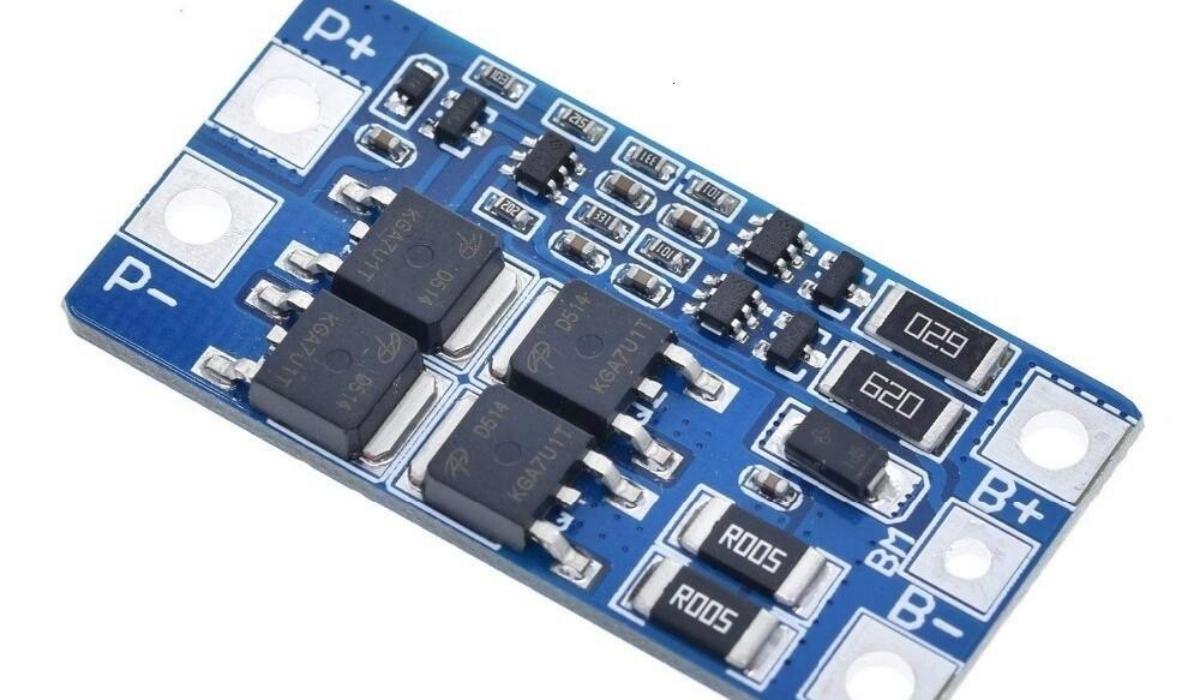
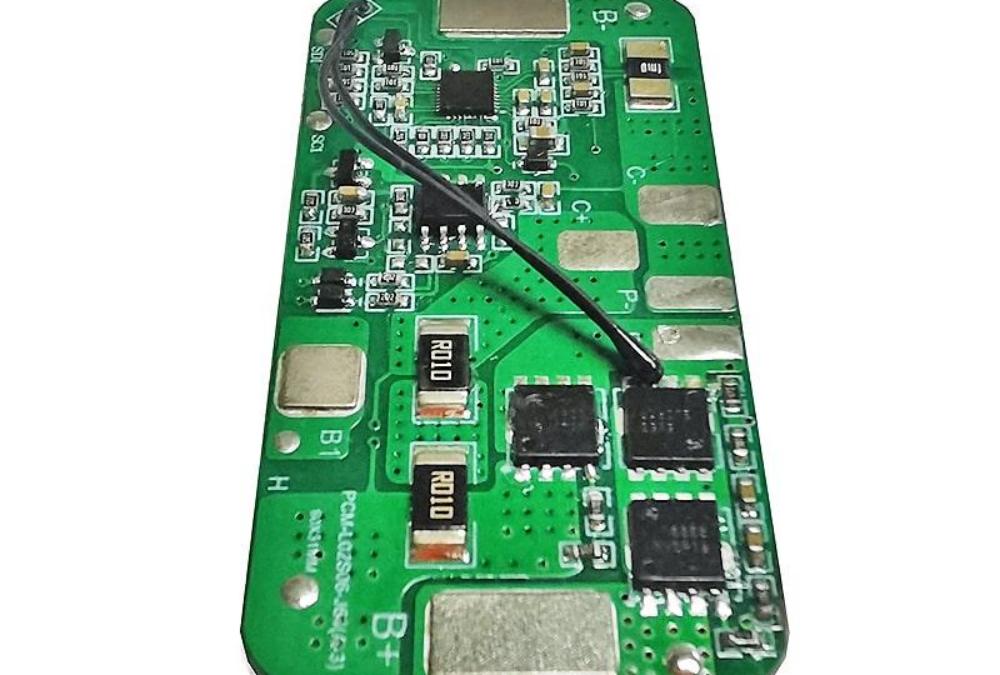
A typical protection circuit may contain a protection IC, MOSFETs, resistors, and sensing components.
The exact architecture depends on the battery configuration and required protection functions.
BMS vs. PCM: Understanding the Difference
A Protection Circuit Module (PCM) generally provides fundamental functions such as overcharge, overdischarge, and overcurrent protection.
A Battery Management System (BMS) may incorporate additional monitoring, balancing, diagnostics, or communication functions.
However, these terms are sometimes used interchangeably in commercial battery specifications.
For compact breast pumps, a relatively simple PCM may be sufficient when the complete charging and device-control architecture provides the necessary functions.
Manufacturers should evaluate actual circuit capabilities rather than relying on the name alone.
3. Essential Battery Protection Functions
Overcharge Protection
Overcharging can damage lithium-ion cells and increase safety risks.
The protection circuit should detect when cell voltage exceeds its specified threshold and interrupt charging under the designed fault conditions.
Protection thresholds must be selected according to the battery cell manufacturer's specifications.
Overdischarge Protection
Excessive discharge may permanently degrade lithium-ion cells.
An overdischarge protection circuit disconnects the battery when the monitored voltage reaches a defined lower limit.
The breast pump's normal low-battery shutdown should generally occur before the protection circuit activates.
Overcurrent and Short-Circuit Protection
Electric motors can draw higher current during startup than during normal operation.
Protection settings must distinguish acceptable motor startup current from abnormal overload or short-circuit conditions.
Incorrect settings may cause unnecessary shutdowns or fail to provide the intended protection.
Temperature Monitoring
An NTC thermistor can provide temperature information to a compatible charger, controller, or protection system.
Manufacturers should evaluate temperature limits during charging, prolonged pumping sessions, and expected environmental conditions.
Temperature sensing alone is insufficient unless the connected electronics respond appropriately.
4. Charging Circuit Design for Rechargeable Breast Pumps
The charging circuit and battery protection circuit perform different functions.
A charger regulates charging current and voltage according to the selected cell chemistry. The protection circuit provides an additional layer of fault protection.
For conventional lithium-ion cells with a maximum charging voltage of 4.2V per cell:
- A 1S configuration typically charges up to 4.2V.
- A 2S configuration typically charges up to 8.4V.
These values are examples, not universal charging specifications.
For products using a two-cell configuration, read our 7.4V Breast Pump Battery Design Guide to understand voltage compatibility and battery integration.
Does USB-C Provide Battery Protection?
USB-C is a connection and power-delivery interface. It does not independently perform lithium-ion charging control.
A breast pump with USB-C charging still requires appropriate charging electronics, voltage regulation, and battery protection.
Manufacturers should also evaluate charging behavior when the device is operating, if simultaneous charging and pumping are supported.
5. Battery Protection for 1S and 2S Designs
Single-cell and two-cell battery packs have different monitoring requirements.
A 1S pack typically uses a protection solution suitable for one lithium-ion cell.
A 2S pack requires monitoring appropriate to two series-connected cells. Depending on the selected architecture, cell balancing may also be necessary.
Engineers should review cell matching, voltage monitoring, protection thresholds, and wiring connections before finalizing the battery design.
For compact devices, protection circuit dimensions and connector placement may also influence the internal layout.
Our Wearable Breast Pump Battery Selection Guide explains how battery dimensions, motor requirements, and packaging affect OEM design decisions.
6. Safety Testing Before Mass Production
A suitable protection circuit must be validated under realistic operating conditions.
Important evaluations may include:
- Overcharge and overdischarge protection response
- Overcurrent and short-circuit fault behavior
- Motor startup and peak-current performance
- Charging and discharging temperature measurements
- Protection recovery and abnormal shutdown behavior
- Connector, wiring, and insulation integrity
Testing should cover both the battery assembly and its interaction with the finished breast pump.
Applicable regulatory, safety, and transportation requirements should also be assessed for the intended markets, including IEC 62133-2 and UN 38.3 where relevant.
Compliance cannot be established solely by selecting cells with existing certificates.
7. OEM Battery Protection Design with Gloflux
Gloflux supports B2B lithium battery customization for rechargeable equipment manufacturers.
Depending on the application, an OEM breast pump battery project may involve cell selection, protection circuit integration, NTC sensors, custom wiring, and connector specifications.
To evaluate a battery protection design, manufacturers should provide:
- Battery configuration, voltage, and capacity
- Continuous and peak operating current
- Available battery compartment dimensions
- Charging input and charging control requirements
- Expected production quantity
These details help determine an appropriate battery architecture and identify testing requirements before production.
Explore our Custom Lithium Battery Solutions to discuss your OEM development requirements.
Conclusion
A well-designed breast pump battery protection circuit is an important part of rechargeable breast pump safety.
For OEM manufacturers, selecting a PCM or BMS should involve more than comparing protection features. Charging control, motor behavior, temperature monitoring, and device-level testing must work together.
Gloflux can assist B2B customers in evaluating customized lithium battery pack designs according to their technical specifications and production requirements.
Frequently Asked Question
Does a breast pump battery need a BMS or protection circuit?
Rechargeable lithium-ion breast pump systems need suitable electrical protection. A compact single-cell battery may use a PCM, while more complex multi-cell designs may require additional monitoring or management functions. The appropriate solution depends on cell configuration, charging architecture, motor current, and device safety requirements.