Home /
Custom Breast Pump Battery Packs: OEM Design and Manufacturing Guide


Table of Contents
- 1. Why OEM Manufacturers Choose Custom Breast Pump Batteries
- 2. Selecting Battery Cells for Breast Pump Applications
- 3. Customizing Voltage, Capacity, and Battery Configuration
- 4. Mechanical Integration and Connector Customization
- 5. Protection Circuits and Charging Compatibility
- 6. From Battery Prototype to Production Approval
- 7. Manufacturing Quality and Certification Considerations
- 8. Working with Gloflux on OEM Battery Development
- Conclusion
- Frequently Asked Question
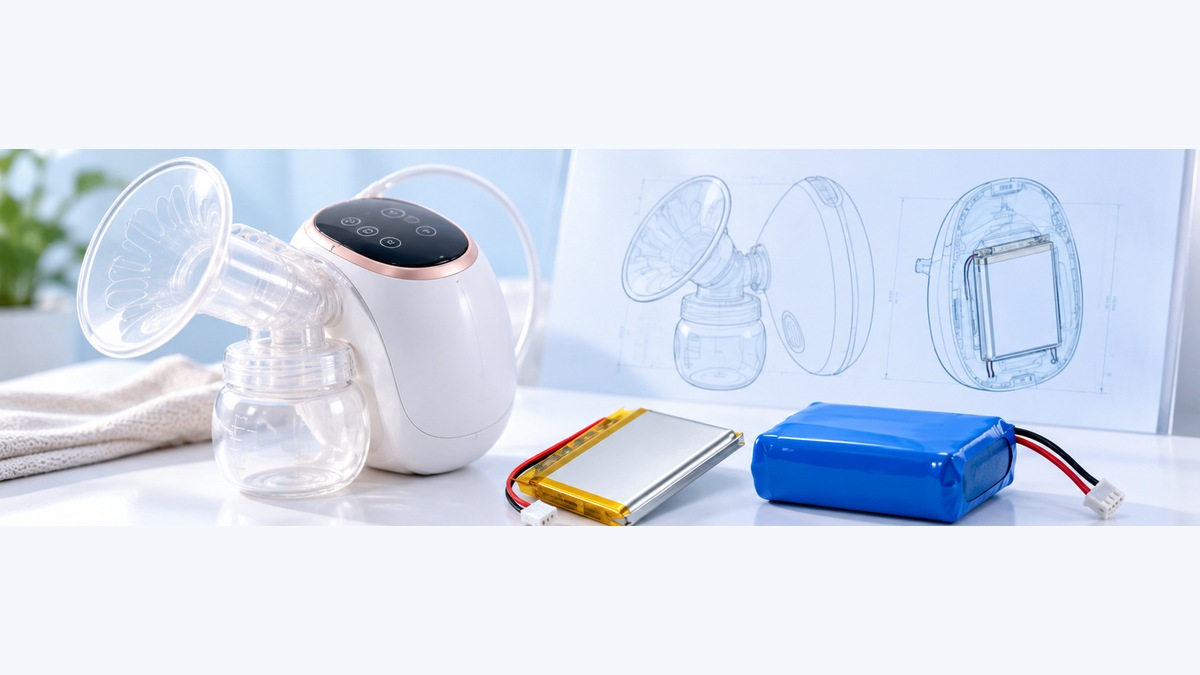
Developing a rechargeable breast pump requires a battery solution that meets the device's electrical, mechanical, and production requirements. For equipment manufacturers, selecting custom breast pump battery packs involves more than choosing a suitable capacity or battery size.
The battery must work with the motor, charging electronics, enclosure, and intended operating conditions. Decisions made during early development can influence product reliability, assembly efficiency, and manufacturing costs.
This guide explores OEM battery customization, engineering requirements, prototype evaluation, and production considerations for rechargeable breast pump manufacturers.
1. Why OEM Manufacturers Choose Custom Breast Pump Batteries
Standard battery packs may not match the available space, connector arrangement, or electrical requirements of a newly developed breast pump.
Custom battery development allows manufacturers to evaluate a configuration around their specific equipment design.
Typical customization requirements include:
- Battery voltage and rated capacity
- Cell chemistry and physical dimensions
- Continuous and peak discharge current
- Protection circuit and temperature sensing
- Connector type, polarity, and cable length
- Insulation, packaging, and mounting arrangements
The objective is not simply to reduce battery size. A successful design must provide the required electrical performance while remaining compatible with the complete device.
2. Selecting Battery Cells for Breast Pump Applications
Cell selection is an important early engineering decision.
Lithium Polymer Battery Cells
Lithium polymer pouch cells are commonly considered for compact rechargeable equipment because they are available in different thicknesses and rectangular dimensions.
For wearable breast pumps, this packaging flexibility can help engineers use limited internal space.
However, pouch cells require suitable mechanical protection against compression, puncture, and other stresses.
Cylindrical Lithium-Ion Cells
Cylindrical cells, including 18650 formats, may be considered when the enclosure accommodates their dimensions.
They offer standardized mechanical formats and various capacity and discharge-current options.
The appropriate choice depends on the device rather than a universal preference for one cell format.
Manufacturers should compare dimensions, operating current, energy requirements, and installation constraints before selecting cells.
3. Customizing Voltage, Capacity, and Battery Configuration
Breast pumps can use different battery architectures depending on their motor and control electronics.
A conventional lithium-ion 1S configuration typically has a nominal voltage of approximately 3.7V, while a 2S configuration commonly provides 7.4V nominal voltage.
Neither configuration is suitable for every breast pump.
OEM engineers should confirm:
- Motor and controller operating voltage range
- Average power consumption
- Startup and peak motor current
- Required runtime between charges
- Charging voltage and current requirements
Battery capacity should be determined from measured power consumption and the required operating time, with appropriate allowances for system efficiency and operating conditions.
For devices using a two-cell architecture, read our 7.4V Breast Pump Battery Design Guide for additional electrical design considerations.
4. Mechanical Integration and Connector Customization
Battery installation can create challenges during product development, particularly in wearable equipment.
The battery pack must fit within the available compartment without interfering with motors, control boards, fasteners, or other components.
Engineers should supply accurate mechanical drawings showing the battery installation area and nearby structures.
Important details include maximum length, width, thickness, connector location, and cable routing.
Connector selection should consider current rating, contact reliability, polarity protection, and assembly requirements.
A battery that fits inside a prototype housing may still require design adjustments before volume production to accommodate tolerances, cable routing, and production assembly.
5. Protection Circuits and Charging Compatibility
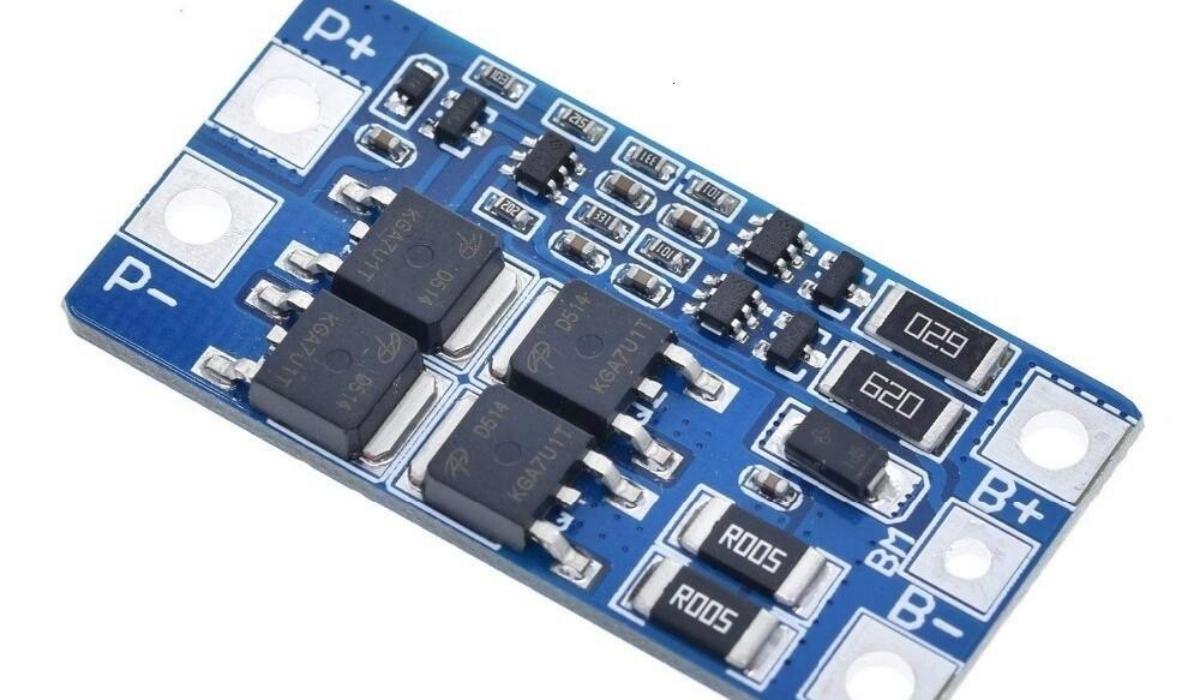
Rechargeable lithium battery packs require appropriate protection against abnormal electrical conditions.
Depending on the architecture, a protection circuit may monitor overcharge, overdischarge, excessive current, short circuits, and temperature.
The battery protection circuit and device charging circuit must be evaluated together.
For example, a USB-C charging connector does not independently determine the correct lithium battery charging profile.
For multi-cell battery packs, engineers must also consider individual cell monitoring and balancing requirements where applicable.
Protection thresholds should be selected using the specified cells and verified during testing.
6. From Battery Prototype to Production Approval
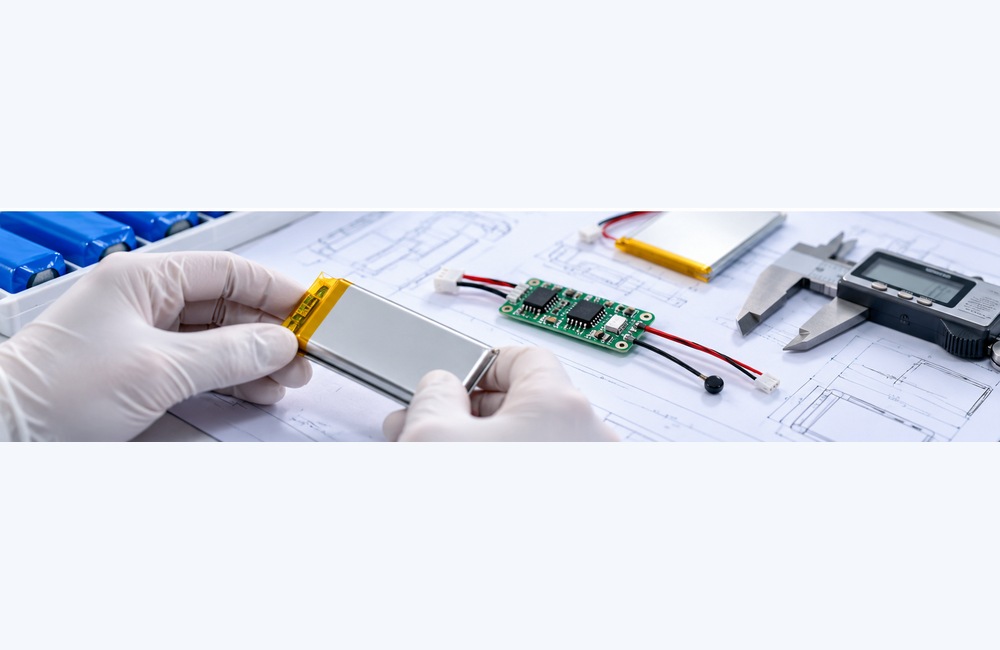
Custom battery development normally begins with a technical review.
The manufacturer evaluates electrical specifications, mechanical drawings, cell availability, protection requirements, and expected production quantities.
After agreeing on a preliminary design, prototype battery packs can be prepared for evaluation.
OEM customers should test samples inside the actual breast pump rather than relying only on standalone battery measurements.
Prototype validation should assess:
- Battery fit and installation
- Motor startup and operating current
- Charging and discharge performance
- Temperature behavior
- Protection circuit response
- Connector and wiring reliability
Any required design changes should be resolved before approving the production configuration.
A documented specification helps maintain consistency between prototype approval and subsequent manufacturing.
7. Manufacturing Quality and Certification Considerations
Battery pack quality depends on controlled components, assembly processes, and verification procedures.
Important manufacturing activities include incoming cell inspection, electrical connection checks, insulation inspection, and finished-pack testing.
For international distribution, OEM customers should identify applicable product safety and transport requirements during development.
IEC 62133-2 and UN 38.3 may be relevant depending on the battery and intended distribution arrangements.
Cell-level test reports do not automatically establish compliance for a finished battery pack or breast pump.
Manufacturers should confirm which reports, certificates, and device-level evaluations are required for their target markets.
8. Working with Gloflux on OEM Battery Development
Gloflux provides customized lithium battery solutions for equipment manufacturers and industrial customers.
Our available customization services include battery configuration, cell selection, wiring, connectors, protection circuit integration, and mechanical packaging.
For a productive technical evaluation, OEM customers should provide their battery specifications, compartment dimensions, charging requirements, and estimated purchasing volume.
Engineering drawings or existing battery samples can also help clarify the design requirements.
Explore our Custom Lithium Battery Solutions to submit a project inquiry and discuss the next steps.
Conclusion
Developing custom breast pump battery packs requires coordination between battery engineering, device integration, quality validation, and manufacturing planning.
By confirming electrical requirements, mechanical dimensions, protection functions, and testing expectations early, OEM manufacturers can reduce unnecessary redesign and establish clearer production specifications.
Gloflux welcomes inquiries from breast pump manufacturers and equipment developers seeking custom lithium battery solutions for commercial production.
Frequently Asked Question
What information does an OEM manufacturer need to provide for a custom breast pump battery pack?
An OEM manufacturer should provide the required voltage, capacity, continuous and peak current, battery compartment dimensions, connector specifications, charging requirements, and expected order quantity. Drawings, existing samples, and target-market compliance requirements are also helpful for evaluating a customized battery design.