


 Home /
 From -40°C to 85°C: Validating a High Temperature Rechargeable Battery for Vehicles


Table of Contents
When a vehicle is parked under the blazing sun or left overnight in freezing conditions, its electronic systems — especially the TBOX (Telematics BOX) computing unit — must remain ready. The hidden guardian behind this reliability is often a High Temperature Rechargeable Battery specifically engineered for extreme environments.
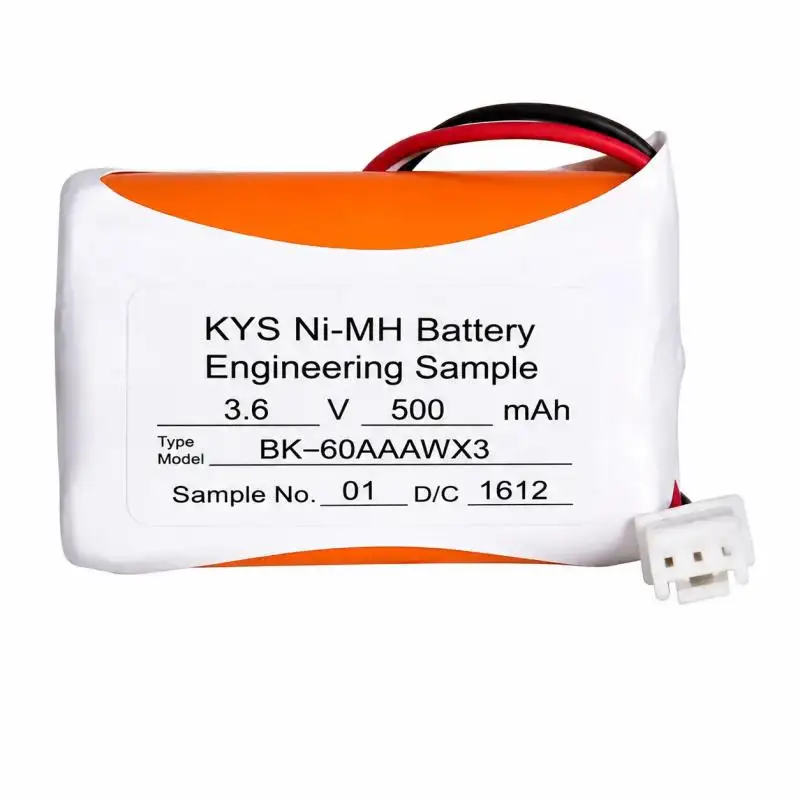
One representative example is the Gloflux 3.6V 500mAh Wide-Temperature Ni-MH Battery for TBOX Vehicle Computing Unit. But how does such a battery prove it can survive from -40°C storage all the way to 85°C discharge? The answer refers to a set of stringent automotive-grade environmental validations.
Here, we outline the primary tests, as well as the design considerations that enable High Temperature Rechargeable Batteries to be used in operational vehicles.
1. Why Automotive Electronics Need a Wide-Temperature Battery
Automotive environments are among the harshest for any electronic component. A TBOX unit may experience:
• Underhood-like temperatures: Up to 85°C during summer heat soak.
• Extreme cold: Winter storage temperatures in cold countries may reach -40 °C.
• Rapid temperature changes: In a few minutes, the battery goes from a heated garage to outdoors at -20 °C.
• Under normal circumstances, a battery would not function at such low temperatures. However, a special High Temperature Rechargeable Battery, is designed to operate safely all along the temperature spectrum.
The Gloflux 3.6V 500mAh Wide-Temperature Ni-MH Battery is guaranteed to remain functional at the following temperatures:
• Storage Temperature: -40 °C to 85 °C
• Discharge Temperature: -20 °C to 85 °C
• Charging Temperature: -20 °C to 60 °C
2. The Three Pillars of Automotive-Grade Validation
Battery manufacturers rely on three interconnected test suites to determine if the High Temperature Rechargeable Battery is truly as good as it claims to be.
2.1 Low-Temperature Storage & Recovery (-40 °C)
• Goal: Determine if the battery is permanently damaged after long-term storage in the cold.
• Test method: Batteries are fully charged and placed inside a -40 °C chamber for 72 hours or more (a typical automotive requirement).
• Pass criteria: After a return to normal room temperatures, the battery must recover ≥90% of its nominal capacity and must not show signs of leakage, cracking, or internal short circuits.
• Why it matters: A TBOX vehicle computing unit may be left for weeks in a sub-zero temperature parking lot. After powering on the vehicle, the battery must provide backup power for the GPS and emergency calls.
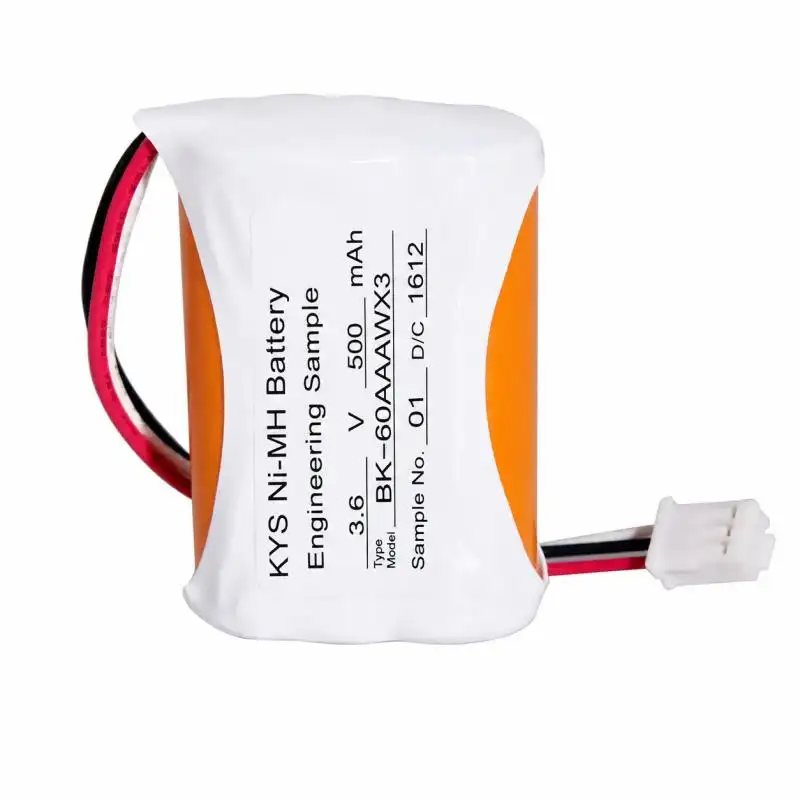
2.2 High-Temperature (85 °C) Discharge Performance
• Goal: Determine if the battery is able to safely provide energy while at its highest (hottest) temperature.
• Test method: Batteries are heated to 85 °C and are discharged at rates of 0.5C and/or 1.0C.
• Pass criteria: Discharge capacity ≥80% of rated value; terminal voltage remains above cut-off (e.g., 3.0V for the Gloflux unit); no venting or thermal runaway.
• Why it matters: In summer, a dashboard or roof-mounted antenna module can reach 85°C. A High Temperature Rechargeable Battery must still power telematics and communication systems without interruption.
2.3 Thermal Shock and Cycling Test
• Objective: Mimic fast moving temperature changes (from -40 °C to 85 °C in a matter of minutes).
• Testing method: Perform fast moving temperature shift tests (i.e. 100 tests) while taking voltage and internal resistance measurements.
• Acceptable Criteria: An intact seal with an internal resistance shift of less than 50% and a capacity shrink of less than 10%.
3. Elements of Design Feature Wide-Temperature Functionality
Gloflux 3.6V 500mAh Wide-Temperature Ni-MH Battery can be assessed under an automotive grade standard.
3.1 Nickel Metal Hydride Chemistry
• Advantage: Ni-MH are more able to accommodate over charging and lower temperature charging compared to lithium chemistries.
• Greater temperature span: Charging a lithium-ion battery is restricted to the 0 °C to 45 °C. This Ni-MH cell can be charged from -20°C to 60°C.
3.2 Proprietary Electrolyte and Separator
• Low temperature additive: Prevents freezing of the electrolyte to -40°C and maintains ionic conductivity.
• High temperature stabilizer: Decreases self-discharge and shrinkage of separator at 85°C.
3.3 PTC (Positive Temperature Coefficient) Overcurrent Protection
• 260PTC rating: At 5.2A, provides rapid resistance increase with cut-off for overcurrent.
• Resettable: Unlike a fuse, the PTC resets once the temperature returns to normal which is critical for the automotive application.
3.4 Absence of Nominal Protection Circuit
• Justification: Protection circuits for lithium batteries are known to fail under the nominal protection temperature (MOSFET leakage, IC drift).
• Solution: Usage of reliable cell chemistry with PTC provides far better protection than lithium batteries in wide temperature range.
4. Actual Validation Results for Gloflux 3.6V 500mAh Battery
The performance data that supports the automotive-grade claim is as follows according to the product specification:
• Cycle life: ≥1000 times (0.5C charge / 1.0C discharge) with ≥60% of original capacity.
• Comparison: In similar conditions, standard Ni-MH batteries see 500 charge cycles drop to 60% capacity.
• Low-temperature charging: Our batteries can be charged down to -20°C without the risk of plating, unlike lithium batteries.
• Storage range: -40°C to 85°C range means the battery can be stored worldwide and in the vehicle.
• Mechanical robustness: Low internal resistance (≤180 mΩ) and a compact size (11×33×48 mm) and light weight (80g)
5. Why This Matters for TBOX and Telematics Systems
A TBOX vehicle computing unit (VCU) performs the following tasks:
• GPS and telematics communication.
• eCall 4G/5G emergency service.
• CAN bus logging and remote diagnostics.
• Start and stop control, and anti-theft.
If the main vehicle battery fails, or is disconnected, the backup High Temperature Rechargeable Battery must take over the functions instantly, even if the cabin is at -20°C or 85°C.
Gloflux 3.6V 500mAh Wide-Temperature Ni-MH Battery was built for this purpose. It was designed for automotive electronics, telematics and communication systems, with the ability to charge at -20°C and safely stored at -40°C, with a discharge capability of 85°C.
Summary: What to Look for in a High Temperature Rechargeable Battery
When evaluating a High Temperature Rechargeable Battery for automotive or outdoor applications, ensure the four following criteria:
• Storage temperature range: at least -40°C to 85°C
• Discharge temperature: 85 °C
• Charge temperature: at least -20°C
• Cycle life at temperature extremes: ≥1000 cycles with >60% capacity remaining.
The Gloflux 3.6V 500mAh battery exceeds the specifications indicated through product specifications and wide-temperature testing.
Final thought: A true automotive-grade High Temperature Rechargeable Battery doesn't consist solely of a cell in a can. It's a system of chemistry, safety components, and extensive testing. From a -40°C storage to an 85°C discharge, every single degree is one of the tests differentiating reliable, useful power from and unreliable loss.
FAQs
Q1. Is PTC protection reusable after a short circuit?
A. Yes, once the fault is cleared the battery will return to a normal state.
Q2. Why is -30°C the cut off temperature for discharging but not for charging the battery?
A. There is a risk of internal pressure and the evolution of gas if the battery is charged at -30°C.
Q3. Is a High Temperature Rechargeable Battery necessarily Ni-MH or can it be lithium?
A. Ni-MH is preferred for extreme low-temperature charging of the battery because they are more stable, while lithium can also be used.
Q4. When the vehicle is parked for long periods of time, should the battery be fully charged?
A. Long term storage should have the battery at a partial charge of 40-60%, but the Gloflux cell can tolerate full storage at -40°C to 85°C.
Q5. How should wide-temperature Ni-MH batteries be disposed of?
A.There are no specific legal requirements for disposal of Ni-MH batteries in many regions, but it is recommended they are recycled through automotive or electronics battery take-back systems.
Talk to the Manufacturer
Resources & Insights

High Capacity Lithium Battery for Wearables: High-Voltage LiPo Cell Design
2026-10-19
Cylindrical Battery Packs for Laptops: 2S vs 3S vs 4S Battery Design
2026-10-19
Stage Lighting Battery Pack: Prevent Voltage Drop & LED Flicker
2026-10-19

Best Rechargeable Batteries for Smart Devices: Performance, Safety, and Selection Guide
2026-10-19


