


 Home /
 Smartphone with Removable Battery: 2026 Buying Guide, Market Trends & Best Use Cases


Table of Contents
Smartphone with removable battery is a phrase you don't hear often in 2025, but it still signals specific needs: longevity, repairability, flexibility, and control. While most flagship phones moved to sealed designs years ago, demand for removable batteries hasn't disappeared—especially among power users, field workers, travelers, and sustainability-focused buyers.
This guide covers the current market for smartphones with removable batteries, how it's evolving, and whether one is the right choice for you.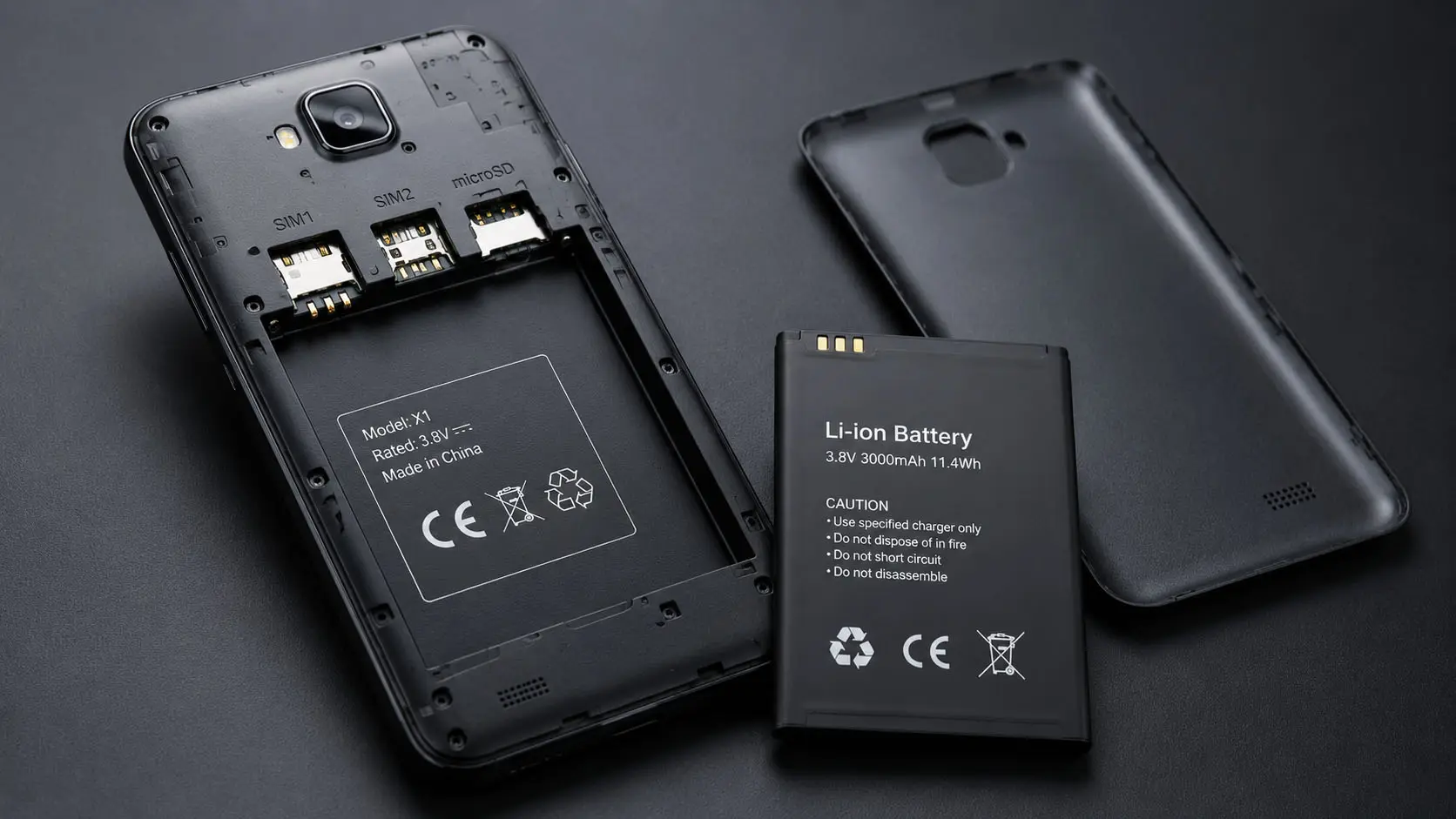
Why removable batteries still matter
The core value
A smartphone with removable battery solves problems sealed-battery phones create:
- Instant power refresh: Swap to a fully charged spare in seconds—no power bank, no waiting.
- Extended device lifespan: When the battery degrades after a couple of years, you replace the battery, not the phone.
- Reduced downtime: Essential for work scenarios where your phone can't be offline for charging.
- Easier troubleshooting: Power issues sometimes resolve simply by removing and reseating the battery.
For users who rely on their devices in the field—delivery staff, technicians, remote workers—this reliability matters more than ultra-slim aesthetics.
How the market shifted
From around 2016 onward, major brands (Apple, Samsung for flagships, Google, etc.) moved to sealed batteries to achieve thinner designs, better water resistance, simpler wireless charging, and perceived premium aesthetics.
New smartphones with removable batteries moved into niche segments: rugged and enterprise phones, budget and mid-range devices in emerging markets, and specialised sustainable and repairable phones.
The Right to Repair movement, growing sustainability awareness, and EU regulatory pressure are slowly reopening conversation around replaceable batteries.
What's available now (2024–2026)
Fewer flagships, more niche models
By mid-2025, you won't find many global flagships marketed around removable batteries. The segment is led by modular or repair-friendly brands (like Fairphone in Europe), rugged phones for industrial use, and carrier or regional brands focused on price-sensitive markets.
When you search for a smartphone with removable battery today, you're typically looking at new but niche models (often mid-range specs), older mainstream phones via resellers, or refurbished devices.
Regional differences and regulatory impact
European Union: Regulations around battery sustainability and recyclability are influencing design. While this doesn't always mean "removable back cover," it's pushing OEMs toward serviceable and repair-friendly designs.
Asia and Africa: In price-sensitive regions, entry-level and feature-rich budget phones still use removable batteries due to cost, ease of repair, and consumer expectations.
North America: Sealed devices dominate, but the Right to Repair movement is driving demand for repairable and sustainable options. This indirectly benefits niche brands and refurbished phones with removable batteries.
Key advantages
Longer usable lifespan and sustainability
Replacing a removable battery can extend a phone's life by years. Lithium-ion batteries typically lose 15–25% capacity after a couple of years of heavy use. Many users upgrade only because battery life deteriorates, not because performance is inadequate.
A smartphone with removable battery can delay the need to buy a new phone, reduce electronic waste, and support more circular, sustainable usage patterns. For businesses rolling out hundreds or thousands of devices, extended lifecycles directly reduce total cost of ownership.
Total control over uptime
For certain roles, downtime is not acceptable: field service technicians, logistics drivers, outdoor workers, emergency responders, photographers, and journalists on the move.
With one or two spare batteries, you effectively multiply your total battery capacity, operate in areas with limited power infrastructure, and aren't dependent on power banks or vehicle chargers.
Easier battery maintenance and safety
A removable battery enables quick replacement when swelling or overheating is noticed, safe storage of multiple batteries (cycling them to reduce wear), and self-service without visiting a service center. Sealed batteries typically require professional tools and expertise, and attempted DIY replacements can void warranties or damage the device.
Trade-offs
Choosing a smartphone with removable battery means accepting certain compromises.
Design and durability
Removable batteries often come with thicker devices, lower water resistance, and less glass and metal (many use plastic backs). If you prioritize premium materials or top-tier waterproofing, you may not find a suitable removable-battery flagship.
Charging and features
Many removable-battery phones lack wireless charging, prioritize practicality over performance (mid-range SoCs and camera systems), and may offer slower charging speeds than sealed-battery flagships. This doesn't make them inferior; they cater to different priorities: reliability and longevity over cutting-edge specs.
How to choose
Step 1: Define your use case
Before browsing models, clarify why you want a removable battery: business and field work, travel, sustainability, or cost control. Your use case will guide which spec trade-offs are acceptable.
Step 2: Evaluate core hardware
Even if the battery is your main priority, don't ignore essentials:
- Processor (SoC): At least mid-range chips for smooth daily performance.
- Memory and storage: 6 GB RAM and 128 GB storage as a practical baseline in 2025.
- Display: Resolution (Full HD or above), brightness, and refresh rate.
- Camera system: Especially if you rely on your phone for documentation or content.
- Connectivity: 4G/5G support, dual-SIM, Wi-Fi standards, NFC.
Step 3: Focus on battery-specific details
When comparing smartphones with removable batteries, pay attention to battery capacity (mAh), availability of spare batteries, charging options (USB-C port, supported wattage), and whether the battery form factor is shared across multiple models.
Step 4: Consider software support and security
A long-living phone is only helpful if it receives security updates for a reasonable period, supports the apps you rely on, and has an active user community. Look for transparent update policies from the manufacturer or reseller.
Who benefits most
Business fleets and field operations
Companies that rely on smartphones as core tools often need minimal downtime, simple battery management, and affordable replacement cycles. Deploying a smartphone with removable battery across a fleet allows centralized battery charging and rotation, on-site replacements without shipping devices to repair centers, and reduced total cost of ownership.
Travelers and remote workers
Airports, trains, and remote areas may not provide accessible power outlets. Multiple removable batteries can be easier to carry than a large power bank, faster to swap than recharging your phone mid-task, and safer in extreme climates when you can rotate batteries and avoid heat buildup.
Environmentally conscious consumers
For sustainability-focused users, a smartphone with removable battery aligns with "repair, not replace" philosophy. It allows the device to stay in service longer, reducing e-waste, and can be paired with refurbished devices and modular accessories for a lower environmental footprint.
Practical tips for owning one
Extending battery life
Avoid regularly draining below 10% or charging constantly to 100%. Store spare batteries at around 40–60% charge when not in use for long periods. Keep batteries away from extreme heat or cold. Use reputable chargers that comply with safety standards.
Managing multiple batteries
Label each battery with an ID and purchase date. Implement a rotation system to ensure even wear. Track runtime performance to identify batteries nearing end of life. Dispose of depleted batteries through certified e-waste or recycling channels.
Future outlook
Regulatory pressure and Right to Repair
EU regulations are pushing for more sustainable and repairable electronics, including easier battery replacement. Right to Repair movements in North America and other regions advocate for manufacturer obligations to provide parts and manuals.
These changes might not bring back classic pop-off backs for all phones, but they are increasing market openness to modular designs, serviceable batteries (even if not user-removable in seconds), and longer-term software and hardware support.
Hybrid approaches
An emerging compromise is phones that use sealed designs for water resistance and slimness but are designed to be opened with common tools without destroying the device. The average user may not swap batteries daily, but authorized or independent repair shops can perform replacements more easily and affordably.
For buyers who insist on a truly user-removable battery, this likely means staying in the niche segment for the foreseeable future.
Summary
A smartphone with removable battery in 2025 is no longer mainstream, but it remains highly practical for workforces and field operations, cost-efficient over a multi-year horizon, aligned with sustainability and Right to Repair values, and flexible for travelers and power users who can't afford downtime.
You trade off some premium design features and flagship-level specs but gain control over device lifespan, immediate power flexibility, and easier, cheaper battery maintenance.
When evaluating your next device—or planning device strategy for your team—start by clarifying your priorities. If uptime, longevity, and sustainability outrank aesthetics and cutting-edge camera features, a smartphone with removable battery remains a smart, future-conscious choice.
Talk to the Manufacturer
Resources & Insights
High Capacity Lithium Battery for Wearables: High-Voltage LiPo Cell Design
2026-10-19
Cylindrical Battery Packs for Laptops: 2S vs 3S vs 4S Battery Design
2026-10-19
Stage Lighting Battery Pack: Prevent Voltage Drop & LED Flicker
2026-10-19
Best Rechargeable Batteries for Smart Devices: Performance, Safety, and Selection Guide
2026-10-19


