


 Home /
 High Capacity Cylindrical Battery Packs: How to Balance Safety & Energy Density


Table of Contents
When designing High Capacity Cylindrical Battery Packs, engineers encounter a classic dilemma. The higher one goes in energy density, the greater one increases the risk of thermal runaway. Modern battery packs, particularly those incorporating the tested and proven 18650 Lithium Ion Li-ion Battery Pack architecture, strike a good balance between the two. These modern battery packs, in part, rely on smart selection of cells, accurate construction, and a sophisticated Battery Management System (BMS).
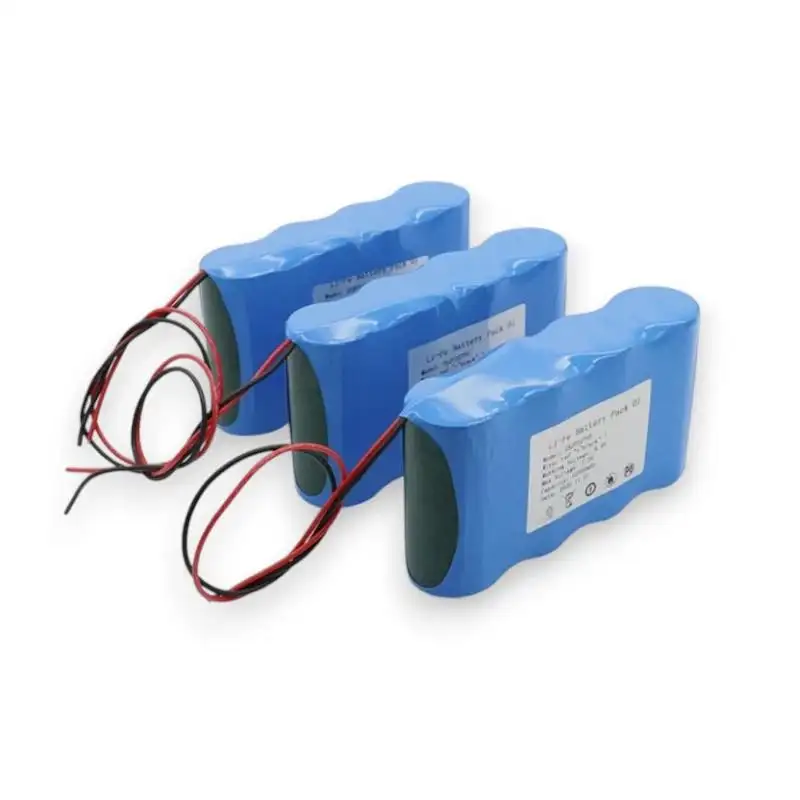
Here, we examine High Capacity Cylindrical Battery Packs with powerful performance coupled with advanced protection, focusing on the protective design, the materials science, and the product validation that is testing.
1. Built-in Safety of Cylindrical Cells
Prismatic and pouch cells pack the battery cells in soft casings, while cylindrical cells pack the battery cells in a rigid, hard steel casing. This provides some built-in safety:
• Mechanical containment: The soft pouch cells are more prone to explode during a thermal runaway and the hardened steel pouch less so.
• Integrated venting mechanism: Every 18650 lithium-ion cell has a vent that ruptures the cell to release elevated pressure in the cell and prevent rupture of the cell.
• Current interrupt device (CID): The cell is destroyed and permanently disabled if pressure exceeds a level where the device ruptures the cell to remove the pressure.
• Consistent electrode winding: Thermal runaway is less likely because there are less hotspots in the steady current delivered by the winding of the jelly-roll of cell.
These built-in safety features help protect the cells of the High Capacity Cylindrical Battery Packs.
2. Chemistry: Lithium Metal Oxide vs. Graphite
The chemistry in a battery determines both capacity and thermal stability. Quality 18650 Lithium Ion Li-ion Battery Packs have the following:
• Cathode (Lithium Metal Oxide): NMC (Nickel Manganese Cobalt) or LFP (Lithium Iron Phosphate). LFP has a lower capacity, but a higher thermal runaway threshold of >270°C. NMC has a lower thermal stability but a higher capacity.
• Anode (Graphite-based): Graphite has a unique layered structure which allows Lithium ions to fit in the structure with 10% volume expansion.
• Microporous separator: 20-25µm polymer films that block the flow of electrons between the cathode and anode, but allows lithium ions to pass. Most modern separators have a shutdown feature: at 130-140°C the separator film closes and halts ionic flow.
• Organic carbonate electrolyte: a lithium salt (LiPF6) based electrolyte that has flame-retardant additives. A strict moisture control (20 ppm) regimen is essential to avoid the formation of HF, that then causes corrosion to the internal battery components.
Gloflux optimizes this chemistry while maintaining capacity and safety at the highest level.
3. From Cell to Pack: How Assembly Affects Safety
High Capacity Cylindrical Battery Pack design and safety is an exceptionally difficult engineering challenge. Gloflux uses a multi-step design process to address failure modes using the following:
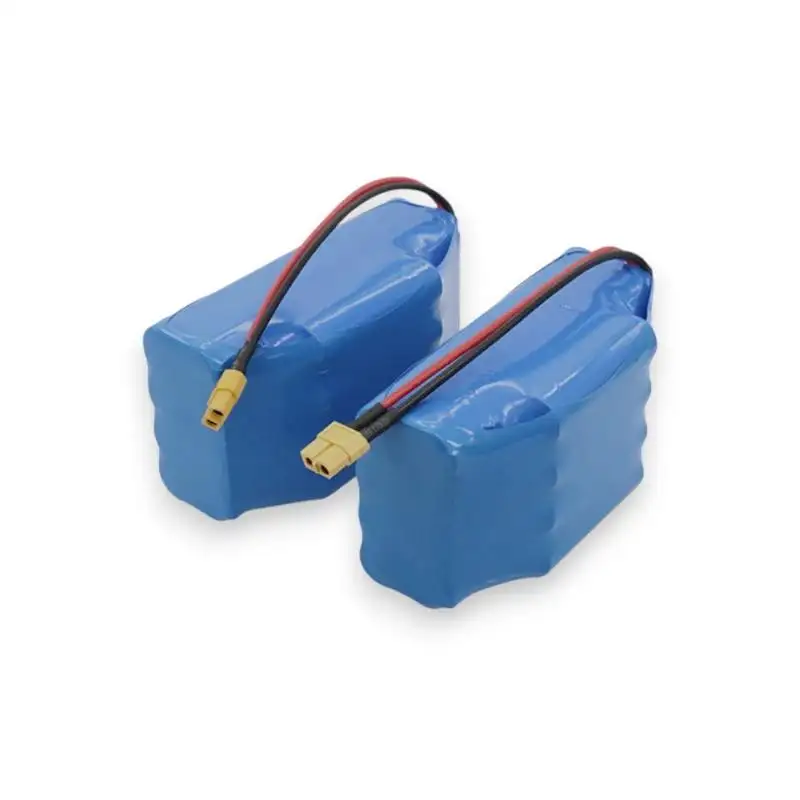
3.1 Cell Matching (Capacity & Internal Resistance)
• Why it matters: cell capacity must be matched to avoid overcharging and lithium plating in weaker cells.
• Gloflux process: Cells are aligned to have capacity (±1%) and internal resistance (±2mΩ) using automated grading systems. Cells are sorted into packs to ensure safety throughout.
3.2 Structural Holder & Controlled Spacing
• Thermal gap management: The spacer provides conductive cooling and maintains a 1mm air gap between the 18650 battery cells and is constructed from plastic.
• Vibration resistance: The spacer mitigates the impact of mechanical shock and maintains a bond preventing relative motion that would damage exposed electrode coatings.
3.3 Resistance Welding (Not Soldering)
• Low-resistance nickel strips: Due to the welding (not soldering) process, there was no concern for introducing excessive heat and damaging the separator or the electrolyte.
• Verification: The pull strength of the welds was tested. Resistance was kept to below 0.5mΩ, which ensured localized heating was avoided during significant current draws.
3.4 Insulation Layer and Wiring Harness
• Kapton or fish paper insulation: in order to insulate the cell groups without having to worry about an insulation failure and its arc flash.
• Strain relief on sense wires: the BMS sense wires were routed separately from the power wires to avoid chafing and, thus, shorting.
• Key takeaway: the design and construction of the 18650 Lithium Ion Battery Pack were done in a way to address insulation, cell mismatch and connection failure, which are the most frequent field failures.
4. Active Safety: the Battery Management System (BMS)
For High Capacity Cylindrical Battery Packs used in demanding applications (e-scooter, robotics and energy storage), assembly alone does not suffice to ensure safety; a sophisticated BMS is a must.
• Overcharge Protection (Cell-wise): Each cell is watched independently. If any cell goes above 4.25V ±0.025V, that charge path is deleted.
• Over-discharge protection: To avoid shorting, and to avoid copper dissolution, that cell is cut off at 2.5V.
• Short-circuit protection: A current spike of 100A within 100µs is considered a real short, which will cut off immediately. All other instances of current spikes, such as those when a motor is being driven, will not be considered a short.
• Temperature Monitoring (3+ points): NTC thermistors are used. In the charge pack, when thermistors reach 45°C, charge current is reduced. At 65°C, full charge current is cut.
• Passive Cell Balancing: Higher voltage cells begin to conduct current until their voltage is equal to other cells during charging. This is also used to prevent runaway cells.
Gloflux uses a custom BMS, which logs cycle count, peak current, and max voltage cell delta. This data is used to assist maintenance.
5. Real-World Testing and Certification
Every High Capacity Cylindrical Battery Pack undergoes validation to international standards as mandated by Gloflux.
| Test | Method Pass | Criteria |
| IEC 62133 | Overcharge, forced discharge, vibration, thermal cycling | No fire, no explosion, no leakage |
| UN38.3 (transport) | Altitude simulation, thermal test, vibration, shock, short circuit, impact, overcharge | No mass loss, no venting, no fire |
| Aging test (45°C / 7 days) | Measure voltage shift and internal resistance change | ΔV < 20mV; ΔR < 5% |
Gloflux also conducts:
• DC internal resistance (DCIR) mapping: Identifies weak cells before the pack is sealed at 50% SoC and 100% SoC
• Charge/discharge (0.5C / 0.5C) test: Total of 50 cycles to ensure that the pack has a capacity of at least 98% with a minimal temperature rise of 15°C above ambient.
6. Common Questions About 18650 Pack Safety (FAQ-Style)
• Are high-capacity 18650 cells more dangerous than low-capacity ones?
Not inherently. Higher capacity cells (3000mAh vs 2000mAh) use different electrode thicknesses and porosities. With a quality BMS and matched assembly, they are equally safe.
• Can I replace a few bad cells in an existing pack?
Highly discouraged. Partial replacement creates severe mismatch in internal resistance and aging level, leading to accelerated failure of the new cells.
• What is the safest cylindrical cell chemistry for home energy storage?
LFP (Lithium Iron Phosphate) has the highest thermal runaway temperature (~270°C) and is intrinsically safer than NMC (210°C). However, NMC offers better energy density for portable devices.
Summary: The Gloflux Approach to Safety & Capacity
High Capacity Cylindrical Battery Packs don't have to choose between power and protection. By combining:
• The robust mechanical design of 18650 cells (steel casing + CID + vent)
• Tight cell matching (±1% capacity, ±2mΩ IR)
• Resistance welding and controlled spacing
• A multi-layer BMS with thermal and per-cell voltage protection
• Certified testing (IEC62133, UN38.3)
…Manufacturers like Gloflux deliver 18650 Lithium Ion Li-ion Battery Packs that achieve high usable capacity (3000mAh per cell, custom pack-level Ah) while maintaining fail-safe behavior under electrical, thermal, and mechanical abuse.
Whether you are designing a robot vacuum, an e-scooter, or a portable solar generator, the principles above remain the same: Safety is engineered at every level, from the chemistry to the final enclosure.
Looking for custom High Capacity Cylindrical Battery Packs?
Gloflux supports OEM/ODM projects with capacities from 2Ah to 50Ah+ (serial/parallel 18650 configurations). Free quotation and thermal simulation available.
FAQs
Q1: Is there a connection between higher mAh and lower safety?
No. Gloflux cells maintain safety and capacity at the same time. It is the design and assembly of the electrodes where safety and capacity hinge on, not the mAh.
Q2: Is it safe to leave a cylindrical battery pack on a charger overnight?
It is safe only if the pack contains a functioning BMS with over-charging protection. If not, it is unsafe and cells can get damaged or worse, cause a fire.
Q3: Are all the 18650 battery packs the same size?
Yes, they all have an 18mm diameter and a 65mm length, but there are a lot of differences in the internal resistance, safety, and capacity.
Q4: Which cylindrical cell chemistry is the safest to use?
The safest would be Lithium Iron Phosphate (LFP). It has a lower energy density but a substantially higher threshold of thermal runaway (>270°C) when compared to NMC.
Q5: Can Gloflux change the voltage and capacity for my device?
Gloflux is capable of adjusting the voltage (3.7V to 72V) and capacity (2Ah to over 100Ah) according to the needs of the customer through series/parallel 18650 configurations.
Talk to the Manufacturer
Resources & Insights
High Capacity Lithium Battery for Wearables: High-Voltage LiPo Cell Design
2026-10-19
Cylindrical Battery Packs for Laptops: 2S vs 3S vs 4S Battery Design
2026-10-19
Stage Lighting Battery Pack: Prevent Voltage Drop & LED Flicker
2026-10-19

Best Rechargeable Batteries for Smart Devices: Performance, Safety, and Selection Guide
2026-10-19


