


 Home /
 6V 2800mAh Ni-MH Battery Pack for Security Alarm Systems


Table of Contents
- What Is a 6V AA-5S Ni-MH Battery Pack?
- Why Security Alarm Systems Need Backup Batteries
- Benefits of Ni-MH Batteries for Alarm Equipment
- Applications of a 6V 2800mAh Battery Pack
- What to Check Before Replacing an Alarm Battery
- Why Connector and Wire Configuration Matter
- OEM and Custom Ni-MH Battery Pack Options
- Charging Compatibility Is Essential
- A Practical Replacement Battery for Security Equipment
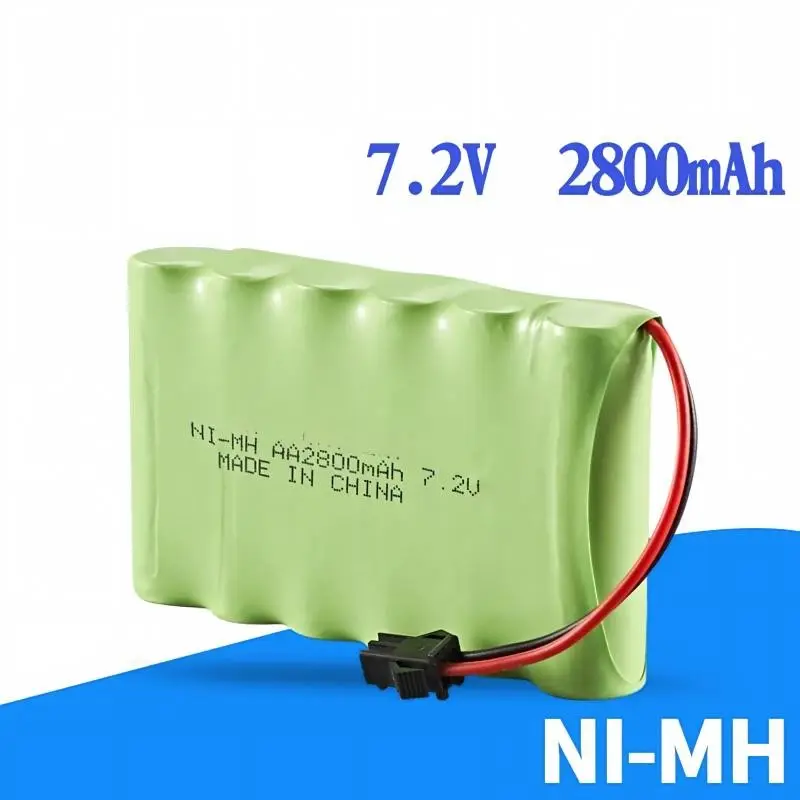
Security alarm systems are expected to remain dependable during daily operation and temporary power interruptions. Touch alarm panels, access control devices, building security equipment, and monitoring systems often rely on rechargeable backup batteries to maintain essential functions when the main power source is unavailable. For compatible equipment, a 6V 2800mAh Ni-MH battery pack provides a practical rechargeable and replacement power solution.
Built with five AA-size nickel-metal hydride cells connected in series, this AA-5S battery pack provides a nominal voltage of 6V and a capacity of 2800mAh. It can be configured with different connectors, wire lengths, cell arrangements, labels, and packaging for OEM or replacement battery projects.
What Is a 6V AA-5S Ni-MH Battery Pack?
The term AA-5S describes the battery cell format and configuration. The pack contains five AA-size rechargeable Ni-MH cells connected in series. Since a typical Ni-MH cell has a nominal voltage of approximately 1.2V, five cells connected in series provide a nominal pack voltage of 6V.
The capacity of this pack is 2800mAh, making it suitable for compatible electronic equipment requiring rechargeable standby or operational power.
Unlike disposable alkaline batteries, a Ni-MH replacement battery pack is designed for repeated charging and discharging when paired with an appropriate charging system. This makes it useful for security equipment that remains installed for long periods and needs a rechargeable internal battery.
However, voltage and capacity alone should not determine compatibility. Connector type, polarity, battery dimensions, charging specifications, and current requirements should also be checked before replacement.
Why Security Alarm Systems Need Backup Batteries
Security equipment often needs to remain operational even when mains electricity is temporarily interrupted. If an alarm control panel loses all power immediately during an outage, monitoring and alert functions may also stop.
A security alarm battery pack can provide temporary backup energy to compatible equipment. Depending on the system design, the battery may support a touch control panel, alarm controller, communication module, access control unit, or other security device.
The required backup duration depends on the power consumption of the equipment. A simple alarm panel may consume relatively little energy during standby, while systems with displays, wireless communication, sirens, sensors, or other connected functions can require more power.
For this reason, battery capacity should be matched to the actual load of the equipment rather than selected only by physical appearance.
Benefits of Ni-MH Batteries for Alarm Equipment
Nickel-metal hydride batteries continue to be used in many rechargeable devices because they provide a practical rechargeable power solution without relying on disposable cells.
For security alarm systems, Ni-MH chemistry can be suitable when the original equipment was designed around this battery type and charging voltage.
A 6V Ni-MH battery pack offers a straightforward series configuration using AA-size cells. The cylindrical cell format also makes it possible to arrange the pack in different shapes depending on the available internal space.
For example, five cells can be arranged in a flat row, staggered formation, or customized pack layout when required by the enclosure design.
This flexibility can be useful in replacement projects where the battery must fit into an existing alarm panel or security device.
Applications of a 6V 2800mAh Battery Pack
A 6V 2800mAh Ni-MH battery pack may be used in a range of compatible security and monitoring products.
Typical applications include touch security alarm systems, home alarm panels, access control equipment, building security systems, emergency alarm devices, monitoring terminals, and customized electronic security products.
It can also be considered for other equipment originally designed to use a 6V rechargeable Ni-MH battery with similar capacity, charging characteristics, connector, and dimensions.
Compatibility must always be checked before installation. A battery that looks similar may still have different polarity, wiring, connector size, or charging requirements.
For replacement projects, checking the original battery specifications is one of the most important steps.
What to Check Before Replacing an Alarm Battery
Before ordering an alarm system replacement battery, begin by checking the label on the original battery.
Confirm the nominal voltage first. If the original equipment requires a 6V Ni-MH battery, replacing it with a battery using a different chemistry or voltage without verifying system compatibility is not recommended.
Next, check the capacity. A 2800mAh pack may provide suitable operating time for one alarm system but may not match another system designed around a different capacity.
The physical dimensions should also be measured. Pay attention to the length, width, height, cell arrangement, cable exit direction, and available space inside the equipment.
Connector type and polarity are equally important. Even if two plugs look similar, their pin arrangement or polarity may differ.
For OEM and replacement battery projects, providing photos of the original battery label, connector, cable, and battery compartment can help identify the required configuration.
Why Connector and Wire Configuration Matter
One of the most common challenges in replacement battery projects is that the electrical specifications match but the connector does not.
Different security alarm manufacturers may use different plug housings, wire gauges, cable lengths, or polarity arrangements.
A custom AA-5S battery pack can be configured with a connector and wire length that match the target equipment requirements.
The wire exit location may also affect installation. If the cable is too short or exits from the wrong side of the pack, it may be difficult to connect the battery without creating unnecessary tension on the wires.
These mechanical details should therefore be confirmed before mass production.
OEM and Custom Ni-MH Battery Pack Options
Security equipment manufacturers may require more than a standard battery specification.
For OEM projects, a custom Ni-MH battery pack can be developed around the electrical and mechanical design of the finished product.
Customization may include cell arrangement, connector type, wire length, insulation materials, labeling, packaging, and other battery pack details.
The development process usually begins with application information such as required voltage, capacity, dimensions, expected current, charging method, connector specifications, and operating environment.
For existing replacement applications, an original battery sample or detailed drawing can help simplify specification confirmation.
Charging Compatibility Is Essential
A rechargeable battery must be compatible with the equipment's charging system.
Even when two batteries have the same nominal voltage, different battery chemistries may require different charging methods. Therefore, a device designed for Ni-MH batteries should generally use a compatible Ni-MH replacement unless the entire charging system has been evaluated for another chemistry.
For security alarm equipment, this is particularly important because the battery may remain connected to the system for long periods.
Correct charging conditions help support stable battery operation and reduce unnecessary stress on the cells.
A Practical Replacement Battery for Security Equipment
The 6V 2800mAh Ni-MH AA-5S battery pack provides a practical rechargeable solution for compatible touch security alarm systems, control panels, monitoring devices, and access control equipment.
Its five-cell series configuration provides a nominal 6V output, while the 2800mAh capacity supports applications requiring rechargeable backup or operating power.
For the best replacement result, check more than voltage and capacity. Confirm battery chemistry, connector type, polarity, dimensions, wire length, charging requirements, and equipment compatibility before ordering.
For OEM projects, these specifications can be customized around the finished device, helping manufacturers integrate a battery pack that better matches the mechanical and electrical requirements of their security equipment.
Talk to the Manufacturer
Resources & Insights
High Capacity Lithium Battery for Wearables: High-Voltage LiPo Cell Design
2026-10-19
Cylindrical Battery Packs for Laptops: 2S vs 3S vs 4S Battery Design
2026-10-19

Stage Lighting Battery Pack: Prevent Voltage Drop & LED Flicker
2026-10-19

Best Rechargeable Batteries for Smart Devices: Performance, Safety, and Selection Guide
2026-10-19


