


 Home /
 User Replaceable Battery for Electronics: 10 Real Differences You Never Considered


Table of Contents
- 1. Speed of Recovery from Failure: Seconds vs. Hours
- 2. Battery Longevity vs. Device Lifespan Decoupling
- 3. Thermal Management Freedom
- 4. Calibration & State-of-Charge Accuracy
- 5. Logistics for Field-Deployed Devices
- 6. End-of-Life Material Recovery
- 7. Manufacturer Accountability for Safety
- 8. Customization for Specialized Voltage/Capacity
- 9. Long-Term Storage & Self-Discharge Behavior
- 10. Certification & Compliance for Global Shipping
- Why Gloflux Champions the User-Replaceable Model
Most arguments surrounding user-replaceable batteries versus permanently sealed devices for electronics simplistically frame the issue as "convenience vs waterproofing." The issue is far more complex and includes trade-offs and balances in engineering, product lifecycle cost, sustainability, and even safety. Using Gloflux KYS2057HH Smart Battery Pack and other trade-grade solutions, we outline 10 complex differences.
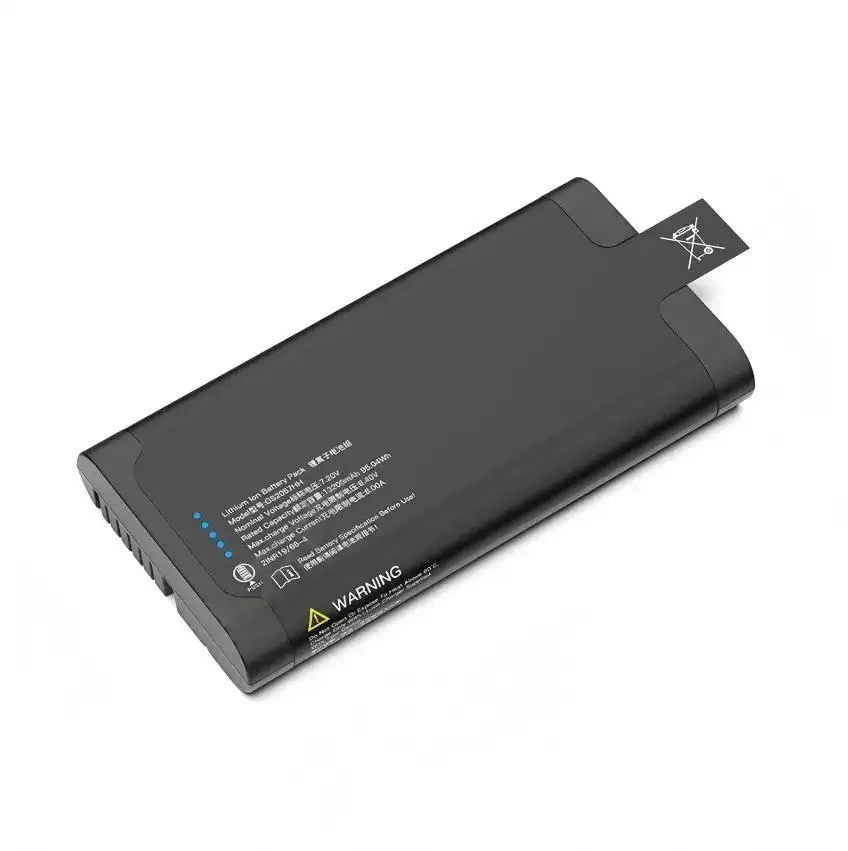
1. Speed of Recovery from Failure: Seconds vs. Hours
User-replaceable: A dead battery pack can be replaced, with spare battery packs, in less than 30 seconds and critical devices can continue to be used (medical, industrial, etc.).
•Sealed: The device must be completely taken offline, then charged for 1 to 3 hours, or even sent to a third party for repair—completely unacceptable when a device is critical to an operation.
•Example: Gloflux KYS2057HH allows instant, hot-swap replacement and can keep a Class III medical device operational without the need to reboot.
2. Battery Longevity vs. Device Lifespan Decoupling
User-replaceable: You can replace the battery multiple times over 5–8 years, while keeping the host device (e.g., a $5,000 industrial computer) fully functional.
•Sealed: When the internal battery degrades below 80% capacity (typically after 300–500 cycles), the entire device is often discarded—even if electronics work perfectly.
•Data point: The KYS2057HH delivers 500 cycles while retaining ≥80% capacity, meaning one pack can serve 1.5–2 years of daily use, then be swapped fresh.
3. Thermal Management Freedom
User-replaceable: External battery packs can be designed to include cooling features (even airflow, heat sinks, and active fans) at no impact to the device size.
•Sealed: Cooling is maximized as much as possible with whatever slim passive gaps exist inside a sealed chassis, which increases internal temperatures by 5 to 8 °C.
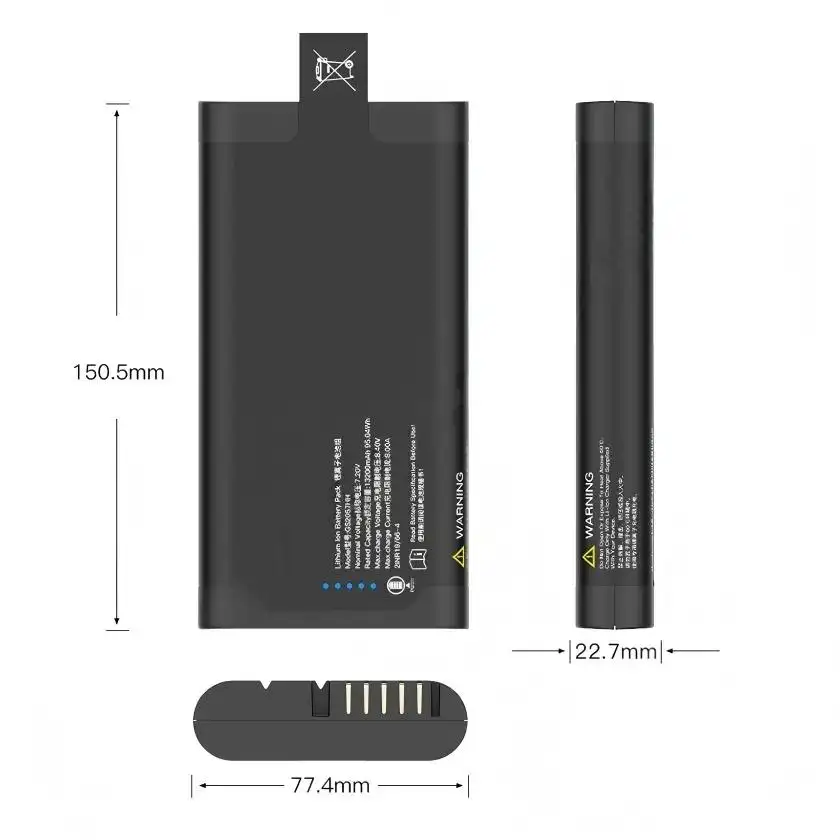
•Design insight: The KYS2057HH has airflow channels and possible fan mounting, and is designed to keep the cell temperature stable even at 8.0A continuous discharge.
4. Calibration & State-of-Charge Accuracy
User-replaceable: Smart packs with built-on fuel gauges (for example, Texas Instruments) maintain accurate state-of-charge conditions cycle after cycle.
•Sealed: Built-in packs generally lose state-of-charge calibration after about 50 cycles, requiring users to fully discharge and fully recharge, damaging pack health.
•Technical edge: With TI precision fuel gauging and an LED SOC indicator, KYS2057HH users understand exactly how much time is remaining on the pack.
5. Logistics for Field-Deployed Devices
•User-replaceable: Field technicians carry pre-charged spares, swap in 1 minute, and recharge depleted packs back at base—zero downtime.
•Sealed: Devices must be returned to a charging station or replaced entirely, multiplying fleet costs by 3–5x for remote operations (e.g., non-destructive testing equipment).
•Application note: This is why the KYS2057HH is specified for industrial computers and precision measuring instruments—where uptime is revenue.
6. End-of-Life Material Recovery
•User-replaceable: Battery is removed cleanly; the plastic/metal casing and electronics go to standard recycling, while the cell goes to specialized lithium recovery.
•Sealed: To get the battery, the whole device has to be shredded, which damages e-waste recycling streams, and the recovery rate for lithium is only 30% (compared to 95% for batteries with a removable pack).
7. Manufacturer Accountability for Safety
•User-replaceable: Certified packs (like the KYS2057HH) include overcharge, over-discharge, over-current, over-temperature, and short-circuit protection—all visible to users.
•Sealed: Safety circuits are hidden; counterfeit or degraded third-party repair batteries may be forced in, increasing fire risk.
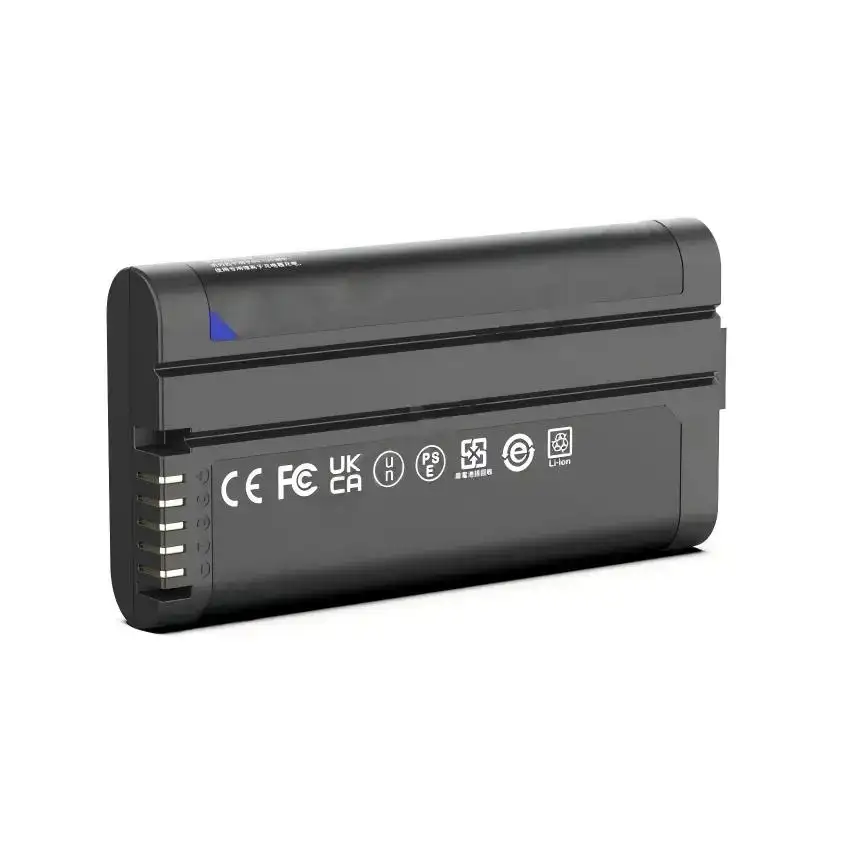
•Compliance: The KYS2057HH meets UL, IEC62133, UN38.3, CE, FCC, PSE, RoHS, and REACH—full traceability.
8. Customization for Specialized Voltage/Capacity
•User-replaceable: Specify exact nominal voltage (e.g., 7.2V) and/or capacity (e.g., 13.2Ah for KYS2057HH) without the need for total redesign of the device.
•Sealed: Changes in battery chemistry, capacity or size entail new chassis molds, battery/certification approvals, and a new production line. This can increase development time by 6– 12 months.
•Flexibility: Gloflux provides a wide range for OEM/ODM customization for different application requirements including, but not limited to, 2S4P configurations and/or different mechanical interfaces, etc.
9. Long-Term Storage & Self-Discharge Behavior
•User-replaceable: You can store spare packs at 20–30% initial shipment capacity (industry standard) in a cool environment, then top them up before deployment.
•Sealed: The device's battery slowly self-discharges inside the non-operational unit; after 6 months, many sealed devices are found dead and may refuse to recharge.
•Storage spec: The KYS2057HH is designed for -20°C to 25°C recommended storage with minimal capacity loss.
10. Certification & Compliance for Global Shipping
•User-replaceable: Each transport tested and labeled transportable (UN38.3) battery pack helps customs clearance and mitigates device manufacturers' liability.
•Sealed: The entire product must be retested as a unit, and if the battery is non-removable, some countries (e.g., EU post-2027 Battery Regulation) may restrict import.
•Regulatory ready: The KYS2057HH already complies with JEITA charging optimization, cell balancing, and (EU) 2023/1542—future-proof for global markets.
Why Gloflux Champions the User-Replaceable Model
Gloflux's design and technical advantages are evident in the KYS2057HH Standard Smart Lithium Battery Pack:
•High energy density & stability: Uses Panasonic cells with graphite anodes and lithium metal oxide cathodes, plus a microporous polymer separator.
•Integrated Intelligence: The BMS balances cells to stop unbalanced degradation.
•Tough Design: Our metal shells are welded steel and aluminum alloys that have corrosion resistant coatings. Our cases withstand wear and repeated mechanical stress.
•Application breadth: From Class III medical devices to non-destructive testing equipment, the pack supports reliable performance where sealed batteries fail.
The takeaway: A well-designed user-replaceable battery for electronics—like the Gloflux KYS2057HH—does not compromise on safety, intelligence, or durability. It simply gives the user choice, control, and a far lower total cost of ownership.
FAQs
Q1: Can I use any third-party battery in a device designed for user-replaceable packs?
A: Technically yes, but for safety and accuracy, always use certified packs with proper BMS and cell balancing (like the KYS2057HH).
Q2: What is the comparison on size/weight for a device with a replaceable battery?
A: The device would be a bit larger and heavier, with a thickness of around an extra 2-3 mm and with around an additional 10 to 15 percent weight. It is likely most professional equipment will accept that serviceability and life extension trade-off.
Q3: What would happen if I buy a spare interchangeable battery and let it sit for months?
A. The optimal range for the battery's charge is between 20-30%. Ideally the battery would be stored at temperatures between 0-25 °C. Do not fully charge the battery and keep the charge low.
Q4: Is the KYS2057HH likely to be compatible with my existing industrial device?
A: Gloflux is a lot more flexible and accommodates customer requirements when it comes to the mechanical interface, capacity, and connector type. Please reach out with requirements.
Q5: Are user-replaceable batteries more dangerous than sealed batteries?
A: No…actually the opposite is the case when appropriately designed. The KYS2057HH is designed to include overcharge, over-discharge, over-current, over-temperature, and short circuit protection.
Talk to the Manufacturer
Resources & Insights
High Capacity Lithium Battery for Wearables: High-Voltage LiPo Cell Design
2026-10-19
Cylindrical Battery Packs for Laptops: 2S vs 3S vs 4S Battery Design
2026-10-19
Stage Lighting Battery Pack: Prevent Voltage Drop & LED Flicker
2026-10-19
Best Rechargeable Batteries for Smart Devices: Performance, Safety, and Selection Guide
2026-10-19


