


 Home /
 OEM/ODM Removable Rechargeable Battery Packs for Garden Tools & Sensors


Table of Contents
- What Is a Removable Rechargeable Battery Pack?
- Benefits of Removable Battery Design in Garden Tools and Outdoor Sensors
- 12V Lithium-Ion Battery Architecture for Outdoor Use
- Main Characteristics of 12V 18650 Removable Battery Pack
- OEM & ODM Customization by Gloflux
- Example of a Technical Specification (12V 18650 3S Pack)
As the gardening, landscaping, and environmental monitoring industries increasingly incorporate outdoor power tools and wireless sensing systems, the requirements for power systems continue to evolve.

Pack systems for removable rechargeable batteries offer modularity, rapid reconfiguration, and ease of system maintenance—essentially eliminating the need for battery management for manufacturers of modern outdoor equipment.
OEMs designing battery-powered garden tools; soil monitoring sensors; weather stations; and other IoT devices for outdoor use can provide improved system convenience and serviceability with greater efficiency throughout a product's lifecycle by utilizing a removable lithium battery pack.
This article details the design of systems with removable battery packs, the considerations for 12V lithium-ion systems, and the customizable options for industrial OEM/ODM applications.
What Is a Removable Rechargeable Battery Pack?
As its title suggests, a removable rechargeable battery pack has a modular system that allows for easy replacement and customization.
In contrast to sealed battery systems, removable packs allow for:
• Flexibility to reorganize and add components to systems without disassembly.
• Charging via a dedicated system away from the battery.
• Replacement system that minimizes user inconvenience.
Such systems are typically found in battery operated tools and equipment used in the field where continuous operation is a necessity.
For modular systems used in the field away from electrical infrastructure, it helps mitigate the battery's useful life in the field and helps ensure the battery's proper disposal.
Benefits of Removable Battery Design in Garden Tools and Outdoor Sensors
Power deficiencies, extreme weather, and high variability humidity combine with dust to create adverse conditions for deploying equipment outdoors.
Removable battery design helps mitigate some challenges of external equipment design and offers the following advantages.
1. Continuous Use and Rapid Replacement
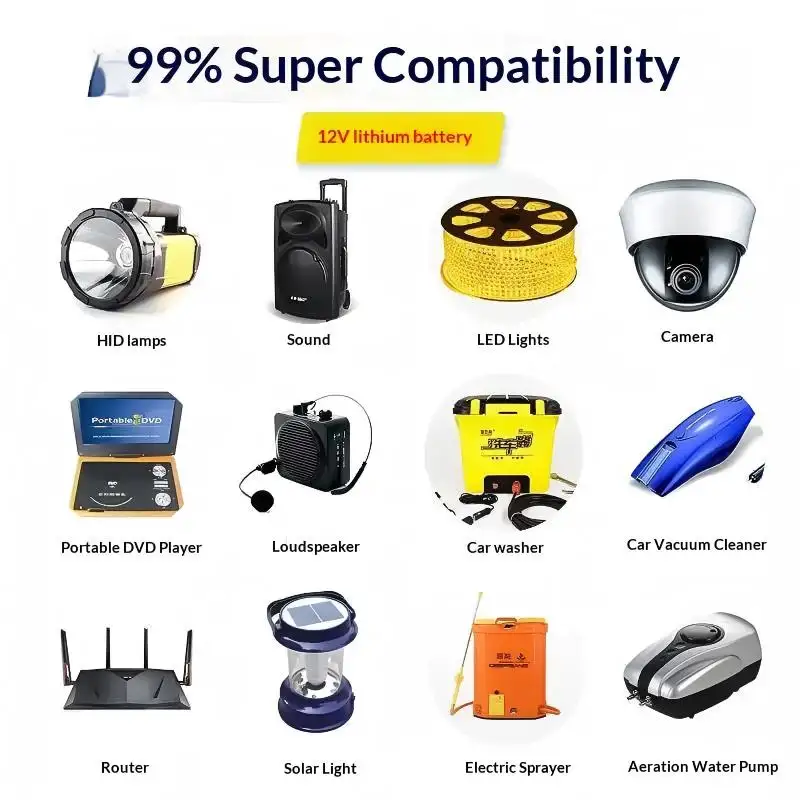
Users can carry multiple battery packs. In the case of sprayers, trimmers, and blowers, uninterrupted use of a tool can be extremely useful.
2. Uninterrupted Use and Storing Flexibility
Batteries can be stored indoors and protected to minimize exposure to the elements, to encroach weather and to minimize degradation.
3. Adjustable Design
This system can vary its energy storage levels and run time with the same equipment to meet diverse user specifications.
4. Improved Recycling and Lifecycle Mitigation
Separating the battery from the rest of the product helps mitigate the impact of the lifecycle of the product and improve the recycling of the product.
12V Lithium-Ion Battery Architecture for Outdoor Use
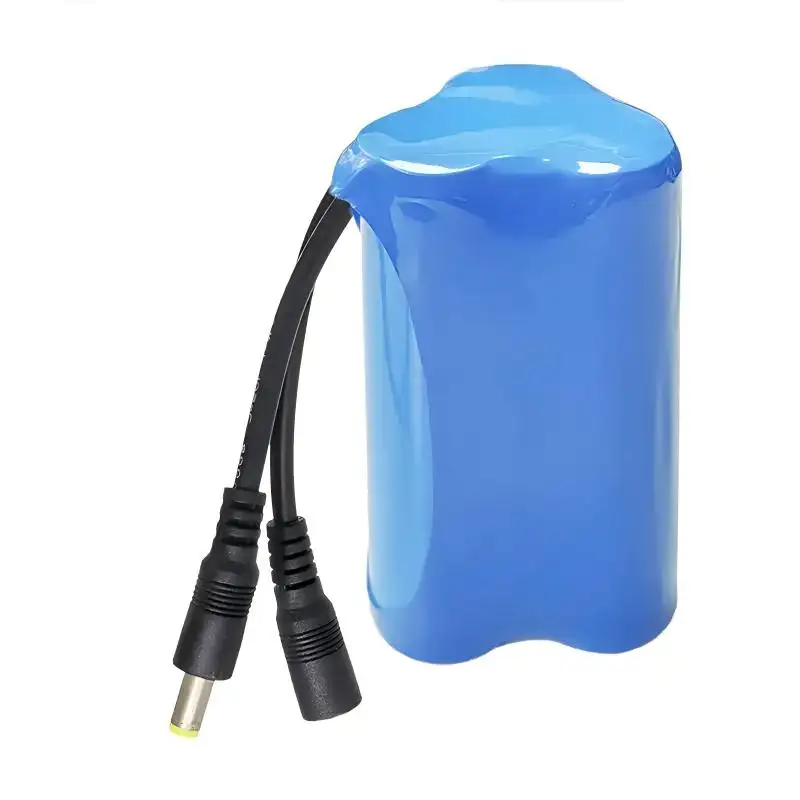
Most garden tools and sensor systems are designed with a 12V DC power architecture. Therefore, a 3S configuration of lithium-ion is the most common.
The removable battery pack is typically designed with 18650 lithium cells (18mm × 65mm), the most common battery cell, because of their safety, supply, and energy density.
Electrical Structure
An electrical architecture for this configuration includes:
• 3S (3 cells in series)
• Nominal Voltage 11.1V
• Fully Charged Voltage 12.6V
• Discharge Voltage Range ~ 9.0V – 12.6V (depending on the system)
This voltage range is applicable to most 12V rated motors, sensors, and control electronics.
Main Characteristics of 12V 18650 Removable Battery Pack
1. Stable Output Performance
In outdoor applications, a 3S lithium configuration has consistent output voltage under intermittent and continuous load conditions.
2. Cycle Life (Application Dependent)
Lithium-ion 18650 are designed for ~500-1000 cycles under normal use (≤1C charge/discharge, good thermal management).
The actual cycle life is very dependent on discharge depth, temperature, and the charging profile.
3. Compact Modular Structure
The 18650 format is very flexible for structural integration into handheld tools, sensor housings, and portable field devices.
4. Battery Management System (BMS) Protection
Typical protection circuit provides:
• Overcharge protection
• Over-discharge protection
• Overcurrent protection
• Short-circuit protection
• Cell balancing (for multi-series configurations)
OEM & ODM Customization by Gloflux
Where many markets may provide standardized battery packs, these solutions fail to meet the mechanical, electrical, and aesthetic requirements of your industrial products.
Gloflux provides custom solutions for removable lithium batteries through OEM/ODM development.
Some possible solutions are as follows:
1. Electrical Design
• Battery pack design alternatives for 2000 to 5000 mAh
• Select cell type
• State discharge current for powered tools
2. Mechanical Interface
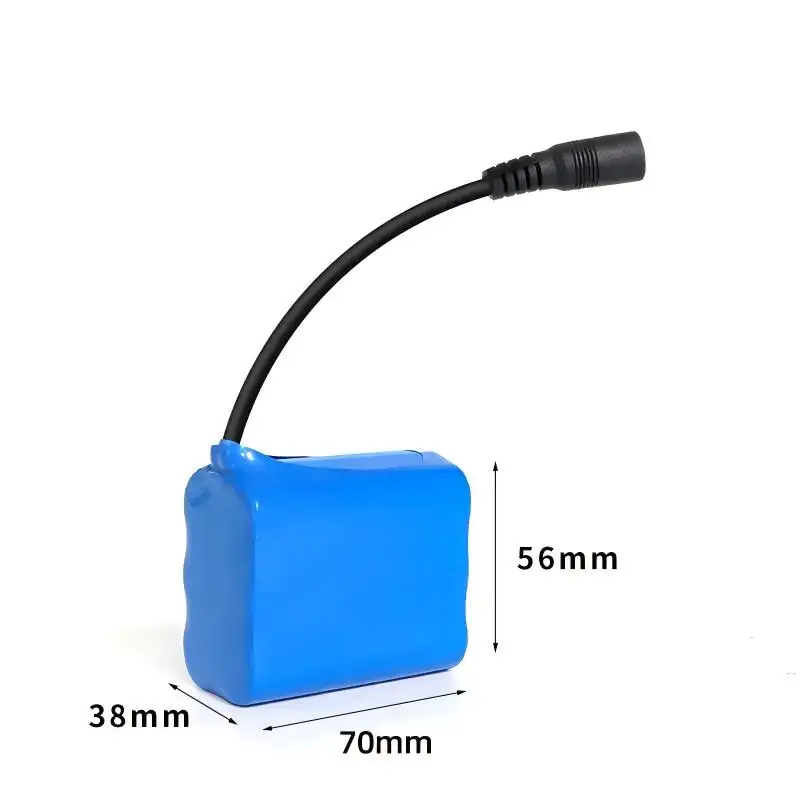
• State preferred connector type (DC, XT, etc. or custom)
• State cable length and cable routing
• State the locking mechanism
3. Battery Management System
• Set voltage cut-off levels
• Set the current limit to the load profile
• Choose the communication protocol (available for smart battery systems)
4. Structural & Branding Design
• Redesign the housing to fit a specific device
• Custom design and branding with compliance space
• Custom design with a choice of color and housing
This approach allows the battery pack to be a custom integrated power module designed around the specific customer product.
Example of a Technical Specification (12V 18650 3S Pack)
| Parameter | Specification | Typical/Industry Standard |
| Configuration | 3S1P | Three cells in series |
| Cell Type | 18650 Li-ion | Standard cylindrical lithium-ion cell |
| Nominal Voltage | 11.1V | Standard 3S lithium system |
| Full Charge Voltage | 12.6V | CC/CV charging limit |
| Capacity Range | 2500–3500mAh (typical) | Depending on cell selection |
| BMS Protection | Included | Essential for safety & longevity |
| Application | Outdoor tools & sensor systems | Garden equipment, IoT devices |
�� Note: The 3500 mAh capacity refers to high-capacity cells contemporary to the 18650 lithium cells. The actual capacity of the pack depends on the parallel configuration (3S1P vs 3S2P).
Essentials of the Design
Mechanical Design:
• Battery packs need a mechanical lock to avoid pack separation due to vibrations. This is essential for tools that are motor driven.
Environmental Interface Design:
• Ingress protection, at least for dust and moisture, should be achieved at contact points, for example, using sealing or a gasket design.
Electrification Interface Design:
• To maintain a good cycle life and to avoid premature aging of the pack, CC/CV must be implemented either in the external charger or in the circuitry of the device.
User Feedback Interface Design:
• User Feedback Interface Design: To improve the user experience, the pack should incorporate LED indicators or fuel gauge systems. This would help in avoiding a surprise trip of the pack while in the field.
Usual Applications
Removable 12V lithium battery systems are commonly incorporated in:
• Wireless garden equipment (shears, trimmers, sprayers)
• Environmental measurement devices (soil moisture, climate measurement)
• Outdoor IoT data collection and communication devices
• Mobile LED lighting
• Auxiliary power equipment for low-voltage outdoor equipment
Battery Maintenance and Lifespan
To improve the lifespan of the battery:
• Avoid discharging the battery below the recommended voltage of 3.0V for each cell
• Store the battery at room temperature (between 10 degrees celsius and 25 degrees celsius)
• Recharge the battery periodically if stored for a long time
• Remove and clean any corrosion buildup on battery terminals
Following the recommended guidelines for the battery will maintain the cycle life of the battery and will also improve the system stability for the long term.
Summary
Removable rechargeable battery systems greatly improve the design and performance of modern garden tools and outdoor measurement systems.
The 12V 18650 lithium-ion 3S battery architecture provides a combination of good safety, high energy density, and cost effective design which makes this the best choice for most applications in this field.
Gloflux desires to assist equipment manufacturers by providing its knowledge and experience of modular removable battery systems focused on customized applications.
Removable battery systems will continue to be the enabling design technology for innovative outdoor products that are wireless, modular, and smart.
FAQ
Q1. What voltage do most outdoor tools use?
Most outdoor tools use a 12V lithium-ion system.
Q2. What does 3S stand for in battery configuration?
3S stands for three cells in series to get ~11.1V nominal.
Q3. Are 18650 cells suitable for battery packs?
Yes, 18650 cells are a good choice for battery packs.
Q4. What is the average cycle life of a lithium battery?
The average cycle life is between 500 and 1000 cycles.
Q5. What does a BMS do in a battery pack?
A BMS prevents overcharge, over-discharge, overcurrent, and short circuits.
Talk to the Manufacturer
Resources & Insights

High Capacity Lithium Battery for Wearables: High-Voltage LiPo Cell Design
2026-10-19
Cylindrical Battery Packs for Laptops: 2S vs 3S vs 4S Battery Design
2026-10-19
Stage Lighting Battery Pack: Prevent Voltage Drop & LED Flicker
2026-10-19
Best Rechargeable Batteries for Smart Devices: Performance, Safety, and Selection Guide
2026-10-19


