


 Home /
 Custom 4S 4000mAh 14.8V LiPo Battery for RC Aircraft with FPV Adapter Cable Connector


Table of Contents
- 1. Understanding the 4S 14.8V Battery Configuration
- 2. Stable Power for RC Aircraft
- 3. Suitable for FPV Equipment
- 4. Custom Connector Options
- 5. Flexible Battery Customization
- 6. Main Application Areas
- 7. Factors That Affect Flight Time
- 8. Charging and Storage Recommendations
- 9. Quality Control for Reliable Performance
- 10. A Flexible Power Solution for RC Projects
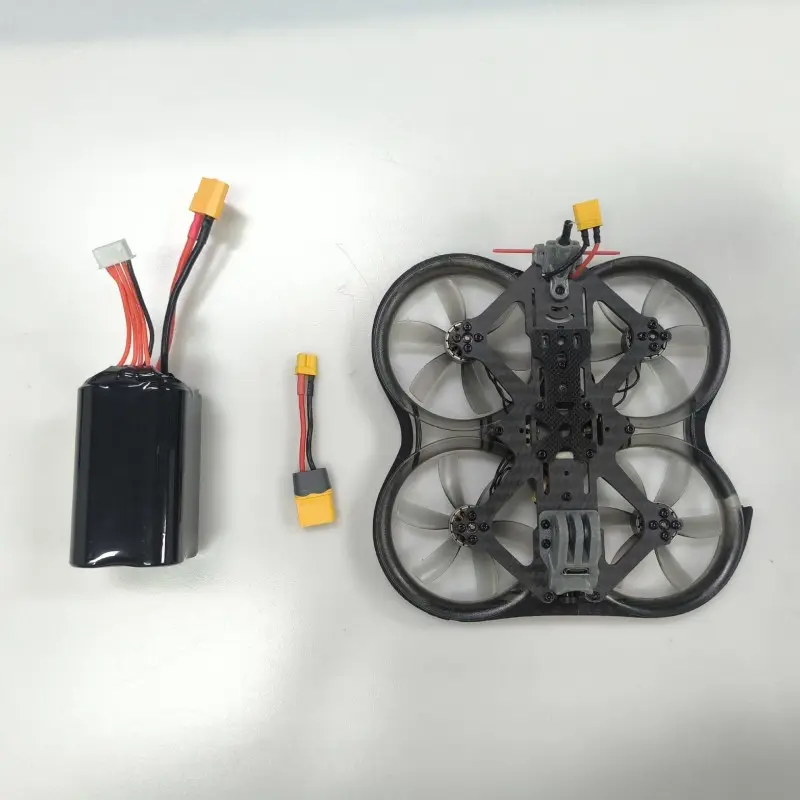
Reliable power is essential for the performance, control, and flight endurance of remote-controlled aircraft. Whether the aircraft is used for recreation, professional training, aerial observation, or prototype development, the battery must provide stable voltage and efficient energy output.
The 4S 4000mAh 14.8V LiPo battery pack is designed for RC airplanes, fixed-wing models, FPV aircraft, drones, gliders, and other remote-controlled systems. It can be supplied with an FPV adapter cable and customized connectors to meet different installation and electrical requirements.
Below are the main features, applications, customization options, and selection considerations for this rechargeable model aircraft battery.
1. Understanding the 4S 14.8V Battery Configuration
The term “4S” means that four lithium polymer cells are connected in series. Each cell has a nominal voltage of approximately 3.7V, creating a total nominal voltage of 14.8V.
This configuration is commonly used in RC aircraft that require more power than a 2S or 3S battery can provide. A 4S battery can support suitable motors, electronic speed controllers, servos, and onboard FPV equipment.
The 4000mAh capacity indicates how much electrical energy the battery can store. A larger capacity may provide longer operating time, although actual flight duration also depends on aircraft weight, motor efficiency, propeller size, flying speed, weather conditions, and payload.
2. Stable Power for RC Aircraft
RC airplanes require consistent power during takeoff, climbing, cruising, turning, and landing. Unstable voltage may affect motor performance or the operation of onboard electronics.
This 4S 4000mAh LiPo battery is designed to deliver dependable energy for compatible RC aircraft systems. Carefully selected lithium polymer cells help provide efficient power transfer and stable voltage during operation.
Low internal resistance can also help reduce unnecessary energy loss and heat generation. This is especially important for aircraft that require frequent acceleration or continuous motor output.
3. Suitable for FPV Equipment
First-person-view systems allow pilots to control aircraft through a live video feed from an onboard camera. These systems often include cameras, transmitters, receivers, antennas, and other electronic components.
The battery can be equipped with an FPV adapter cable to simplify the connection between the main power pack and compatible FPV devices. A customized cable design can reduce the need for additional adapters and help create a cleaner internal wiring layout.
Connector type, wire length, cable thickness, polarity, and branch cable configuration can be adjusted according to the aircraft design and FPV system.
4. Custom Connector Options
Different RC aircraft brands and electronic systems may use different battery connectors. A battery that has the correct voltage and capacity may still be unsuitable if its connector does not match the equipment.
Custom connector options can help ensure compatibility with the motor system, electronic speed controller, charger, or onboard electronics. Common requirements may include main discharge connectors, balance connectors, adapter cables, and special wiring configurations.
Before confirming production, customers should provide clear information about the required connector model, polarity, wire length, and equipment interface. Connector polarity should always be checked carefully before connecting the battery.
5. Flexible Battery Customization
RC aircraft manufacturers, distributors, hobby brands, and engineering teams may require a battery that fits a specific installation compartment. Standard battery packs do not always match the available space or weight limitations.
Customization options may include:
- Battery length, width, and thickness
- Nominal voltage and capacity
- Cell arrangement and pack structure
- Discharge performance
- Main connector and balance connector
- Wire length and cable specification
- FPV adapter cable configuration
- Product label and brand design
- Individual packaging or bulk packaging
- Testing and documentation requirements
Customers should provide the maximum available installation dimensions instead of only the preferred battery capacity. This helps the battery manufacturer evaluate whether the requested specifications are physically practical.
6. Main Application Areas
The 4S 4000mAh 14.8V RC aircraft battery can be considered for several applications.
Fixed-Wing RC Airplanes: It can power compatible sport aircraft, scale models, training planes, and other fixed-wing platforms.
FPV Aircraft: The battery can support the propulsion system while providing a suitable connection option for FPV cameras and transmitters.
RC Gliders: Powered gliders may use a 4S battery for climbing before entering gliding flight.
Multirotor Drones: Compatible quadcopters and other multirotor platforms may use this battery when the voltage, weight, dimensions, and discharge requirements match the system.
RC Helicopters: Certain model helicopters may require a 14.8V rechargeable battery pack.
Prototype Aircraft: Engineering teams can use customized battery packs when developing new UAVs, training models, or remote-controlled aviation equipment.
7. Factors That Affect Flight Time
A 4000mAh capacity does not guarantee the same flight time in every aircraft. Flight duration depends on the entire power system and operating environment.
Important factors include the motor’s current consumption, aircraft weight, aerodynamic design, propeller efficiency, payload, wind resistance, throttle usage, and battery condition.
Adding a larger battery may increase available energy, but it also increases aircraft weight. Additional weight may require more motor power and could reduce the expected improvement in flight time. Battery selection should therefore balance capacity, weight, dimensions, and discharge capability.
Testing the battery in the actual aircraft system is recommended before finalizing a large-volume order.
8. Charging and Storage Recommendations
A LiPo-compatible balance charger should be used for charging a 4S battery. The charger should be configured according to the battery voltage, capacity, and recommended charging current.
The battery should be inspected before and after use. It should not be charged if it is swollen, punctured, damaged, overheated, or leaking. Charging should take place in a suitable area away from flammable materials.
For extended storage, the battery should not remain fully charged or deeply discharged. It should be kept at an appropriate storage voltage in a cool, dry, and ventilated environment.
Users should also avoid short circuits, reverse polarity, excessive impact, water exposure, and operation outside the recommended temperature range.
9. Quality Control for Reliable Performance
Battery quality affects both aircraft performance and user safety. During production, important inspection processes may include cell matching, voltage testing, internal resistance testing, capacity testing, connector inspection, polarity confirmation, and appearance checks.
For custom projects, sample testing can help customers confirm battery size, connector compatibility, weight, installation method, and operating performance before mass production.
Clear communication between the aircraft manufacturer and battery supplier can reduce compatibility issues and improve the final product.
10. A Flexible Power Solution for RC Projects
The custom 4S 4000mAh 14.8V LiPo battery offers a practical power option for RC airplanes, fixed-wing models, FPV aircraft, drones, gliders, and prototype aviation systems.
With customizable dimensions, connectors, cables, labels, discharge requirements, and packaging, the battery can be adapted to different OEM and ODM projects. Selecting the correct battery requires careful consideration of voltage, capacity, aircraft weight, installation space, current demand, connector type, and expected flight time.
A properly designed and tested battery pack can provide stable power, convenient installation, and dependable performance for a wide range of model aircraft applications.
Talk to the Manufacturer
Resources & Insights

High Capacity Lithium Battery for Wearables: High-Voltage LiPo Cell Design
2026-10-19
Cylindrical Battery Packs for Laptops: 2S vs 3S vs 4S Battery Design
2026-10-19
Stage Lighting Battery Pack: Prevent Voltage Drop & LED Flicker
2026-10-19

Best Rechargeable Batteries for Smart Devices: Performance, Safety, and Selection Guide
2026-10-19


