

 Home /
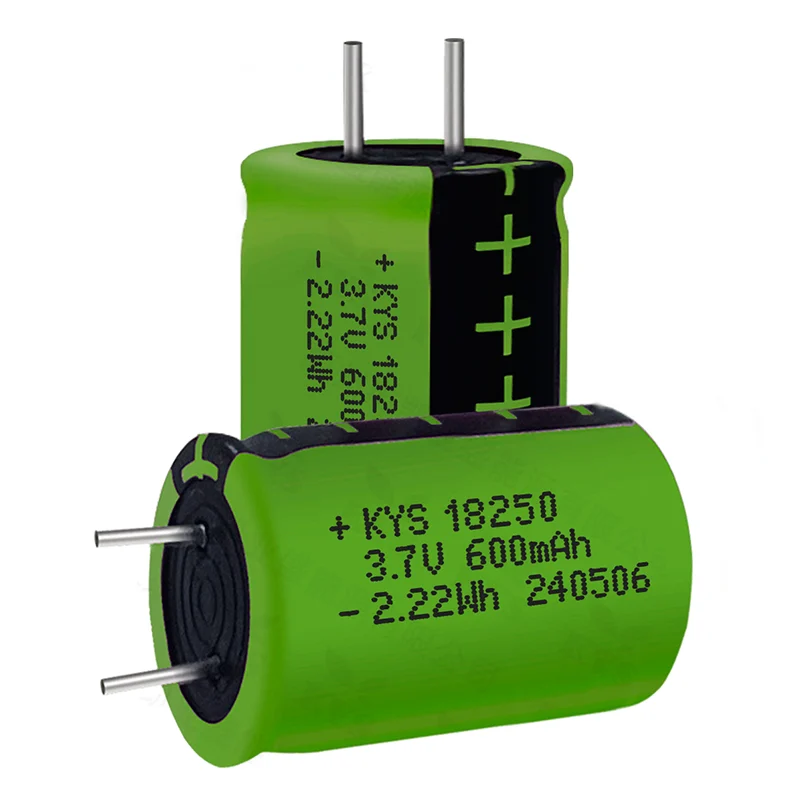
 18250 3.7V Large Supercapacitor Cells
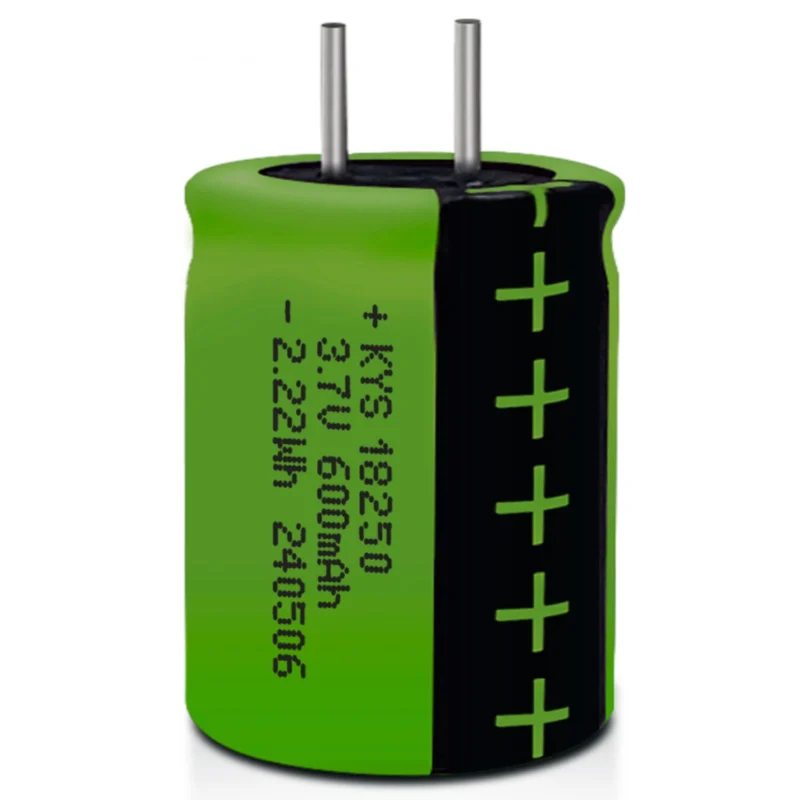
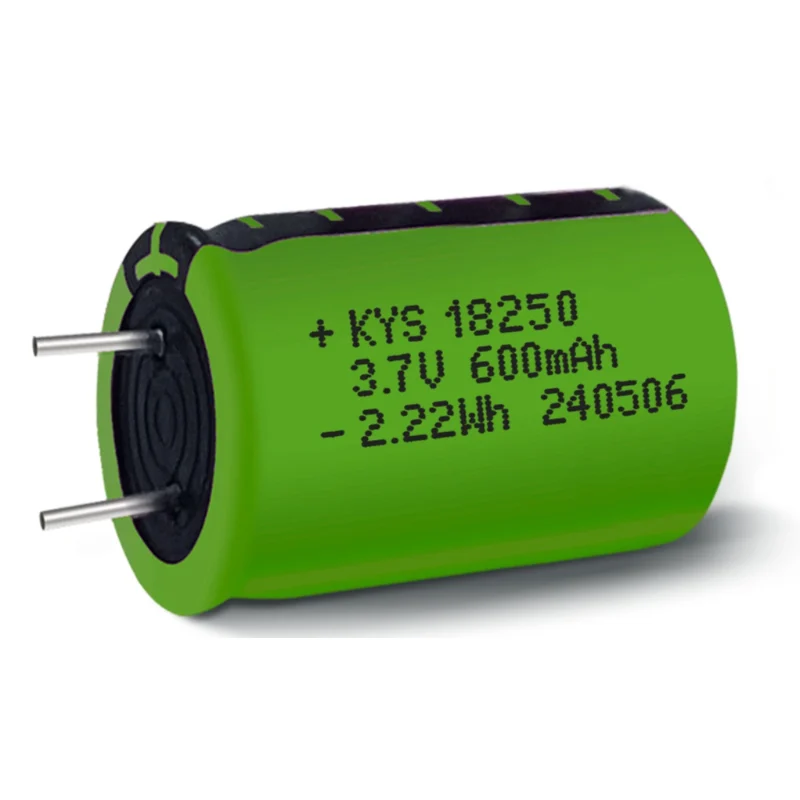
The 18250 3.7V lithium capacitor battery has a constant voltage output, very low self-discharge and high-quality multi-protection safety system. It supports customizable specifications, high 20C discharge rate and long service life, widely matching various portable smart electronic devices.
- Model: 18250 Lithium-Ion Capacitor
- Cell Size: 18(Diameter)×25 mm
- Nominal Voltage: 3.7 V
- Discharge Current: 3 A
- Capacity: 600 mAh
- Internal Resistance: 60 mΩ
- Application Scope: Electronic Products
- Charging Voltage: 4.2 V
 Get Free Quote
Back to Product List
Overview
Large Supercapacitor Cells Structural Overview
Engineers build large supercapacitor cells by assembling electrochemical double-layer structures within a closed cylindrical or prismatic enclosure. They first stack activated carbon electrodes with a high-surface-area separator membrane and stack the layers together into a tightly compressed roll of electrodes or a stacked block. Meanwhile, technicians keep the pressure at the correct level during assembly to make sure that the electrode interface has a uniform pore distribution. Then they insert the electrode assembly into a rigid metal housing and ensure mechanical alignment before commencing electrolyte filling.
Electrode Material System and Ionic Medium
Manufacturers make electrodes by mixing porous activated carbon with conductive carbon additives and polymer binders and coating this mixture onto aluminum current collectors. Moreover, they present an organic electrolyte system with quaternary ammonium salts dissolved in carbonate solvents, which allows the ionic movement across the porous network to be fast. Moreover, they use microporous separator films to avoid internal short circuits without blocking ion diffusion pathways. In the meantime, the enclosure is made of aluminum or steel casing material to maintain structural integrity during repeated charge-discharge stress cycles.
Cell Fabrication and Assembly Process
Technicians start with the production of the electrodes by sprinkling carbon powder, conductive agents and binder systems into a homogeneous slurry and apply the slurry onto metal foils with precision coating lines. They then dry the electrodes that have been coated under controlled thermal conditions to eliminate solvents. They then calendar the electrode layers to maximize density and uniformity of the surface. They then cut and assemble the electrodes into cylindrical or stacked and wind or press them into a compact core structure. Meanwhile, they install current collectors and terminal interfaces with either resistance welding or mechanical compression bonding.
Formation Testing and Industrial Standards Compliance
Initial charge conditioning cycles are performed by engineers to stabilize electrode-electrolyte interfaces and to obtain uniform charge distribution throughout the cell. They then conduct long-duration cycling tests to test capacitance retention and internal resistance stability at controlled temperatures. Lastly, quality teams perform dimensional inspection, electrical parameter inspection and sealing inspection. During the manufacturing process, manufacturers conform to the IEC energy storage safety standards and industrial reliability standards that are often used in high-capacitance supercapacitor systems in high-power electronic designs.
Product Details
Product Features
1. Customizable
Can be customized to suit customer needs.
- High Power
Maximum discharge rate of 20C.
- Long Cycle Life
Satisfies the long-term product use requirements.
- High Safety
Complete safety tests.
- True Rated Capacity
Matches the product design capacity
- Multi-Chemistry Options
Covering LCO, NCM, NCA and LFP.
- Multi-Protection Mechanism
Built-in protection board with overcharge, overdischarge, overcurrent and short-circuit protection
Product Application Areas
The product can be used in a wide range of portable and powered electronic devices, and the most common uses are:
- Personal Care and Health: Electric Toothbrushes, Beauty Devices, Fitness Trackers, Medical Devices.
- Smart Digital & Audio: Headphones, Speakers, Nebulizers, Toys, Lights.
- Financial Payment and Office: POS Machines, USB Tokens, Portable Printers.
Technical Parameters
| Model | KYS 18250 |
| Cell Size | 18(Diameter)×25 mm |
| Discharge Current | 3 A |
| Operating Voltage | 3.7 V |
| Capacity | 600 mAh |
| Internal Resistance | 60 mΩ |
| Processing Method | Customized Per Request |
| Application Scope | Electronic Products |
| Charging Voltage | 4.25 V |