


 Home /
 Lithium Battery for Portable Photography Lights: How to Match Runtime and Output


Table of Contents
- How Battery Runtime and Output Are Calculated for a Photography Light
- Voltage, Current, and Output Stability: What the Light Actually Needs
- Choosing the Right Cell Chemistry and Battery Form Factor
- Designing the Battery Pack: Voltage, Capacity, Current, and Mechanical Fit
- Protection, Charging, and Smart Battery Features
- Sending Your Requirements to a Custom Battery Manufacturer
- Testing, Documentation, and Shipping a Lithium Battery Pack
- Building a Battery Pack That Matches Your Light's Demands
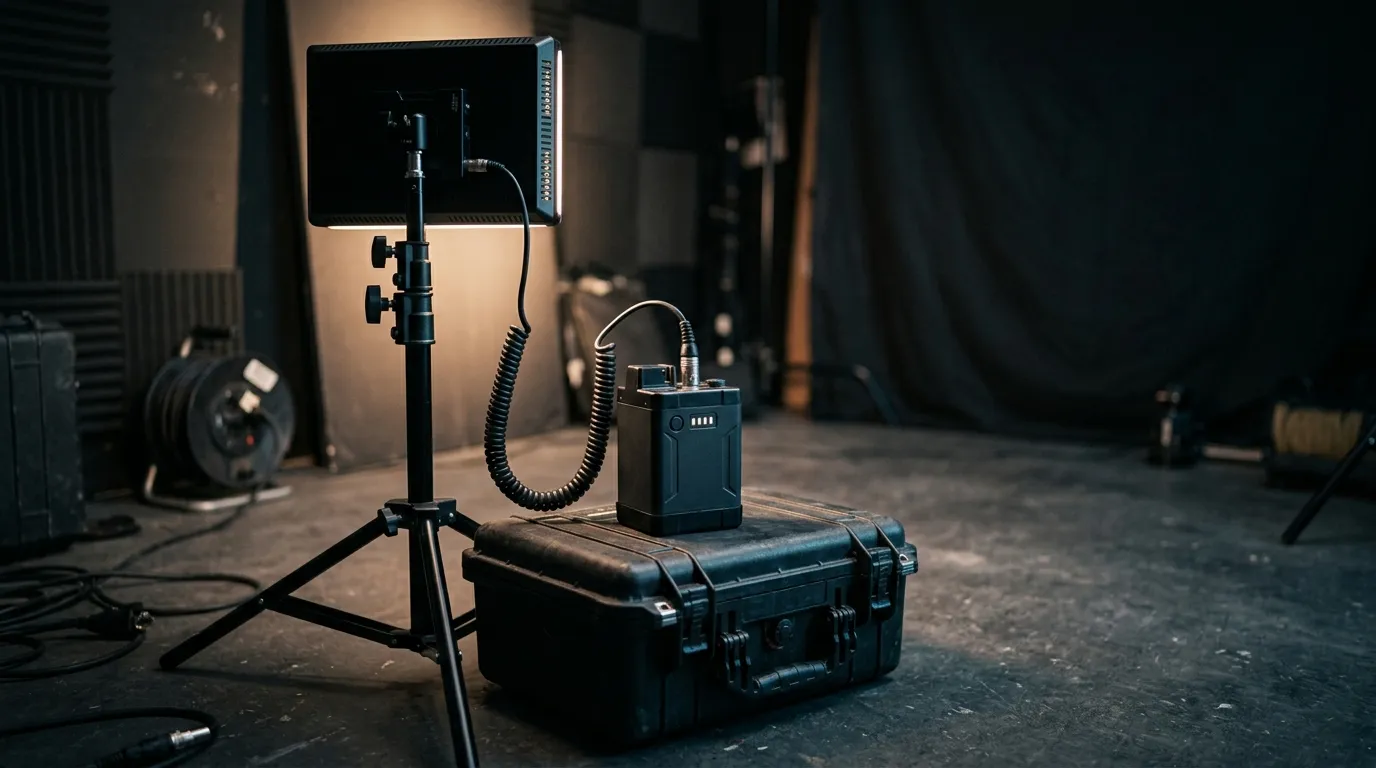
The right lithium battery for a portable photography light is selected by matching usable watt-hours and continuous/peak current to the light's power draw at each brightness setting, then confirming voltage, charger, BMS, connector, thermal, and mechanical requirements. Runtime is determined by dividing usable battery energy (in watt-hours) by the light's average power consumption, while output stability depends on the battery's ability to deliver current without excessive voltage sag.
For lighting manufacturers and product teams, this means the battery decision cannot be an afterthought. It must begin with a clear picture of how the light will be used, how much power it draws at each output level, and what physical and thermal constraints the pack must fit within. Gloflux supplies custom lithium battery solutions for mobile lighting applications, and the same engineering discipline applies whether you are designing a compact on-camera light or a high-output location fixture.
How Battery Runtime and Output Are Calculated for a Photography Light
Battery runtime for a portable photography light comes down to two numbers: how much energy the battery stores and how quickly the light consumes it.
Energy storage is measured in watt-hours (Wh) , not milliampere-hours (mAh). A watt-hour tells you how much total energy the pack can deliver. To find approximate runtime, divide usable energy by the light's average power draw:
Runtime (hours) ≈ Usable Battery Energy (Wh) ÷ Average Light Power Draw (W)
For example, if a light draws 30W at a given brightness setting and the battery pack provides roughly 60Wh of usable energy, the expected runtime is approximately two hours. Real runtime will be shorter because of conversion losses in the light's driver circuitry, battery cutoff behavior, temperature effects, and the fact that not every watt-hour in the pack is accessible before voltage drops below the light's operating threshold.
Why mAh Alone Does Not Tell You Runtime
Milliampere-hours (mAh) or ampere-hours (Ah) measures charge capacity, not energy. A 10,000mAh pack at 3.7V stores less energy than a 10,000mAh pack at 7.4V, even though the charge capacity number is identical. Watt-hours account for both voltage and charge:
Wh = Nominal Voltage (V) × Charge Capacity (Ah)
So a 7.4V, 5Ah pack stores 37Wh, while a 14.8V, 5Ah pack stores 74Wh. When comparing batteries for a photography light, always compare watt-hours rather than milliamp-hours alone.
Voltage, Current, and Output Stability: What the Light Actually Needs
The light's electrical requirements define the battery's voltage and current specifications.
Nominal voltage is the pack's average operating voltage—for example, 11.1V for a 3S configuration of lithium-ion cells. Maximum charge voltage is higher—for standard lithium-ion chemistries, typically 4.2V per cell, or 12.6V for a 3S pack. These values are not interchangeable. The light's input range must accommodate the pack's nominal and fully charged voltage, and the charger must be matched to the pack's maximum charge voltage.
Continuous current is the current the light draws during normal sustained operation at a given brightness. Peak current is the momentary demand during startup, bright flashes, or rapid brightness transitions. The battery pack must supply both without excessive voltage drop.
Voltage sag occurs when the pack's voltage dips under load, primarily due to internal resistance. Every cell and pack has some internal resistance; when current flows through it, voltage drops and heat is generated. If the sag is significant enough, the light may dim or shut down even though the battery still shows charge. A pack with higher internal resistance will sag more under the same load than a pack with lower internal resistance.
This is why a battery's current rating matters as much as its capacity. A pack that stores plenty of energy but cannot deliver the required current will not hold stable output at high brightness.
Choosing the Right Cell Chemistry and Battery Form Factor
| Chemistry | Typical Advantages | Typical Considerations | Best Fit |
|---|---|---|---|
| Li-ion (cylindrical) | Robust mechanical design; mature manufacturing; good energy density; readily available in standard formats | Less design flexibility than pouch; harder to fit in thin or curved enclosures | Lights where durability, modularity, and supply reliability matter |
| Li-polymer (LiPo pouch) | Thin and lightweight; flexible form factors; good energy density | Requires mechanical protection against swelling and puncture; more sensitive to enclosure design | Compact, lightweight, or custom-shaped light designs |
| LiFePO4 | Long cycle life; generally more stable chemistry; lower thermal runaway risk | Lower nominal voltage (~3.2V per cell); higher volume and weight for equivalent energy | Applications where cycle life and safety profile outweigh size and weight |
There is no universal "best" chemistry for portable photography lights. Cylindrical Li-ion cells are a practical default for many designs because they are mechanically robust and easy to assemble into packs. LiPo pouch cells become attractive when the light must be thin, lightweight, or shaped around an unusual enclosure. LiFePO4 is worth considering when the light operates in a fixed location with less concern about weight, or when a longer cycle life justifies the larger physical footprint.
Designing the Battery Pack: Voltage, Capacity, Current, and Mechanical Fit
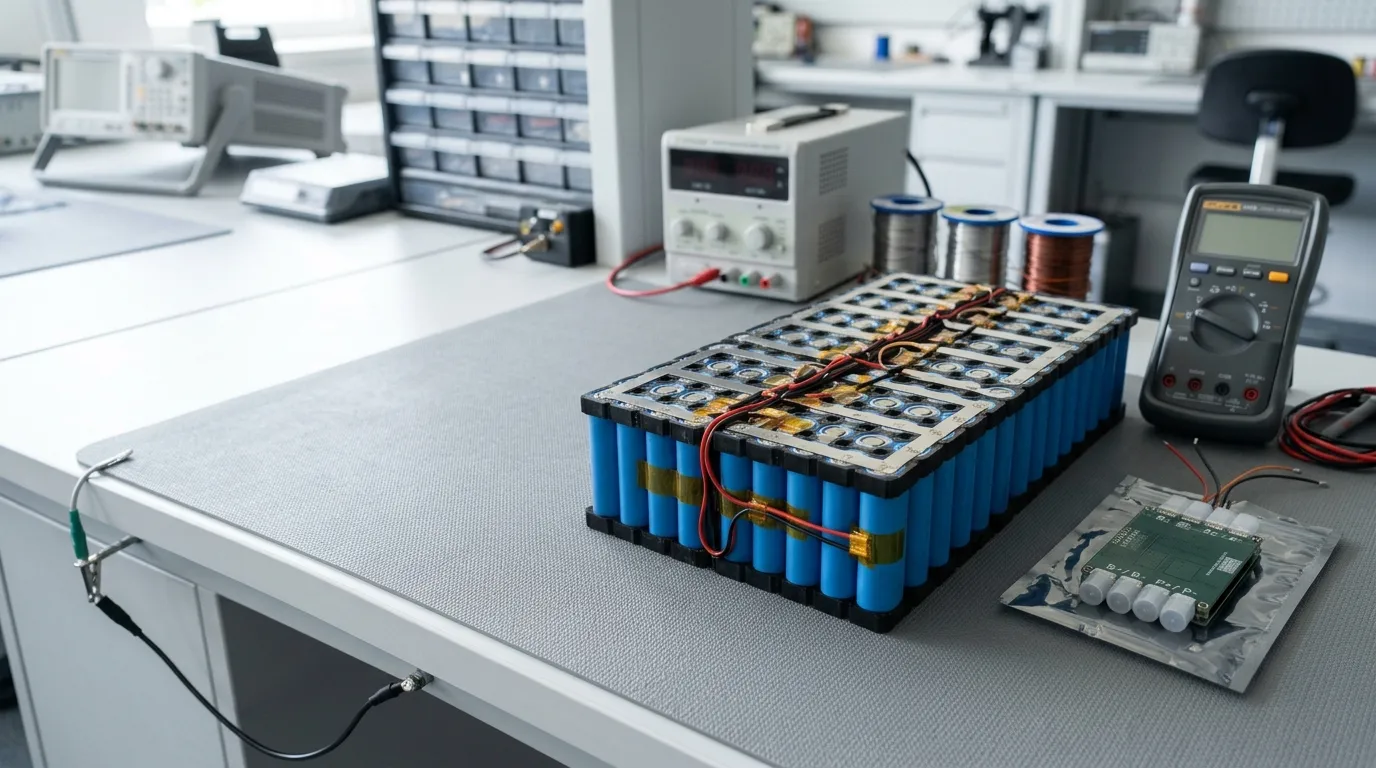
A battery pack is built by connecting individual cells in series and parallel configurations.
- Series connections (S) increase voltage. A 2S pack has two cells in series, typically producing 7.4V nominal for Li-ion. A 3S pack produces 11.1V nominal.
- Parallel connections (P) increase capacity and available current. A 2P pack has two cells in parallel, doubling the pack's charge capacity compared to a single cell.
The S/P configuration directly affects the pack's dimensions, weight, and performance. Increasing series count raises voltage to match the light's input requirement; increasing parallel count adds energy and current capability but also adds size and mass.
A common engineering error is comparing a single cell's rating to a complete pack's rating. A cell rated for 5A continuous discharge is not the same as a pack rated for 5A. The pack's rating depends on its configuration, cell matching, BMS limits, thermal design, and interconnection resistance.
Mechanical integration is equally important. The connector must match the light's input in polarity, current rating, and mechanical locking. The wiring must be sized for the current draw without excessive voltage drop. The enclosure must protect the cells from impact and moisture while providing a path for heat to escape. Insulation between cells, between the pack and the enclosure, and around the BMS is necessary to prevent short circuits.
Thermal management is often underestimated in lighting applications. A high-output light draws significant current, and the pack generates heat internally from internal resistance. If the pack is sealed inside an enclosure with poor heat dissipation, cell temperature rises, which accelerates aging and can trigger BMS temperature protection.
Similar considerations apply to other portable lighting products. For example, a custom lithium battery for headlamps must balance weight against runtime on the user's head, while an outdoor headlamp battery needs to handle colder operating conditions. These applications share the same fundamental pack-design principles but optimize them differently based on the device's physical and environmental constraints. Even a portable light with a different form factor, such as an outdoor speaker battery pack, follows the same process of matching load profile, enclosure, and thermal design to the chemistry and cell configuration. For high-output LED lighting that runs for long periods under demanding conditions, a Custom battery pack for LED work lights often requires similar attention to continuous current capability and thermal management as a professional photography light.
Protection, Charging, and Smart Battery Features
A lithium battery pack for a portable photography light should include a protection circuit (PCM) or a battery management system (BMS) to guard against:
- Overcharge — charging beyond the cell's maximum voltage.
- Over-discharge — discharging below the cell's safe cutoff voltage.
- Overcurrent — drawing more current than the pack can safely deliver.
- Short circuit — an unintended low-resistance path.
- Overtemperature — operating outside the safe temperature range.
For multi-series packs, a BMS may also provide cell balancing, which helps keep all cells at similar voltages during charging and discharging. Without balancing, cell mismatch can reduce usable capacity and shorten pack life.
Charging must follow the correct CC/CV (constant current / constant voltage) profile for the chemistry and series configuration. The charger must match the pack's maximum charge voltage and current limit. Using a charger designed for a different series count or chemistry can cause overcharge, overheating, or damage.
Smart battery features — such as a fuel gauge, state-of-charge monitoring, or communication interfaces like SMBus or I2C — are optional additions that some light manufacturers request when they need accurate remaining-runtime information. These features require additional engineering and are not standard on every pack.
Sending Your Requirements to a Custom Battery Manufacturer
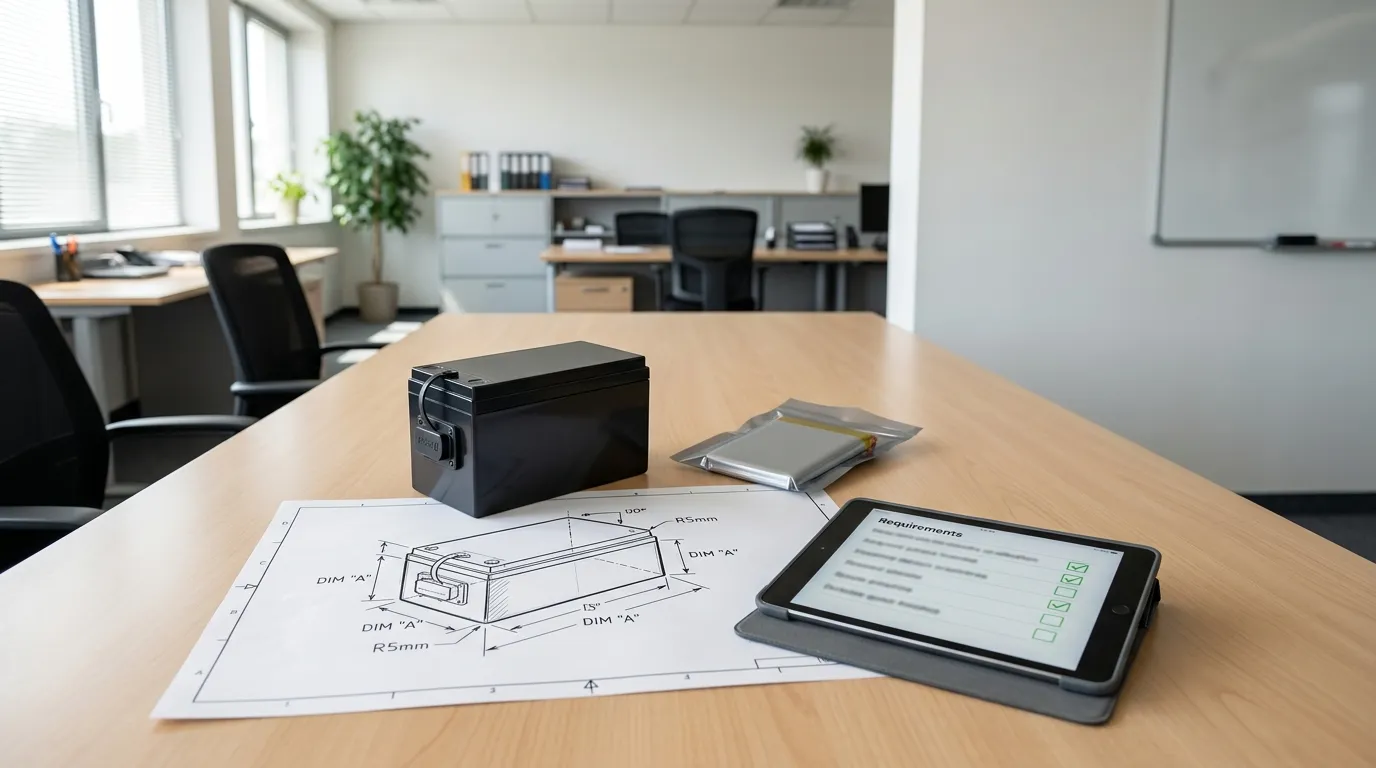
When you contact a custom battery manufacturer like Gloflux, the quality of the response depends on the clarity of your requirements. A complete request should include:
- Light power draw — the wattage at each brightness mode, including startup or peak draw.
- Runtime target — how long the light should operate at each brightness setting.
- Voltage range — the light's acceptable input voltage window.
- Current requirements — continuous and peak current, with duration for peak loads.
- Mechanical space — the maximum dimensions and weight for the battery pack.
- Connector and wiring — the desired connector type, polarity, and cable length.
- Charging method — the intended charger, charging time, and interface.
- Thermal environment — the ambient operating temperature range and any heat dissipation constraints.
- Target markets — the countries where the light will be sold, to plan documentation and transport requirements.
- Production requirements — expected volume, prototype timing, and any quality or traceability needs.
Providing these details upfront helps the manufacturer recommend an appropriate chemistry, cell format, S/P configuration, BMS, and mechanical design rather than offering a generic solution.
Gloflux's mobile lighting application page describes lithium-ion battery solutions for portable lighting, with capacities ranging from 500mAh to 10,000mAh and voltage options beginning at 3.7V. This range reflects the variety of portable lighting products, from compact emergency lights to more demanding location fixtures. The specific pack design for your photography light will depend on the load profile and mechanical constraints you provide.
Testing, Documentation, and Shipping a Lithium Battery Pack
Before a lithium battery pack can be shipped internationally, it must meet transport requirements that are separate from product safety standards.
UN38.3 is the United Nations test standard for lithium metal and lithium-ion cells and batteries during transport. It covers tests such as altitude simulation, thermal cycling, vibration, shock, external short circuit, impact, and overcharge. Passing UN38.3 does not mean a battery is safe for all uses—it means the battery has met the transport testing requirements. A UN38.3 test summary is required documentation for shipping lithium batteries by air, sea, and ground.
Product safety standards, such as IEC 62133-2 or UL 1642 for cells, are separate and address the battery's safety characteristics during normal use and foreseeable misuse. A battery can have a valid UN38.3 test summary without having completed IEC or UL product certification.
Other documentation may include:
- Datasheet/TDS — the electrical and mechanical specifications for the specific pack model.
- SDS/MSDS — safety data for handling, storage, and emergency response.
- Transport documentation — the test summary and dangerous-goods declaration.
Manufacturers may also provide product-level or batch-level test reports, such as capacity test data, cycle life test results, or protection circuit verification. These reports should be tied to the specific model and batch, not presented as a general company capability.
Airline and carrier rules for lithium batteries change over time. Always confirm current IATA requirements and the receiving carrier's regulations before shipping. Transport requirements are also influenced by the pack's watt-hour rating and whether it is shipped as part of a device or as a standalone battery.
For photography light manufacturers, the distinction between transport testing and product safety certification matters during procurement. Ask for the specific documentation that applies to your product, not a broad company certification list. A reliable custom battery partner will provide model-specific evidence and explain what each document does and does not prove.
Building a Battery Pack That Matches Your Light's Demands
The battery is not an accessory to a portable photography light—it is a core part of the design. Starting with the light's power draw, brightness modes, mechanical envelope, and target markets gives you a clear set of requirements. From there, the pack design follows logically: choose the chemistry and cell format, configure the series and parallel architecture, select the BMS and charger, design the mechanical enclosure, and plan the documentation.
Engineers and product managers who work this way avoid the two most common failures in portable light design: a battery that runs out too quickly and a battery that cannot sustain output at high brightness. Both problems trace back to the same root cause—selecting the battery after the light design is already finished, rather than treating the battery as an integral design variable.
If you are developing a portable photography light and need a custom lithium battery pack, send Gloflux your load profile, runtime target, voltage requirements, mechanical space, connector preference, charging method, and target markets. A custom battery partner can then translate those requirements into a pack design that delivers the runtime and output stability your product needs.
Talk to the Manufacturer
Resources & Insights

High Capacity Lithium Battery for Wearables: High-Voltage LiPo Cell Design
2026-10-19
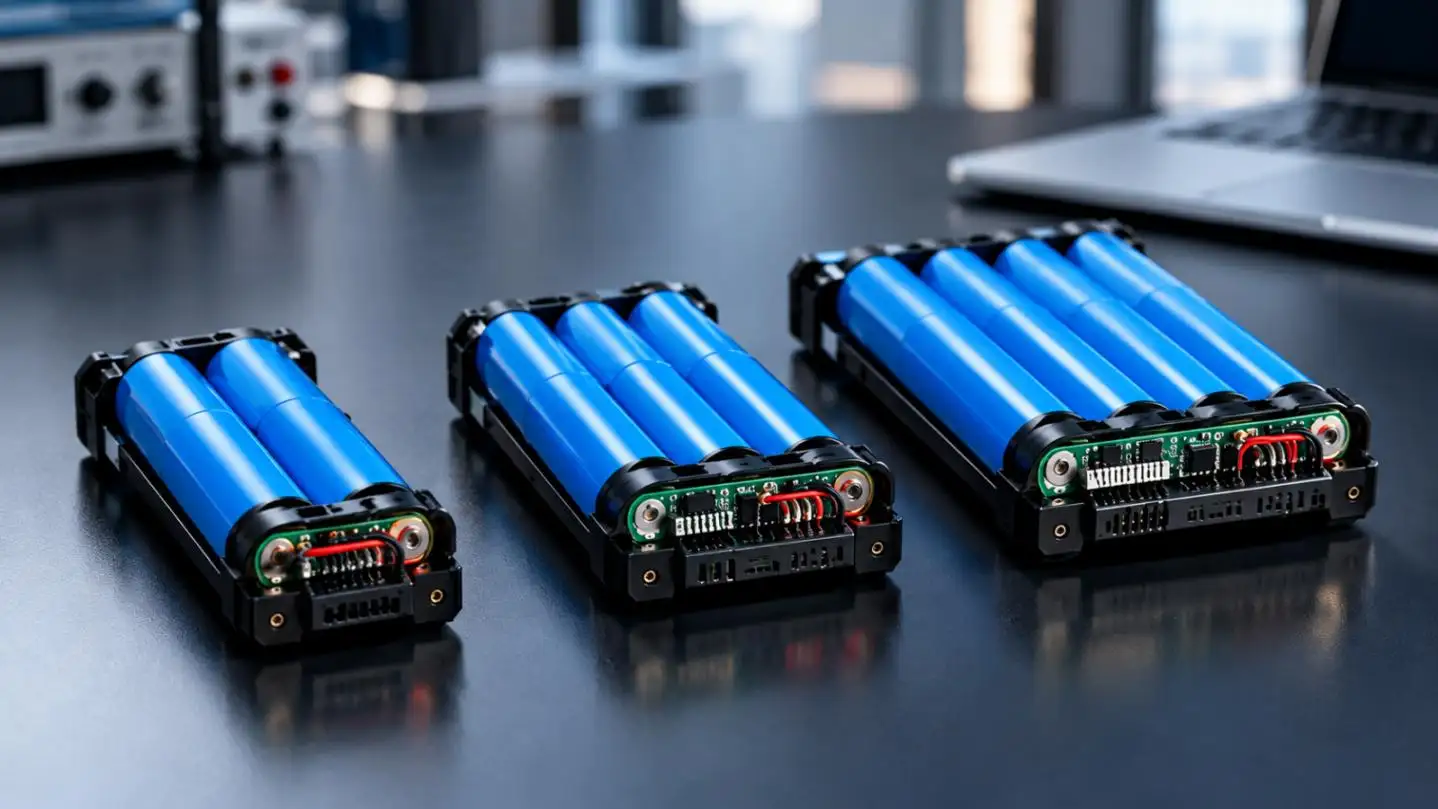
Cylindrical Battery Packs for Laptops: 2S vs 3S vs 4S Battery Design
2026-10-19
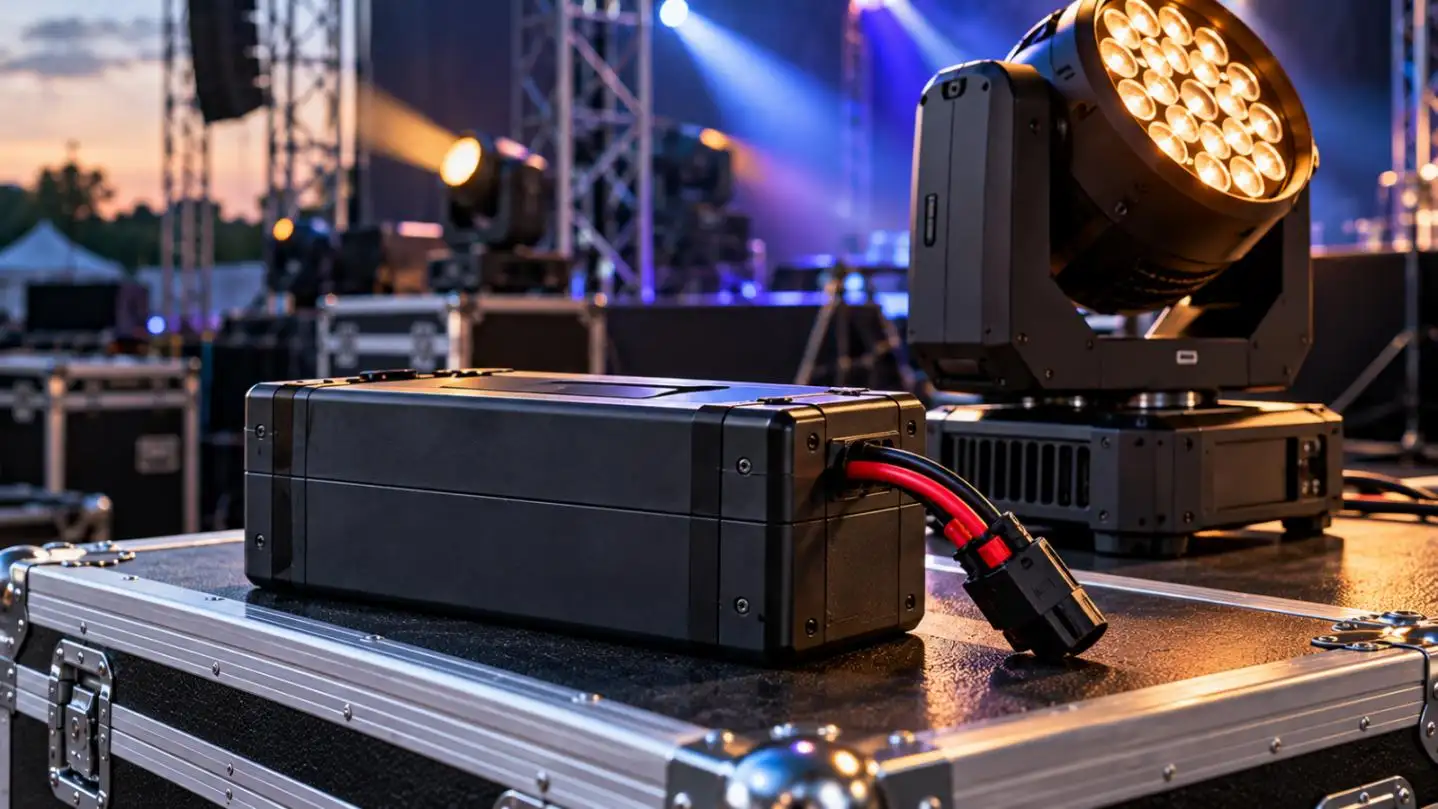
Stage Lighting Battery Pack: Prevent Voltage Drop & LED Flicker
2026-10-19
Best Rechargeable Batteries for Smart Devices: Performance, Safety, and Selection Guide
2026-10-19


