


 Home /
 OEM Beauty Device Battery Supplier Guide: LiPo, Cylindrical, or Ultra-Thin Battery Selection


Table of Contents
Selecting an appropriate battery for a beauty device requires complex engineering decisions regarding miniaturization, energy density, safety, and how the battery will integrate with the device structurally. Facial massagers, RF skin tightening tools, cleansing brushes, and LED therapy masks all operate under different load profiles and enclosure constraints. For this reason, an experienced OEM beauty device battery supplier plays a critical role in determining whether a lithium polymer (LiPo) pouch cell, cylindrical Li-ion cell, or ultra-thin battery solution is most suitable for the final product design.

This guide provides a structured comparison to support early-stage product development decisions.
1. Minimum Battery Requirements for Cosmetic Devices
Before selecting a particular battery technology, the primary electrical and mechanical requirements for most portable cosmetic devices must be established.
A knowledgeable supplier of OEM beauty device batteries will understand the following:
1.Battery with Stable Voltage Output
A battery that provides uninterrupted and consistent energy for RF heating, vibration, and lighting modules.
2.Small and Lightweight
Enhances ergonomic design for beauty devices, whether handheld or worn, that are used for long periods of time.
3.Long Cycle Life
Typical consumer beauty devices need a battery that can achieve between 300 and 500 charge cycles, or more, depending on how frequently the device is used and where it is marketed.
4.High Energy Density
Improves the operational time of the device considering the limited volume available inside the device, without adding weight or bulk.
5.Multi-Layer Safety Protection
Includes safety mechanisms for:
• Overcharge
• Over-discharge
• Short circuit
• Overcurrent
• Thermal runaway
2. Overview of Battery Types
The following table captures the most popular battery types for beauty devices.
| Battery Type | Form Factor | Typical Application Range | Primary Benefit |
| LiPo (Lithium Polymer) | Flat pouch cell | RF devices, facial massagers, cleansing brushes | High flexibility in device design for beauty devices |
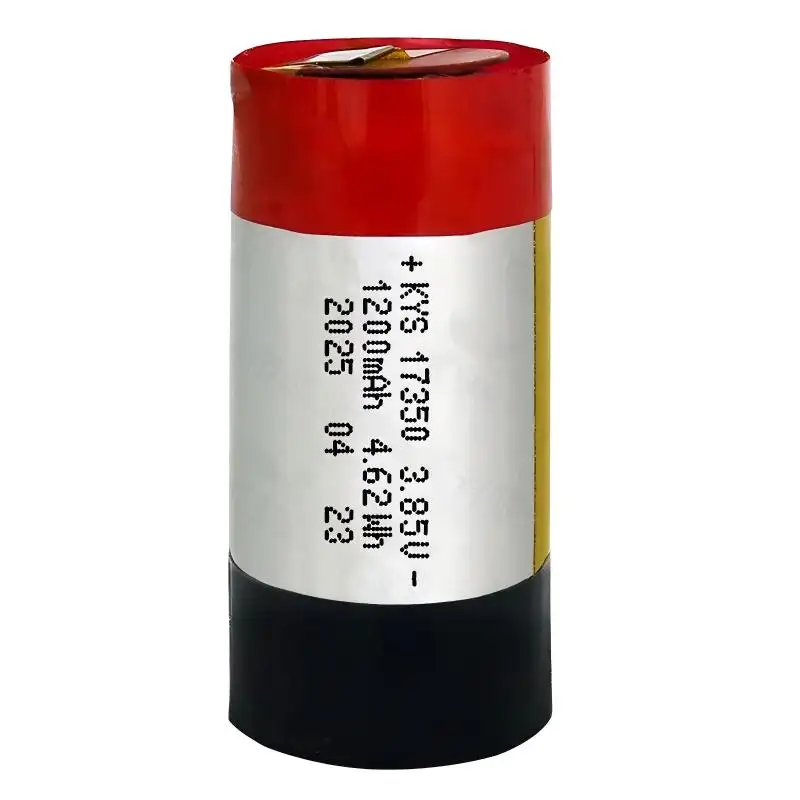
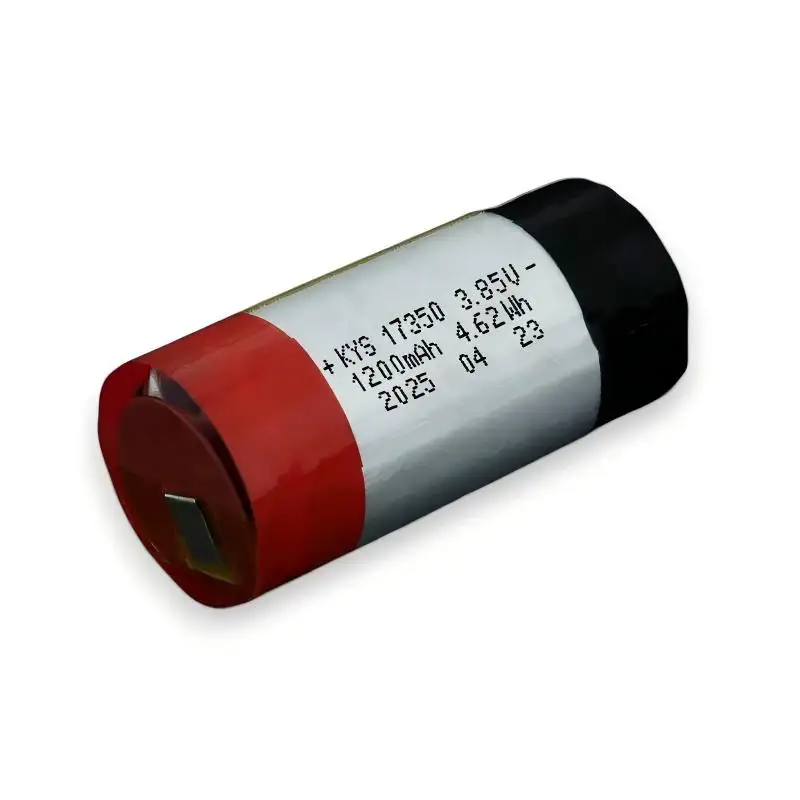
| Cylindrical Li-ion (e.g., 14500 / 18650) | Standard cylindrical cell | Electric brushes, handheld massagers | Design maturity and reliability |
| Ultra-thin LiPo | Thin pouch (Typically designed <~4 mm) | LED masks, wearable skincare devices | High design flexibility and minimal thickness for wearable devices |
In most instances, an OEM beauty device battery supplier offers semi-custom or fully custom pack integration, especially for non-standard industrial designs.

3. Selection Guidance by Battery Type
3.1 Lithium Polymer (LiPo) Batteries
LiPo pouch cells rule the market for handheld beauty devices, and for a good reason. Their design is highly packable and customizable.
Key advantages:
• Customizable design in length, width, and thickness
• Great for ergonomic and curved design
• Good tradeoff in weight and energy density
Typical use cases:
• Compact massagers, RF skincare devices, sonic facial cleansing devices
3.2 Cylindrical Li-ion Cells
Cylindrical Li-ion Cells are the go-to battery choice in early prototyping and in the developing of more cost effective products.
Key advantages:
• Design and production processes lend to a high level of consistency
• Readily available and easy to replace
• Extensive data on electrical performance and cycling available
• Cost efficient in medium sized production
Design consideration:
• Poor design flexibility as a cavity of the required cylindrical shape must be integrated.
3.3 Ultra-thin LiPo Batteries
Ultra-thin LiPo cells are the go-to battery choice in applications where product thickness is a primary design consideration.
Key advantages:
• Design down to ~2 - 4mm depending on capacity
• Super lightweight
• Great for devices designed to make skin contact and curved devices.
Typical use cases:
• Wearable beauty patches, LED facial masks, contour adaptive skincare systems.
4. Unique Benefits of an OEM Battery Supplier for Beauty Devices
OEM battery suppliers for beauty devices offer battery cells and play a key role in the development of beauty devices, as well as their regulatory and reliability requirements.
For example, organizations like Gloflux (2016) have the capability to perform lengthy manufacturing processes due to their environment of combined engineering and testing.
Battery Design and Engineering
• Device architecture-dependent battery design and engineering
• Application-specific chemistry selection and corresponding discharge profile
• Specialized design support for fast charge and high rate discharge
Manufacturing Capability
• Infrastructure for industrial design and engineering to support both prototype and production-level manufacturing
• An emphasis on high levels of automation in assembly to ensure consistent quality in every production batch
Safety and Certification
Some of the major international standards are:
• UL
• CE
• IEC 62133
• RoHS
• UN38.3
• KC / CB (for the specific target market)
Quality Control
A series of inspections are done to ensure:
• Incoming materials are as specified
• Cells are of the same quality and matched
• Assembly is of the same quality
• Final testing covers safety and the product is electrically functional.
5. Practical Selection Checklist for Brands
When working with an OEM beauty device battery supplier, brands should define the following early in development:
1. Mechanical Constraints
Confirm whether the industrial design supports:
• Pouch battery
• Cylindrical structure
• Ultra-thin embedded solution
2. Usage Profile
Describe:
• Frequency of daily usage
• Expectations for battery cycles (usually 300–500+ cycles)
• Peak power demand (RF, vibration, heating, etc.)
3. Certification Requirements
Target regions should be selected early on (EU, US, UK, Asia) should so that safety certification and transportation compliance requirements may be addressed.
4. Protection Strategy
• Integration of BMS or PCM
• Thermal cut-off protection
• Voltage and current monitoring
5. Lifecycle Data Transparency
Request:
• Capacity retention curves
• Cycle life test data
• Thermal performance data
Conclusion: Matching Battery Type to Product Strategy
There are no one-size fits all battery solutions for beauty devices.
• LiPo batteries are the most flexible from a design standpoint.
• Cylindrical battery cells are cost effective and provide ease of manufacturing.
• Ultra-thin batteries are ideal for design focused on next-gen wearables and mask based devices.
The selection of the battery pack is the trade off between the constraints of the industrial design and the requirements of electrical performance.
Partnering early in the development cycle with an experienced OEM beauty device battery supplier, such as Gloflux, minimizes design risk and enhances the potential for a better, more desirable product and compliance, thus reducing time to market for brands.
FAQs
Q1. What types of batteries are typically found in beauty devices?
The most commonly found batteries are LiPo, cylindrical lithium-ion, and ultra-thin LiPo.
Q2. What is the best battery for beauty devices?
This is determined by the consideration of the beauty device's design and the spaces and power constraints.
Q3. What is the advantage of using a LiPo battery for beauty devices?
LiPo batteries allow for the design of tools in various shapes and provide sufficient power within a small volume.
Q4. Is it common for beauty devices to use cylindrical batteries?
Yes, beauty devices do use cylindrical batteries because of their economic design and sufficient power.
Q5. What is an example of a beauty device that uses an ultra-thin LiPo battery?
Usually used for LED masks and other wearables.
Talk to the Manufacturer
Resources & Insights
High Capacity Lithium Battery for Wearables: High-Voltage LiPo Cell Design
2026-10-19
Cylindrical Battery Packs for Laptops: 2S vs 3S vs 4S Battery Design
2026-10-19

Stage Lighting Battery Pack: Prevent Voltage Drop & LED Flicker
2026-10-19
Best Rechargeable Batteries for Smart Devices: Performance, Safety, and Selection Guide
2026-10-19


