


 Home /
 LiPo Battery For Wireless Devices: High-Performance Power Solutions


Table of Contents
- LiPo Battery For Wireless Devices: Power Choice for Modern Connected Technology
- Conclusion:
LiPo Battery For Wireless Devices: Power Choice for Modern Connected Technology
The wireless technology has silently revolutionized our lives and work. Smart home devices and wearable devices, industrial sensors and GPS trackers, almost all connected devices need a trusted power source. The core of this development is the LiPo Battery for Wireless Devices, a small and efficient energy source that can satisfy the needs of the new electronics.
A wireless device lithium polymer battery is a combination of lightweight construction, flexible design, and amazing energy storage. These batteries can be used to power a Bluetooth sensor, Wi-Fi module, medical monitor, or even a smart security system, and provide consistent performance with a small footprint.
Firms such as Gloflux are still working on battery technology by coming up with tailored lithium polymer to be used in next-generation wireless applications. Their battery lineup consists of small and high-performance batteries that can be used in consumer electronics, medical devices, and industrial applications. (Gloflux)
The Reason Why Wireless Devices Require LiPo Battery Technology
The contemporary wireless electronics demands a fine balance between size, weight, and performance. Conventional battery technologies are not always able to fulfill these needs. This problem is addressed with a rechargeable LiPo battery that provides high energy storage in a lightweight and slim package.
Key advantages include:
• Long operating times with high energy density.
• Small and miniature battery designs.
• Low self-discharge rates
• Stable voltage output
• Fast charging capability
• Long charge cycle life
• Excellent compatibility with portable electronics
Due to these advantages, LiPo batteries are now the wireless device battery of choice in various industries.
Learning About Energy Density and Battery Efficiency
The capacity to store more energy without growth in size is one of the largest factors why manufacturers prefer a high-energy-density battery.
The energy density is in watts-hours per kilogram (Wh/kg). The lithium polymer cells of modern times are able to reach much higher energy density than the older rechargeable battery chemistries. This enables engineers to come up with thinner and lighter products without compromising on the runtime performance.
In the case of wireless devices, this is:
• Longer sensor operation
• Reduced charging frequency
• Smaller device dimensions
• Better portability
A lightweight lithium polymer battery is particularly useful in wearable technology, handheld electronics, and remote monitoring systems where every gram counts.
The Lithium Polymer Batteries 3.7V and 7.4V
The most popular types of batteries in wireless electronics are the 3.7V LiPo battery and the 7.4V lithium polymer battery. A 3.7V single-cell design is ideal for:
- Bluetooth device battery applications.
- RFID device battery systems
- Wearable device battery products.
- GPS tracker battery solutions.
- Battery designs of smart home devices.
In devices that need higher power output, manufacturers tend to employ 7.4V multi-cell battery packs. They are prevalent in:
• Telecommunications device battery systems
• Battery equipment of the wireless control system.
• Applications in industrial wireless sensor battery.
• High-performance IoT applications
The proper choice of the voltage has a direct effect on battery efficiency and the reliability of the device.
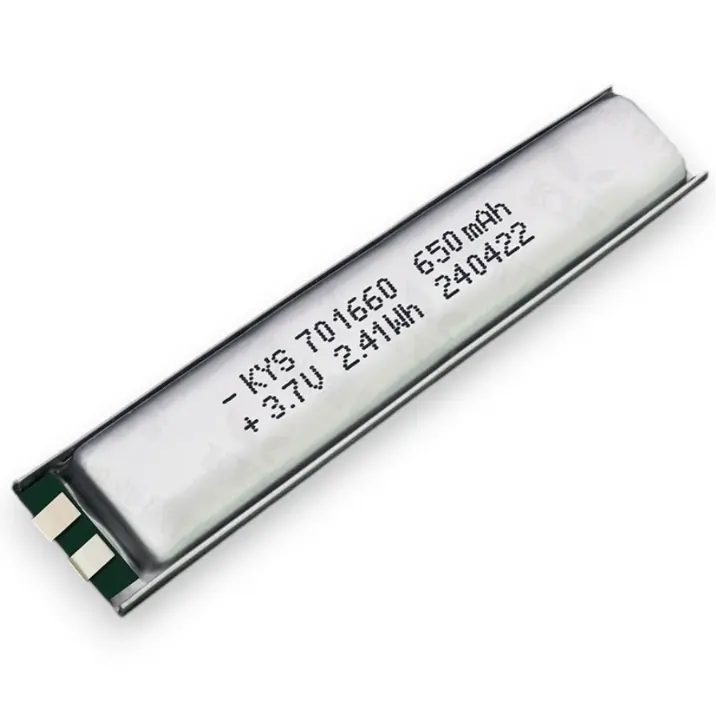
Gloflux 3.7V 650mAh Lithium Polymer Compact Wireless Devices Battery
A good example is the 3.7V 650mAh LiPo Battery for Wireless Devices that is provided by Gloflux. This is a small LiPo battery that is used in applications that need reliable power in a small space. It offers a good balance between size and runtime with a nominal voltage of 3.7V and a battery capacity of 650mAh. Gloflux focuses on bespoke lithium battery designs, which enable companies to design battery sizes, wiring, connectors, and protection circuits to fit their unique product needs. (Gloflux)
This kind of portable device battery is appropriate for:
• IoT sensors
• Smart wearables
• Medical electronics
• Consumer electronics
• Wireless communication modules
• Portable tracking devices
A custom LiPo battery pack offers more design freedom and the best performance to many manufacturers.
Battery Management Systems Enhance Safety
Connected electronics are very sensitive to battery safety. This is why the lithium batteries of today incorporate a Battery Management System (BMS).
A BMS constantly monitors:
• Cell voltage
• Charging current
• Discharge current
• Battery temperature
• State of charge
Advanced systems include:
• Overcharge protection
• Over-discharge protection
• Short-circuit protection
• Battery voltage regulation
• Battery safety circuit monitoring
These characteristics greatly increase battery life and minimize operational risks. A battery protection PCB is especially significant in wireless applications that are either continuously running or remote.
Uses Generating Demand of LiPo Batteries
The fast development of the Internet of Things has significantly raised the demand for sophisticated battery technologies. LiPo batteries are currently used in a variety of devices, such as:
IoT Device Battery Applications
The wireless sensors used in factories, farms, and smart cities need reliable sources of energy that require minimal maintenance.
Bluetooth Device Battery Systems
Bluetooth Low Energy devices use low-power consumption batteries to ensure that they operate as long as possible between charges.
Wi-Fi Device Battery Solutions
Wireless Wi-Fi devices need a constant voltage supply and stable energy storage.
Medical Device Battery Technology
Healthcare equipment and portable monitors need lightweight rechargeable batteries that have reliable performance.
Battery Smart Home devices
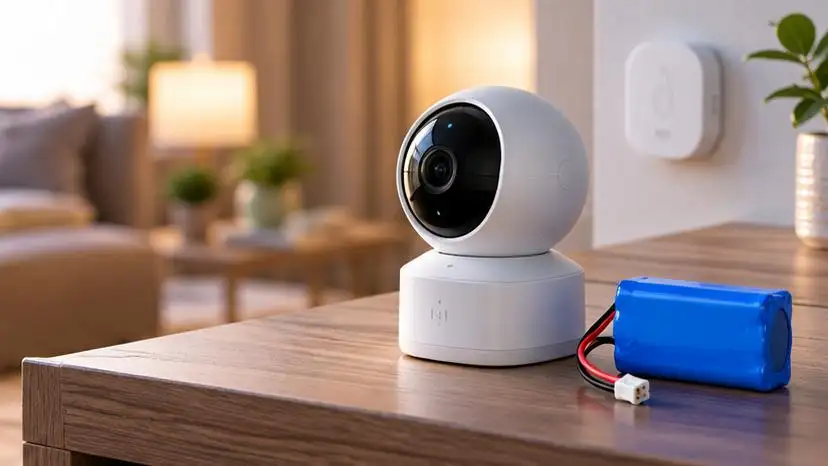
The advantages of smart locks, cameras, thermostats, and security systems include extended battery life.
Wireless Sensor Network Infrastructure
Wireless sensor battery solutions are becoming more and more important in industrial automation to monitor equipment and the environment.
Optimization of Battery Performance to Last Longer
Capacity is not the only factor in battery life. Manufacturers maximize performance by concentrating on:
• Battery operating temperature control
• Efficient charging algorithms
• Integration of the power management system.
• Low-leakage battery designs
• High-technology lithium polymer cell.
Most high-quality batteries can be used over 500 charge cycles with a large portion of their original capacity when used properly. (globtek.com)
Best practices include:
• Avoiding extreme temperatures
• Preventing deep discharge
• Using approved charging circuits
• Maintaining proper storage voltage
These measures can maintain battery efficiency in the long run. Gloflux provides OEM and ODM battery development solutions, serving consumer electronics and healthcare, as well as industrial automation and smart energy systems.
Conclusion:
The wireless technology continues to evolve, but one thing that remains very important in determining its success is the availability of reliable power. The right LiPo Battery for Wireless Devices can increase the life of the devices, enhance efficiency, and facilitate innovative product designs.
Ready to create smarter, more durable wireless products? Get in touch with Contact Gloflux to design lithium polymer batteries tailored to IoT devices, wearables, medical devices, and high-performance wireless electronics. Discover your possibilities and get a quote at Gloflux.
Talk to the Manufacturer
Resources & Insights
High Capacity Lithium Battery for Wearables: High-Voltage LiPo Cell Design
2026-10-19
Cylindrical Battery Packs for Laptops: 2S vs 3S vs 4S Battery Design
2026-10-19
Stage Lighting Battery Pack: Prevent Voltage Drop & LED Flicker
2026-10-19
Best Rechargeable Batteries for Smart Devices: Performance, Safety, and Selection Guide
2026-10-19


