


 Home /
 High Temperature LiPo Battery | LiPo Battery for Industrial Use


Table of Contents
-
Extreme Performance LiPo Battery with High Temperature
- Difference Between a High Temperature Lithium Polymer Battery and a Standard Battery?
- Technical Structure and Characteristics of Performance
- Industrial and Commercial Uses
- Merger with High Voltage Systems (74V Battery Technology)
- Thermal Protection Systems and Safety Engineering
- High Temperature Batteries and Their Significance in the Contemporary Industry
- Conclusion
Extreme Performance LiPo Battery with High Temperature
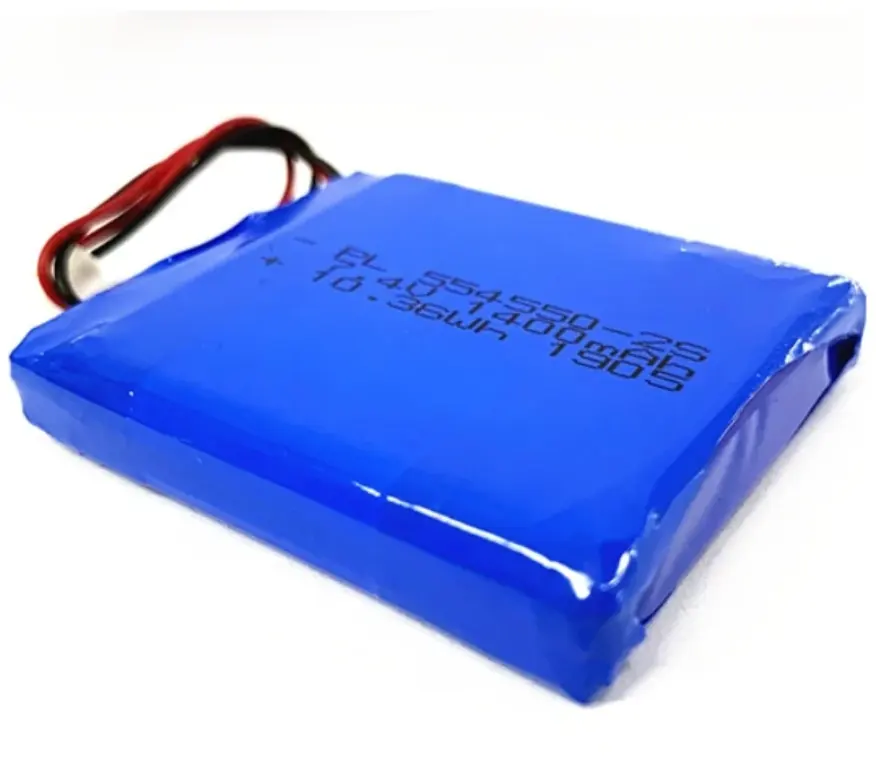
The need for reliable energy storage is increasing rapidly, particularly in places where heat is unavoidable and is always present. A High Temperature LiPo Battery is precisely made to be used under such circumstances. It is not a lithium polymer cell. It is a well-designed heat-resistant LiPo battery that can withstand high thermal loads and yet deliver constant power output.
In modern industries, power failure is not an option. Storage of energy must be stable, be it a drone flying in desert heat or an industrial sensor in a factory furnace area. Here, the high-temperature lithium polymer battery systems are offered with high chemical stability and good internal structure.
These batteries are often referred to as:
• High-temp LiPo battery
• LiPo battery of high temperature.
• LiPo battery of high temperature.
• Thermally stable LiPo battery
They are prevalent in aerospace, robotics, IoT devices, and automotive electronics, where heat resistance is not an option, but a requirement.
Difference Between a High Temperature Lithium Polymer Battery and a Standard Battery?
A LiPo cell is not made in a high-temperature lithium polymer battery. It is built with modified electrolyte chemistry and enhanced separator material that enhances thermal endurance.
The significant engineering improvements are:
- Polymer electrolyte stability at high temperature: Stability of polymer electrolytes at high temperature guarantees unhindered flow of ions even when subjected to heat.
- Lithium battery design uses high-temperature separator material, and lithium battery design removes internal short circuits.
- Better thermal runaway resistance battery technology: This technology raises safety margins.
- High-temperature lithium polymer battery packs with a strong casing to ensure durability.
- These improvements allow the battery to work in conditions that would make normal LiPo batteries degrade or even fail.
The outcome is a thermally stable LiPo energy system that can sustain continuous discharge performance even at extreme operating conditions.
Technical Structure and Characteristics of Performance
The internal construction of a high-temperature energy storage battery is built in a first, second, and third performance stable manner. Nonetheless, the contemporary developments enable it to provide both.
Characteristic performance characteristics are:
• Optimized operating temperature range to suit industry.
• Stable voltage with heat stress.
• High thermal conditions with long cycle life.
• Improved swelling and thermal runaway.
In larger-scale designs, like those that look like a high-temperature lithium-ion polymer cell, the design is reinforced with heat-resistant binders and electrodes coated with a coating.
These batteries can also be used with:
• Stability of the cycles at high temperatures.
• LiPo cell high-temperature discharge.
• Less loss of capacity when subjected to continuous heat.
This renders them applicable in the wide temperature LiPo battery applications, particularly in outdoor or high-load systems.
Industrial and Commercial Uses
One of its strongest points is that a high temperature LiPo battery can be utilized in drones or industrial machines. The batteries are used in several industries where heat in the environment cannot be controlled.
UAV and Drone Systems
- Drone LiPo battery is of high temperature, which guarantees stable flight performance.
- UAV heat-resistant battery increases aerial stability in desert or tropical weather.
Robotics and Automation
- LiPo battery with high temperature enables robotics to operate throughout the factory.
- Robotics based on a heat-intensive power system ensures constant motion control.
Industrial Equipment
- LiPo battery in industrial equipment: LiPo battery can withstand heavy-duty operations.
- High-heat battery solution improves system uptime in industrial automation.
IoT and Smart Devices
- IoT devices have a high-temperature battery, which guarantees remote reliability.
- High-temperature power sources for outdoor IoT devices are in support of smart monitoring systems.
Automotive and Transportation
High-temperature automotive electronic battery: A high-temperature battery is used to guarantee consistent ECU performance.
- Automotive electronics heat-resistant battery enhances the reliability of the vehicle systems.
- Sensor and tracking device high-temp battery to guarantee long field life.
- Harsh environment surveillance system battery aids security infrastructure.
These applications demonstrate that industrial high-temp LiPo battery systems are now a necessity in modern electronics.
Merger with High Voltage Systems (74V Battery Technology)
The higher voltage configurations are usually needed in advanced energy systems to be more efficient. In this case, the solutions, such as a 74V lithium battery pack, are involved. In Gloflux, high voltage systems like those in this system are designed for high-performance industrial:
Such systems tend to be typified by:
• High energy density structure.
• Balanced cell architecture
• Inbuilt battery management system (BMS)
• Best discharge control for constant output.
High temperature lithium polymer battery technology, combined with high temperature, means a high-energy solution that can be used to power:
• Robotics platforms
• Electric mobility systems
• Industrial automation machines
• High-load electronic systems.
This combination improves thermal performance and efficiency in extreme conditions.
Thermal Protection Systems and Safety Engineering
One of the major problems with any overheat-resistant lithium polymer battery design is safety. High temperature environments are more prone to instability, and thus high-level protection systems are required. The important safety mechanisms are:
• Thermal cutoff protection
• Intelligent BMS monitoring
• Pressure release systems
• Heat-resistant encapsulation
• Constant load discharge.
These properties reduce the risks such as swelling, overheating, and loss of energy. The existing designs are also open to battery thermal management, which can be combined with external cooling systems in industrial applications.
High Temperature Batteries and Their Significance in the Contemporary Industry
The industries are moving towards automation, mobility, and smart systems. All these are founded on the storage of energy that is constant. A rechargeable LiPo battery with a high temperature guarantee:
• Dependable power under severe conditions.
• Reduced maintenance costs
• Higher system uptime
• Improved operational safety
• Long-term energy efficiency
This is why high-temperature lithium polymer battery packs are becoming the choice of many companies over the traditional lithium-ion solutions.
Conclusion
Energy storage has to change in a world where machines will never cease, and environments will continue to get harder. A High Temperature LiPo Battery is not just a power supply but an engine of dependability that is capable of working in extreme environments.
It favors robotics, drones, industrial systems, and automotive electronics, which are able to run on constant power even in hot environments. Gloflux offers the future of thermal-resistant energy, in case you are creating systems that cannot afford a power failure. Find the next generation of solutions and propel your innovation.
Talk to the Manufacturer
Resources & Insights

High Capacity Lithium Battery for Wearables: High-Voltage LiPo Cell Design
2026-10-19
Cylindrical Battery Packs for Laptops: 2S vs 3S vs 4S Battery Design
2026-10-19

Stage Lighting Battery Pack: Prevent Voltage Drop & LED Flicker
2026-10-19

Best Rechargeable Batteries for Smart Devices: Performance, Safety, and Selection Guide
2026-10-19


