


 Home /
 Custom Lithium Battery Pack Solutions: Design, Manufacturing & Integration Guide


Table of Contents
- What Is a Custom Lithium Battery Pack?
- Why Are Custom Packs in High Demand?
- Designing a Custom Lithium Battery Pack: Key Parameters
- Typical Applications for Custom Lithium Packs
- How to Specify Your Custom Pack
- Custom vs. Standard Solutions: What's Right for You?
- Maximizing Long-Term Value
- Emerging Trends in Custom Lithium Battery Design
- When Should You Choose a Custom Pack?
- Summary
The move toward electrification is happening across industries—mobility, manufacturing, energy storage—and at the heart of this shift are custom lithium battery packs. As power needs become more complex, safety standards tighten, and space constraints grow, off-the-shelf batteries often fall short. Custom packs bridge that gap by tailoring electrochemistry, mechanical design, and control electronics to fit a specific application seamlessly.
This guide offers a practical overview of designing, selecting, and integrating custom lithium battery packs. It combines core engineering principles with insights from current market trends and recent technology advances.
What Is a Custom Lithium Battery Pack?
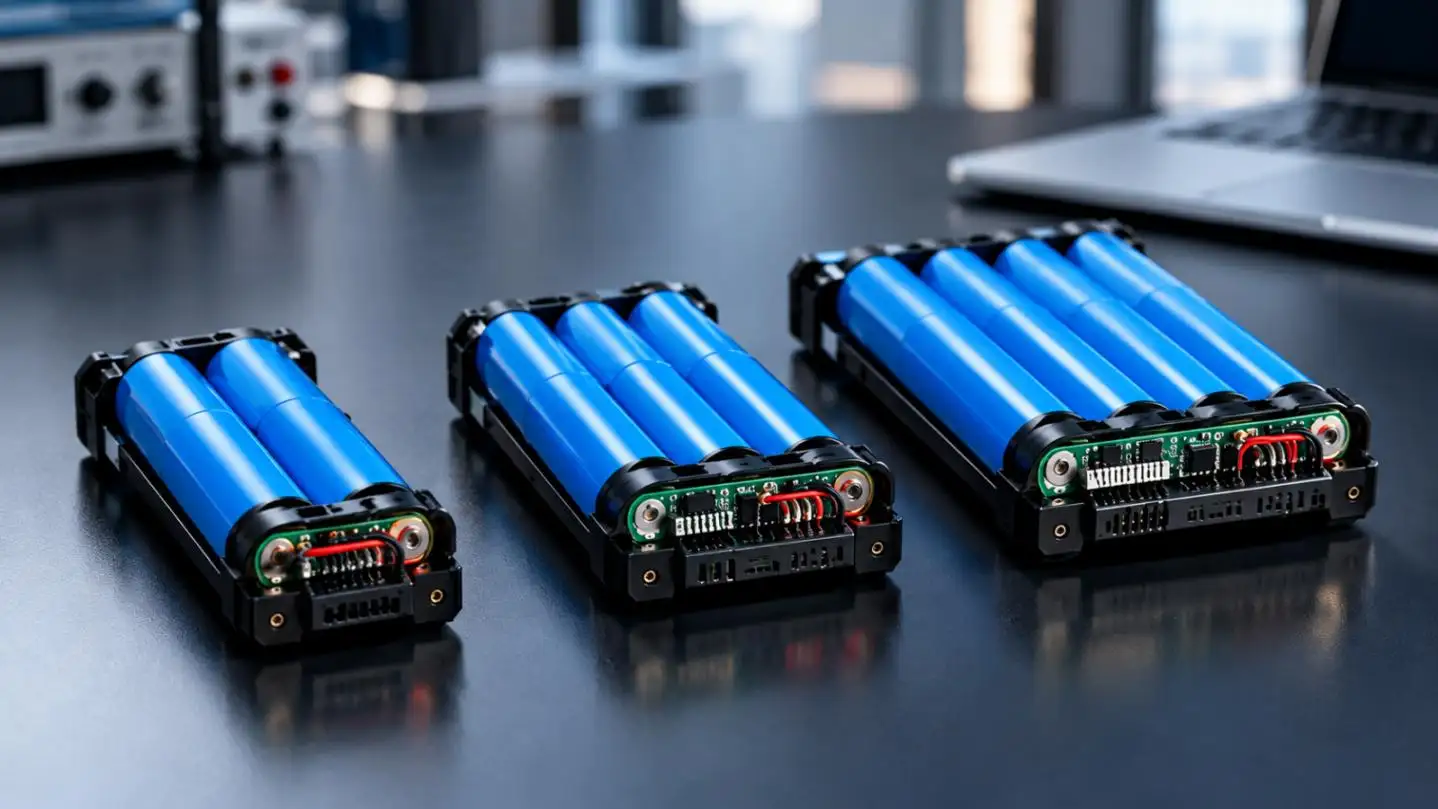
A custom lithium battery pack is an assembly of lithium cells, protective circuitry, mechanical housing, and wiring, engineered specifically for a particular use. Instead of choosing a ready-made solution, you design it to meet parameters like voltage, capacity, current ratings, environmental conditions, and safety standards.
These packs are tailored for applications with unusual form factors, demanding duty cycles—such as high pulse loads or long continuous runs—and environments where reliability over many years is critical. Components include:
- Cells (prismatic, cylindrical, pouch; Li-ion, LFP, NMC, etc.)
- Battery Management System (BMS) for protection and sensing
- Mechanical casing and thermal management components
- Wiring, busbars, fuses, and connectors
- Firmware and communication interfaces like CAN, UART, or RS485
Why Are Custom Packs in High Demand?
Market Drivers
Today, we see a surge in electric vehicles—bikes, trucks, and cars—as well as energy storage projects supporting renewable sources. Many of these applications demand batteries that precisely match their size, power, and safety needs. Automation and robotics are booming too, requiring compact, lightweight packs optimized for reliability and rapid charging. Stricter safety regulations—like UN 38.3 and UL standards—are also pushing companies to go beyond simple DIY assemblies towards professionally engineered solutions. Lastly, organizations now focus more on total ownership costs rather than just initial expense, meaning long-lasting, easily serviceable packs make more sense financially.
Limitations of Off-the-Shelf Packs
Mass-produced batteries can work well for consumer products or low-stakes uses but often struggle with:
- Matching specific sizes or integrating into complex systems
- Managing heat in demanding environments
- Handling high current demands safely
- Communicating seamlessly with industrial controllers
- Optimizing lifespan for particular duty cycles
Designing a Custom Lithium Battery Pack: Key Parameters
Creating an effective custom pack involves balancing multiple factors. Here are the main considerations:
Voltage, Capacity, and Power
- Voltage: Decide on the pack’s nominal voltage based on your load. For example, low-voltage systems (12–48 V) suit many small EVs or robotics; higher voltages (200 V+) are typical in larger EVs and high-power energy systems. This is determined by how many cells are connected in series.
- Capacity: Defined by the cell capacity and parallel configuration, influencing how long the system can run before recharging. For instance, a 100 Ah, 51.2 V pack delivers roughly 5.1 kWh of energy.
- Power: Consider both continuous current and peak surges for startups or accelerations. Cell choice and wiring sizing depend on these demands.
Selecting the Cell Chemistry
Different chemistries offer strengths and trade-offs:
- LiFePO₄: Long cycle life, high safety, stable under abuse, but lower energy density. Great for energy storage and industrial use.
- NMC/NCA: Higher energy density, excellent power, but more sensitive to overheating and degradation if not managed well. Used in EVs and portable devices.
- Others: Lithium Titanate (LTO) for fast charging, or high-temperature variants for tough environments.
Mechanical and Thermal Design
Choose the cell format based on space and robustness:
- Cylindrical cells (like 18650s): durable, readily available, but may require more packing complexity.
- Prismatic: efficient use of space, but sensitive to swelling.
- Pouch: highest packing density but needs careful support against swelling.
Proper thermal management—air cooling, liquid jackets, or phase change materials—is vital to keep the pack safe and performing well over its lifetime.
Battery Management System (BMS)
The BMS acts as the safety and intelligence hub, monitoring voltages, currents, and temperatures. It protects against overcharging, overdischarging, and thermal issues. Modern BMS units support communication over CAN bus or other protocols, enabling integration with vehicle controllers or energy management systems. Good BMS design considers diagnostics, firmware updates, and compliance with safety standards.
Safety, Standards, and Testing
Compliance is essential for transport, safety, and regulatory approval. Standards like UN 38.3, IEC, UL, and regional fire codes set test conditions. Designing with safety margins—fuses, venting paths, proper clearances—reduces risk of failure. Testing at the component and pack level ensures readiness for certification and real-world use.
Typical Applications for Custom Lithium Packs
Electric Mobility
Electric cars, bikes, forklifts, and delivery robots all benefit from packs optimized for specific size, weight, and power needs. Fast charging, vibration tolerance, and thermal stability are key considerations.
Energy Storage
Residential and industrial energy systems demand long life and high safety margins. Modular packs that can scale in size are common for solar plus storage, microgrids, and backup power.
Robotics and Drones
Lightweight, high-discharge packs enable robots and drones to perform demanding tasks. Quick recharge and easy swapping are often added features.
Industrial and Backup Power
Telecom, data centers, and remote sites require reliable, durable systems that can withstand harsh environments while maintaining power quality and safety standards.
How to Specify Your Custom Pack
Here's a practical checklist:
- Define electrical needs: voltage, capacity, currents, charging parameters.
- Set mechanical constraints: size, weight, mounting, environmental conditions.
- Identify performance goals: cycle life, calendar life, efficiency.
- List safety and certification requirements.
- Specify communication interfaces, firmware update methods, and integration needs.
Custom vs. Standard Solutions: What's Right for You?
Custom packs excel when your application demands specific size, safety, longevity, or performance. They can be tailored to fit exactly into your product, offering better long-term value and safety. On the other hand, prototypes or low-stakes projects may find ready-made modules sufficient.
Maximizing Long-Term Value
Focusing on total cost of ownership makes designing a custom pack worthwhile. Higher upfront investment in quality and safety features can lead to lower replacement costs, more efficient operation, and easier scalability over time.
Emerging Trends in Custom Lithium Battery Design
- Higher energy chemistries and silicon‑anode tech for more capacity
- Solid-state batteries promising increased safety and energy density
- AI-enhanced BMS for smarter diagnostics and predictive maintenance
- Design for reuse and recycling to support circular economy goals
- Hybrid standard-meets-custom interfaces for flexible, future-proof systems
When Should You Choose a Custom Pack?
If off-the-shelf solutions can't meet your runtime, power, safety, or size constraints, or if you need certifications or longer service life, then building a tailored solution makes sense. Partnering with an experienced engineer or integrator can help turn your specifications into a reliable, high-performance battery system.
Summary
A custom lithium battery pack isn't just a collection of cells—it’s a carefully engineered subsystem that balances safety, longevity, size, and cost, tailored for your specific needs. As electrification touches more areas—from transportation to energy grids—investing in a well-designed, custom solution can deliver better safety, longer life, and optimized performance. Following the steps outlined here will help you clarify your requirements, avoid pitfalls, and build a battery system that truly fits your application.
Talk to the Manufacturer
Resources & Insights

High Capacity Lithium Battery for Wearables: High-Voltage LiPo Cell Design
2026-10-19
Cylindrical Battery Packs for Laptops: 2S vs 3S vs 4S Battery Design
2026-10-19

Stage Lighting Battery Pack: Prevent Voltage Drop & LED Flicker
2026-10-19

Best Rechargeable Batteries for Smart Devices: Performance, Safety, and Selection Guide
2026-10-19


