


 Home /
 Beauty Device Battery Manufacturer for Facial Massagers and Cleansing Brushes


Table of Contents
A Beauty Device Battery Manufacturer is not just a battery supplier that meets the capacity requirement. Rechargeable batteries used in facial massagers and electric cleansing brushes need to be compact and keep the voltage stable during operation, maintain a stable temperature during battery charging, have good cycle performance, and fit into sealed or narrow packages safely.
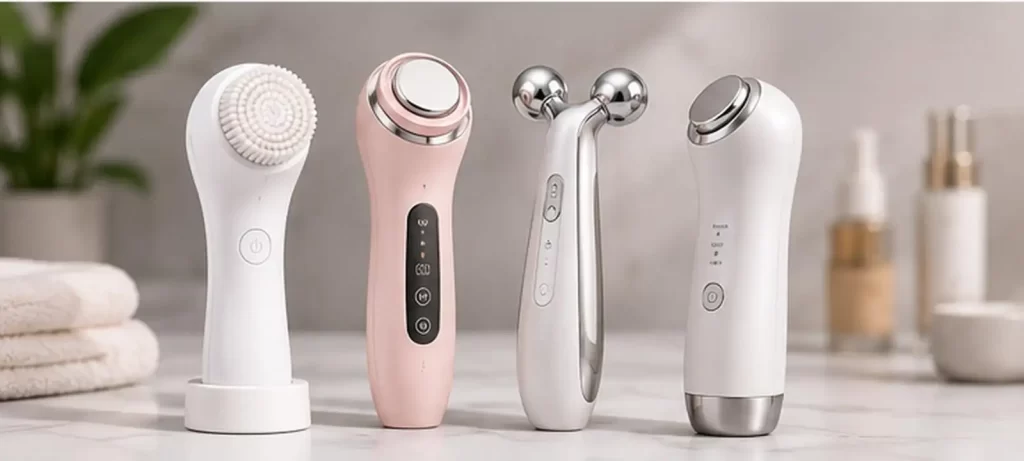
How Beauty Devices Draw Power
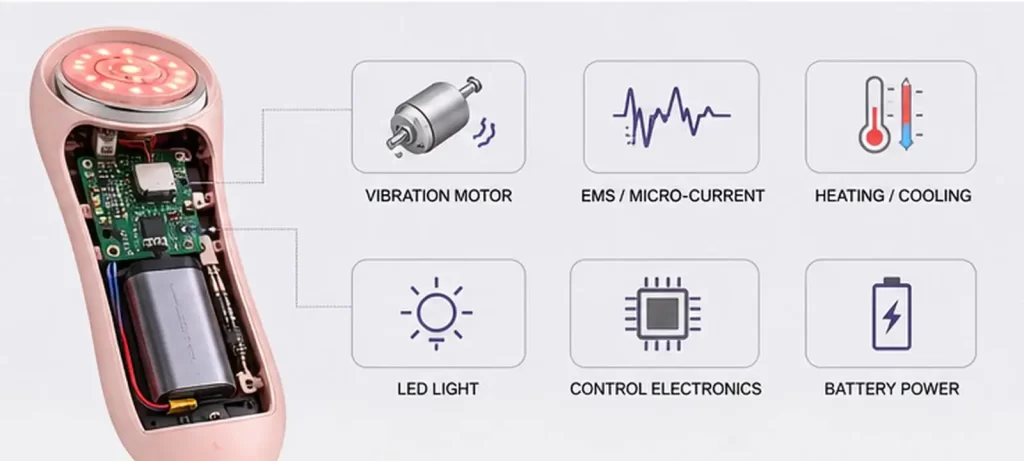
Facial massagers can use vibration motors, EMS or micro-current circuits, heating or cooling elements, LEDs, and control electronics. The current can vary greatly between different working modes. During operation, some motors and heating elements can draw very short bursts of high current.
Electric cleansing brushes usually have rotating or sonic motors with speed control, a timer, an indicator, and a waterproof charging interface.
| Device | Typical Loads | Battery Design Focus |
| Facial massager | Motor, EMS, heating or cooling | Stable output, peak current, thermal control |
| Cleansing brush | Rotary or sonic motor | Compact size, cycle life, sealed integration |
| Multi-function tool | Motor, light, heating and PCB | Energy density and power management |
Why Stable Voltage Matters
Battery voltage falls during discharge. If internal resistance is excessive, voltage may drop sharply when a motor or heating module starts. This voltage sag can cause:
• Weaker vibration or unstable brush speed
• Slower heating and inconsistent EMS output
• False low-battery warnings
• Shutdown at high power
• Inaccurate battery indication
A professional Beauty Device Battery Manufacturer evaluates nominal voltage, discharge curve, internal resistance, peak current, protection cut-off voltage, and PCB undervoltage thresholds. The cell, protection circuit, motor, charger, and firmware must operate as one system.
Core Battery Requirements
Compact Mechanical Integration
Beauty devices often have curved handles and very little clearance on certain components including the motor, PCB, charging coil, and enclosure. Integration of the battery should include:
• Dimensional tolerances and amount of allowance provided for cell expansion
• Center of gravity and wire routing
• Distance to heat sources and sharp internal ribs
• Adhesive, foam, and bracket types of fixation
• Connector location and assembly clearance
These should alleviate problems such as pouch compression and damage to cables, give even weight distribution, and eliminate interference when assembling the device.
Capacity, Runtime, and Cycle Life
Typical beauty-device capacities range from approximately 200mAh to 3000mAh. Practical runtime can be estimated as:
Usable battery capacity ÷ average operating current
Actual runtime also depends on:
• Motor startup current
• Operating mode and speed
• Standby consumption
• Power-conversion efficiency
• Device cut-off voltage
• Ambient temperature
• Battery aging
Cycle life depends on cell chemistry, charge voltage, charging rate, depth of discharge, operating temperature, and storage state of charge. A target of 500–1000+ cycles may be possible under defined test conditions.
A responsible Beauty Device Battery Manufacturer should clearly define the test temperature, charge rate, discharge rate, and end-of-life capacity criterion used to calculate cycle life.
Heat and Protection Design
Heat is generated by cell resistance, charging current, motor stall, and nearby electronics. Since beauty devices contact the face or hands, temperature rise should be checked at the battery, PCB, enclosure, and charging interface.
Key controls include:
• Selecting a cell with suitable discharge capability
• Limiting charging current
• Adding NTC temperature sensing
• Separating the battery from major heat sources
• Optimizing internal thermal paths
• Testing normal operation, motor stall, and abnormal charging
Protection normally includes:
• Overcharge protection
• Over-discharge protection
• Short-circuit protection
• Overcurrent protection
• Temperature protection
Protection thresholds must match the actual peak load. A generic protection board may trip during motor startup or fail to provide adequate protection under abnormal conditions.
LiPo or Cylindrical Li-ion?
| Battery Type | Main Advantages | Typical Applications |
| LiPo battery | Thin, lightweight, flexible dimensions | Slim facial massagers |
| Cylindrical Li-ion | Strong casing and mature manufacturing | Cleansing brushes and larger handles |
| Ultra-thin LiPo | Very low profile | LED masks and wearable tools |
| Custom-shaped pack | Efficient use of irregular space | Curved or non-standard housings |
LiPo batteries are suited to slim or irregular layouts, while cylindrical Li-ion cells fit products with regular internal cavities.
A Beauty Device Battery Manufacturer should also evaluate mechanical protection, swelling allowance, peak-current demand, charging method, cost target, and certification requirements before recommending a battery type.
Voltage Selection and Waterproof Integration
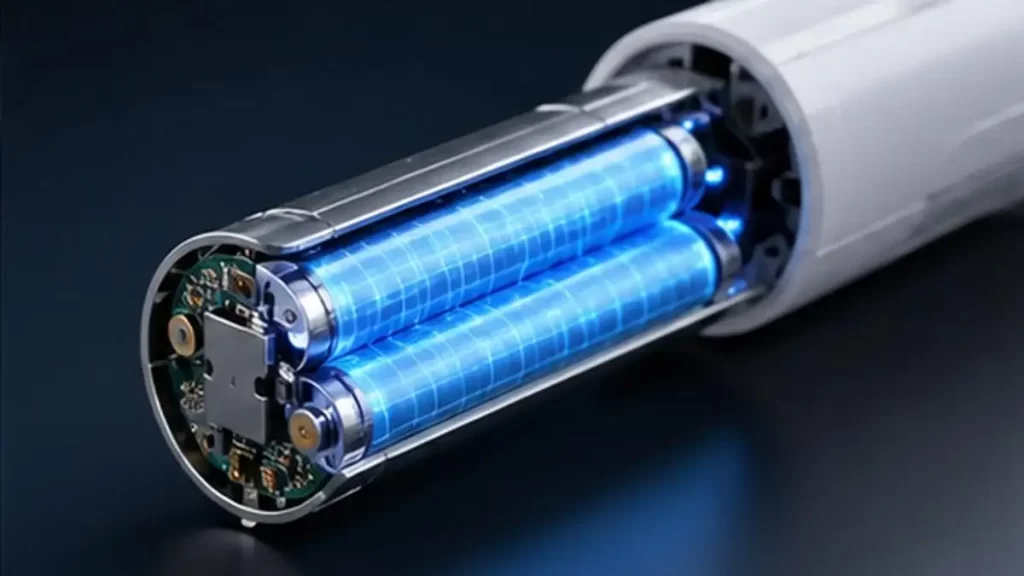
Common configurations include 3.7V single-cell and 7.4V two-cell systems.
A 3.7V platform suits many compact motors and control boards. A 7.4V system may support higher-power or multi-function devices but requires compatible charging, balancing, protection, and power-conversion architecture.
For waterproof cleansing brushes, sealing is an enclosure-level function. The battery itself cannot make the finished device waterproof. Fully sealed construction can also trap heat, so validation should include:
• Charging temperature-rise tests
• Humidity and condensation exposure
• Drop and vibration testing
• Complete-device waterproof testing
• Adhesive and insulation aging
• Wireless-charging efficiency and coil temperature
The battery should also be isolated from potential water-ingress zones and protected from sharp structures that could damage a soft pouch cell.
Common Battery-Related Failures
A short runtime can stem from a lack of capacity with high standby current. Weak vibrations truly point to voltage sag or high resistance. Meanwhile, rapid shutdowns could be attributed to a low protection current.
Heat that is caused by charging is a result of thermal paths, resistance, and a charge current. Capacity loss caused by poor charge retention is the result of deep discharges, fast charging, and/or poor cell design.
Gloflux Battery Design and Manufacturing Capabilities
Gloflux is a Beauty Device Battery Manufacturer specializing in LiPo and Li-ion (cylindrical) batteries for various facial massagers, cleansing brushes, RF devices, LED therapy tools, and other skincare devices.
Typical technical capabilities include:
• Capacity options from approximately 200mAh to 3000mAh
• 3.7V and 7.4V configurations
• Ultra-thin and custom-shaped battery packs
• Customized protection boards
• Wire, connector, label, and insulation design
• Prototype and mass-production support
Engineering support covers load analysis, peak-current evaluation, battery-space review, cell selection, protection-circuit design, sample verification, and production transfer.
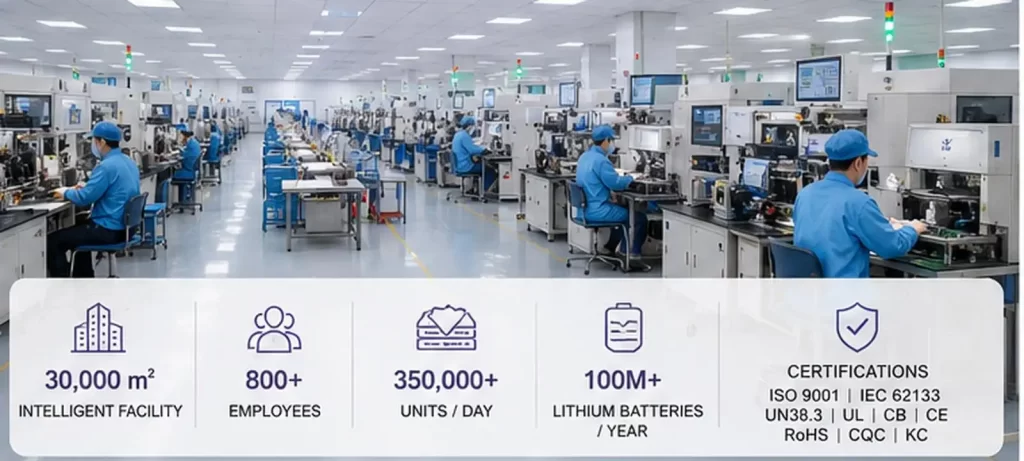
Founded in 2016, Gloflux operates a 30,000㎡ intelligent manufacturing facility with more than 800 employees. Production capacity reaches approximately 350,000 units per day and more than 100 million lithium batteries annually.
Its in-house laboratory can conduct extrusion, needle penetration, thermal shock, overcharge, over-discharge, drop, impact, and short-circuit testing. Certification capabilities include ISO 9001, IEC 62133, UN38.3, UL, CB, CE, RoHS, CQC, and KC, subject to the specific battery configuration and destination market.
Final Considerations
Selecting a Beauty Device Battery Manufacturer requires evaluation of voltage stability, peak current, cycle life, heat generation, structural integration, protection design, and testing—not only nominal capacity or price.
Gloflux supports customized beauty-device battery development from cell selection and protection design to validation and volume production. Beauty device brands can provide battery-space drawings, voltage, peak current, target runtime, charging method, and destination market for an initial engineering assessment.
FAQs
Q1. Which battery solutions does Gloflux offer for beauty devices?
Gloflux manufactures custom lithium batteries for facial massagers, electric cleansing brushes, RF beauty devices, LED therapy tools, skincare equipment and other small handheld personal care electrics.
Q2. Which battery options does Gloflux offer for massagers?
Gloflux provides lithium polymer batteries, cylindrical Li-ion batteries, ultra LiPo batteries, and custom battery pack shapes. The battery selection is based on available space and the volume, peak current, and mechanical structure of the device.
Q3. Does Gloflux offer battery customization for beauty device housings that are curved or narrow?
Yes, Gloflux will evaluate the battery compartment, PCB position, motor placement, connector placement, and the clearance for assembly to develop battery configurations for curved handles, narrow cavities, and irregular housings.
Q4. What capacity and voltage ranges are available?
The typical range for beauty device batteries is 200mAh to 3000mAh, and voltage ranges from 3.7V to 7.4V. The final specifications are decided based upon the device load and runtime.
Q5. How does Gloflux ensure stability with beauty devices?
To improve voltage stability, we assess cell internal resistance, discharge curves, motor start current, peak load, protection settings, and the device cutoff voltage. With this system approach, the undesirable scenarios of weak vibration, unstable brush speeds, and brush shutoff are greatly reduced.
Talk to the Manufacturer
Resources & Insights
High Capacity Lithium Battery for Wearables: High-Voltage LiPo Cell Design
2026-10-19
Cylindrical Battery Packs for Laptops: 2S vs 3S vs 4S Battery Design
2026-10-19
Stage Lighting Battery Pack: Prevent Voltage Drop & LED Flicker
2026-10-19
Best Rechargeable Batteries for Smart Devices: Performance, Safety, and Selection Guide
2026-10-19


