


 Home /
 Smart Ring Battery 150732 20mAh Flexible Curved Cell OEM


Table of Contents
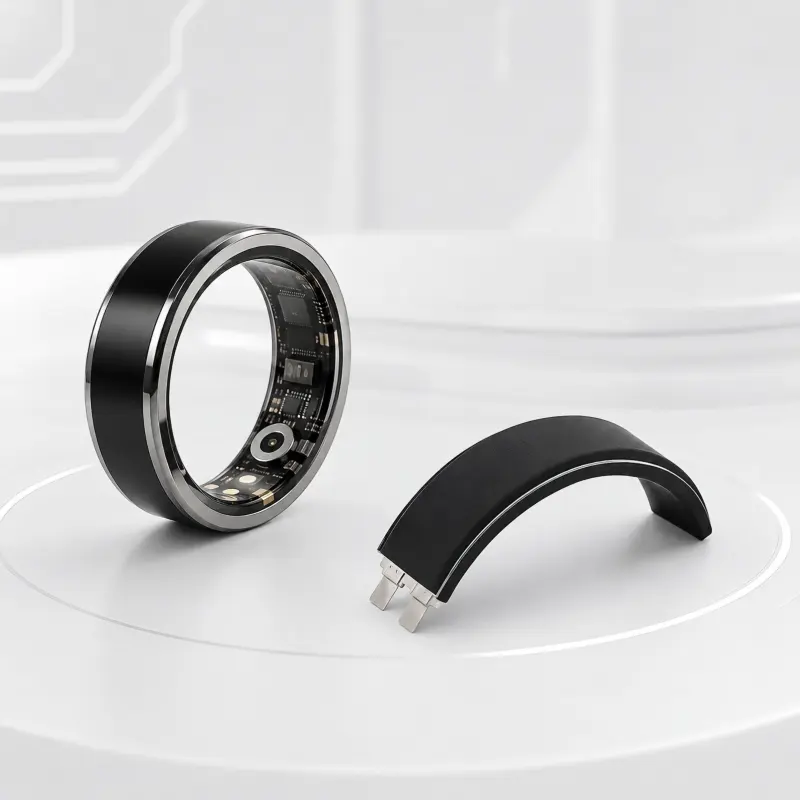
Smart wearable rings are becoming smaller, lighter, and more functional. They can support health monitoring, activity tracking, sleep analysis, gesture control, NFC access, and Bluetooth communication. However, as the product size becomes more compact, the battery design becomes one of the most important challenges. A standard rigid lithium battery is often difficult to fit inside a ring-shaped device. For this reason, the 150732 20mAh 3.7V flexible curved battery offers a practical power solution for smart ring development.
This ultra-thin battery is designed with a curved and flexible structure, making it suitable for narrow, arc-shaped spaces inside wearable electronic products. With a nominal voltage of 3.7V and a capacity of 20mAh, it is suitable for low-power smart wearable applications that require a compact, lightweight, and customized energy source.
Why Smart Rings Need Flexible Battery Solutions
Unlike smart watches or fitness bands, smart rings have very limited internal space. The structure is circular, and the available area for electronic components is narrow. A battery for this type of product must not only provide stable power, but also match the internal shape of the device.
Traditional flat batteries may increase the thickness of the ring or limit the placement of sensors, chips, and circuit boards. A curved flexible battery helps improve internal space utilization. It can better follow the product structure and support a smoother, more comfortable ring design.
For wearable product developers, this type of battery can help reduce design restrictions during early prototyping and mass production planning. It allows engineers to create thinner and more ergonomic devices without sacrificing basic power performance.
150732 20mAh 3.7V Battery Design
The 150732 battery model is suitable for miniature electronic products where space is extremely limited. Its ultra-thin and curved structure makes it different from standard pouch cells. The 20mAh capacity is designed for low-power devices, especially products that work with sensors, Bluetooth modules, or intermittent data transmission.
The 3.7V nominal voltage makes it compatible with many small lithium battery-powered electronic systems. It can be used with suitable protection circuits, charging modules, and device-specific power management systems. Depending on the final product design, the battery can also be customized with different tabs, wire lengths, connectors, and protection board options.
For smart ring applications, the battery must be carefully matched with the device’s operating current, standby power consumption, charging method, and available internal space. This is why OEM and ODM customization is important for successful product development.
Key Product Features
One of the main advantages of this flexible curved battery is its compact structure. The battery can fit into narrow spaces where conventional cells may not be suitable. Its lightweight design also helps improve wearing comfort, which is critical for smart rings that users may wear all day.
The curved form factor supports better integration with ring-shaped devices. It helps manufacturers design products that feel more natural on the finger while keeping the electronic system inside the device compact.
Another important feature is customization. Different smart ring projects may require different dimensions, connector types, soldering methods, protection circuits, or performance parameters. A custom flexible battery solution can be developed according to the product’s internal layout and power demand.
The battery can also support clean assembly for small wearable devices. With the right wire, tab, or connector design, it can be easier to integrate into the final product structure during production.
Applications in Smart Wearable Rings
Smart rings are one of the most suitable application areas for this battery type. These devices often combine sensors, chips, wireless communication modules, and charging contacts inside a very small structure. The battery must be slim, reliable, and shape-compatible.
A 150732 20mAh flexible curved cell can be used in health tracking rings, sleep monitoring rings, fitness rings, gesture control rings, NFC smart rings, and other compact wearable devices. It is especially useful for product designs that need a curved energy source instead of a flat battery.
Beyond smart rings, this battery type may also be used in miniature sensors, flexible electronics, medical wearable prototypes, Bluetooth micro devices, and compact IoT products. Any product with a curved or limited internal space may benefit from a flexible battery design.
OEM Customization Options
For B2B customers, battery customization is often more important than choosing an off-the-shelf model. Different wearable devices have different internal structures and power requirements. A professional battery manufacturer can help adjust the cell size, shape, capacity, wire length, connector type, protection board, and packaging method.
For smart ring projects, customers usually need to confirm several key details before customization. These include the available battery space, required voltage and capacity, maximum discharge current, charging method, connector style, bending requirements, and expected operating time.
OEM customization can help reduce compatibility problems during product development. It also helps improve assembly efficiency and final product stability. For startups, electronics brands, and wearable device manufacturers, early battery matching can save time during sample testing and mass production preparation.
Important Design Considerations
When selecting a battery for smart rings, engineers should not only focus on size and capacity. They also need to consider safety, cycle life, charging stability, temperature performance, and mechanical structure. Since wearable devices are used close to the body, battery safety and consistency are very important.
The battery should be used within its approved bending range and electrical parameters. Excessive bending, overcharging, short circuits, or unsuitable charging methods may affect battery performance. Therefore, the battery should be tested together with the final device structure, charger, PCB, and protection circuit.
For production projects, sample testing is strongly recommended before bulk orders. This allows the customer to verify size matching, runtime, charging performance, assembly method, and device reliability.
Conclusion
The 150732 20mAh 3.7V flexible curved battery is a practical solution for smart wearable ring applications. Its ultra-thin, lightweight, and bendable structure makes it suitable for compact ring-shaped devices where standard lithium batteries may not fit well. With OEM customization options, it can be adjusted to meet different product designs, connector requirements, and power needs.
For smart ring manufacturers, choosing the right battery at the early design stage can improve product comfort, internal layout, and overall reliability. This flexible curved cell provides a compact power option for modern wearable electronics and supports the continued development of smaller, smarter, and more comfortable connected devices.
Talk to the Manufacturer
Resources & Insights
High Capacity Lithium Battery for Wearables: High-Voltage LiPo Cell Design
2026-10-19
Cylindrical Battery Packs for Laptops: 2S vs 3S vs 4S Battery Design
2026-10-19
Stage Lighting Battery Pack: Prevent Voltage Drop & LED Flicker
2026-10-19
Best Rechargeable Batteries for Smart Devices: Performance, Safety, and Selection Guide
2026-10-19


