

 Home /
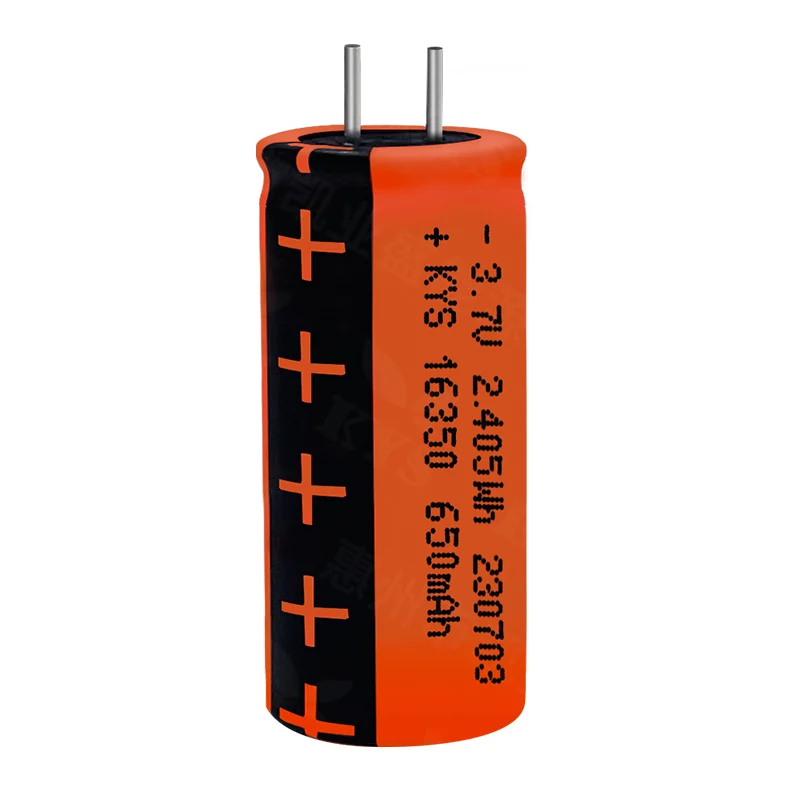
 16350 3.7V Cylindrical Lithium Battery Cell
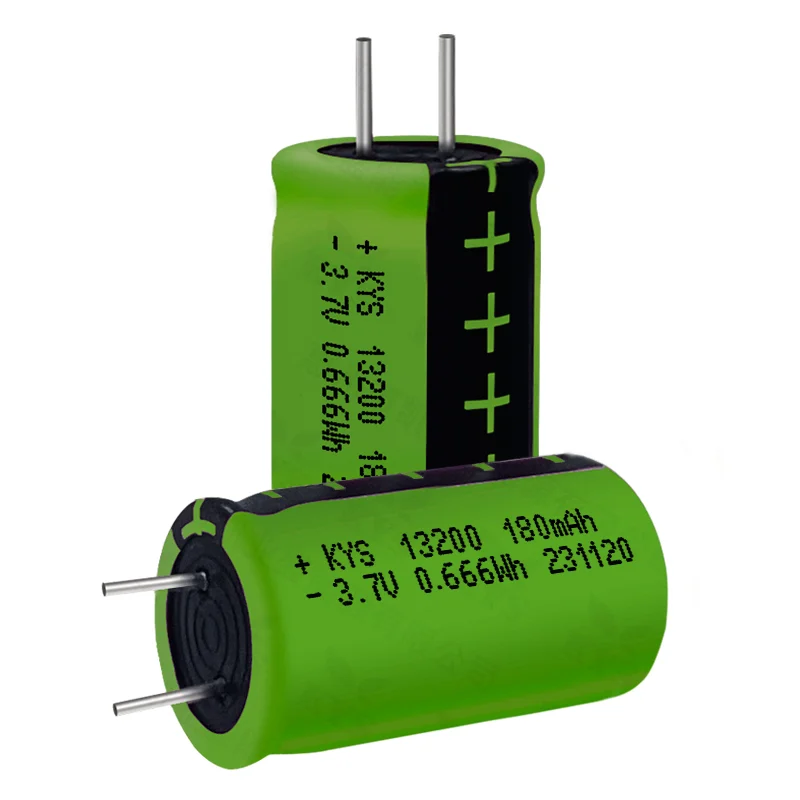
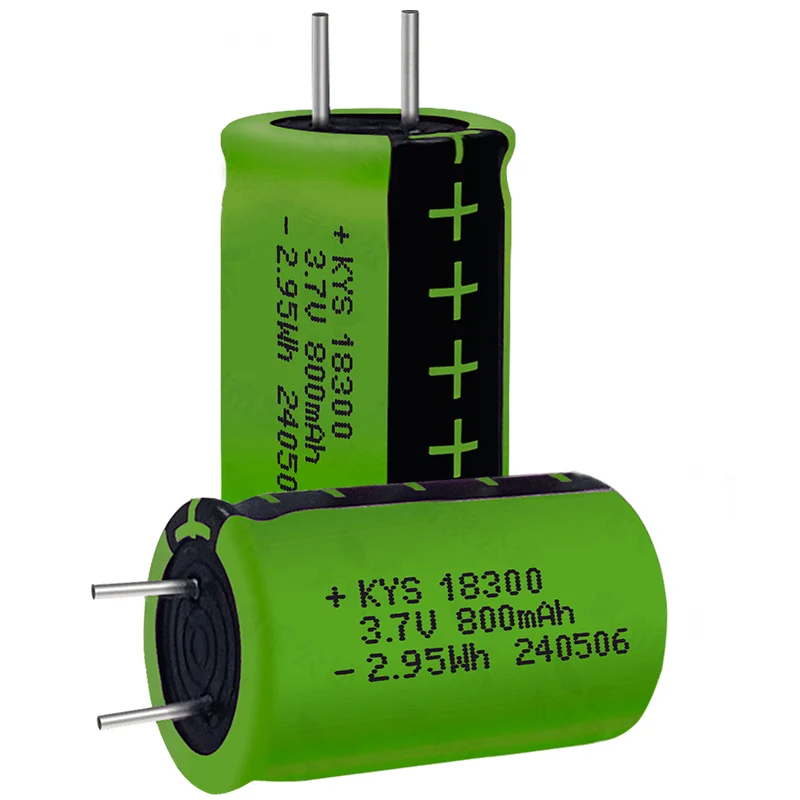
High capacity and low self-discharge, 16350 lithium battery with high reliability. Provides high-performing, durable products to the daily electronics such as e-cigarettes, headphones, POS devices, beauty products, toys, and medical equipment. In-built safety features and customization options. Compact and durable.
- Model: 16350 Lithium-Ion Capacitor
- Cell Size: 16.3(Diameter)×35.7 mm
- Nominal Voltage: 3.7 V
- Discharge Current: 3 A
- Capacity: 620~650 mAh
- Internal Resistance: 45 mΩ
- Application Scope: Electronic Products
- Charging Voltage: 4.2 V
 Get Free Quote
Back to Product List
Overview
Cylindrical Lithium Battery Cell Structure Overview
The cylindrical lithium battery cell (16350 type, 3.7V nominal) is built with a small spiral-wound design by engineers. They roll cathode foil, anode foil and separator membrane into a continuous electrode strip, which they then wind into a cylindrical core that is tightly controlled. Meanwhile, technicians control the tension of winding to ensure that the distance between layers is the same and that the internal alignment is not distorted. Subsequently, they place the rolled core in a metal shell of precision and fix it in place before the electrolyte injection and sealing processes commence.
Material System and Electrochemical Composition
To create the cathode layer, manufacturers apply lithium transition-metal oxide on aluminum foil, and to create the anode layer, they apply graphite-based slurry on copper foil. They also add a PP/PE microporous separator to preserve ionic conduction but not allow direct electrode contact. Moreover, they make an organic carbonate electrolyte that includes lithium hexafluorophosphate (LiPF6), and they pay close attention to moisture levels when handling. In the meantime, the cylindrical housing is made of steel or aluminum alloy to guarantee mechanical strength and pressure resistance during construction.
Electrode Fabrication and Winding Process
Technicians make electrode slurry by combining active materials, conductive carbon and polymer binders in a homogeneous suspension. They then apply the slurry to metallic current collectors with precision coating equipment and dry them in staged thermal ovens. They then use calendering pressure to regulate the consistency of thickness and density. Once the electrodes have been cut into thin stripes, they are inserted into automated winding machines to create a jelly-roll structure that is small. Meanwhile, they weld electrode tabs with ultrasonic or resistance methods to provide stable electrical connection.
Formation Cycling and Standard Compliance System
To trigger electrochemical reactions and stabilize the interphase layer of solid electrolyte within the cell, engineers start the formation cycling. They then perform aging tests in controlled temperature conditions to measure stability in voltages and impedance. Lastly, quality teams conduct dimensional inspection, internal resistance checks and sealing checks. During production, the manufacturers are in line with the IEC 62133 and UN38.3 standards, which assure structural integrity, electrical conformity, and compliance with transport safety of cylindrical lithium battery cell manufacturing.
Product Details
Product Features
- Customizable
Customizable to meet customer requirements
- High Power
Max. 20C maximum discharge rate.
- Long Cycle Life
Meets long-term product usage needs
- High Safety
Successful through extensive safety exams.
- True Rated Capacity
Matches the product design capacity
- Multi-Chemistry Options
Includes LCO, NCM, NCA and LFP systems.
- Multi-Protection Mechanism
In-board overcharge, overdischarge, overcurrent and short-circuit protection.
Product Application Areas
The product can be used with a wide range of portable and powered electronic devices and is commonly used with:
- Personal Care and Health: Electric Toothbrushes, Beauty Devices, Fitness Trackers, Medical Devices.
- Smart Digital & Audio: Headphones, Speakers, Nebulizers, Toys, Lights.
- Financial Payment & Office: POS Machines, USB Tokens, Portable Printers.
Technical Parameters
| Model | KYS 16350 |
| Cell Size | 16.3(Diameter)×35.7 mm |
| Discharge Current | 3 A |
| Operating Voltage | 3.7 V |
| Capacity | 620~650 mAh |
| Internal Resistance | 45 mΩ |
| Processing Method | Customized Per Request |
| Application Scope | Electronic Products |
| Charging Voltage | 4.2 V |