


 Home /
 Lithium Thionyl Chloride Battery: Technology, Manufacturing Process and Industrial Applications


Table of Contents
- What Is a Lithium Thionyl Chloride Battery?
- How Lithium Thionyl Chloride Batteries Work
- Key Advantages of Lithium Thionyl Chloride Batteries
- Lithium Thionyl Chloride Battery Manufacturing Process
- Bobbin-Type vs Spiral-Type Lithium Thionyl Chloride Batteries
- Industrial Applications of Lithium Thionyl Chloride Batteries
- How to Choose a Reliable Lithium Thionyl Chloride Battery Manufacturer
- Why Choose Gloflux
- Conclusion
- FAQ
Lithium Thionyl Chloride Battery technology has become a critical power solution for applications requiring long service life, high energy density, and dependable performance in demanding environments. From smart metering and utility infrastructure to IoT devices, asset tracking systems, and industrial monitoring equipment, Li-SOCl₂ batteries are widely recognized as one of the most reliable primary lithium battery technologies available today.
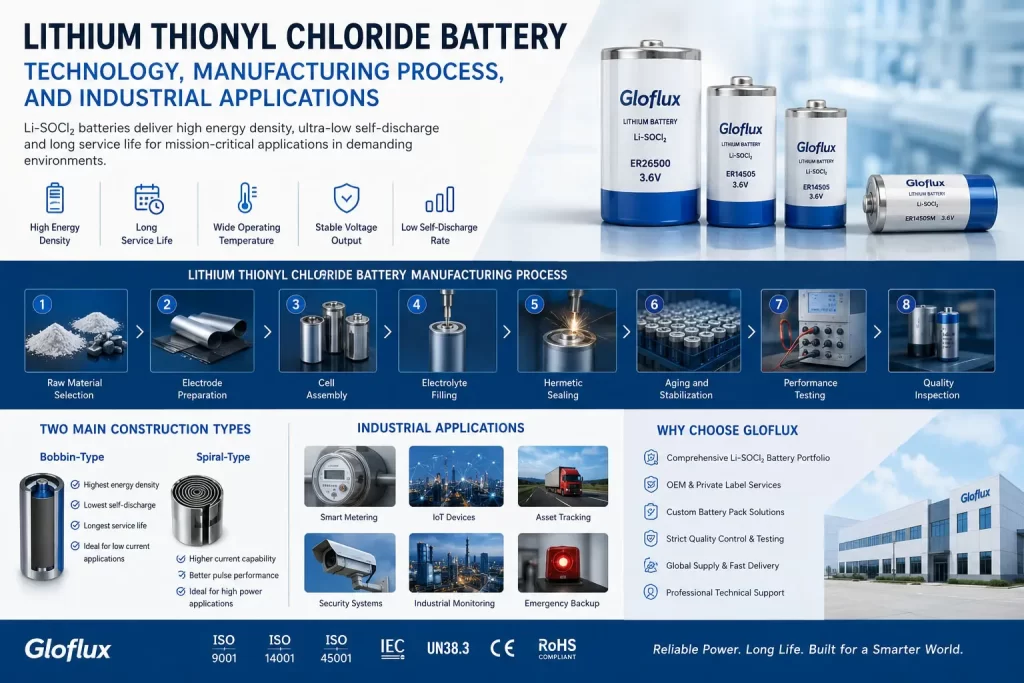
At Gloflux, we manufacture and supply high-performance Lithium Thionyl Chloride Batteries designed to meet the rigorous requirements of industrial, commercial, and utility applications worldwide. Understanding the technology and manufacturing process behind these batteries helps customers make informed decisions when selecting long-life power solutions.
What Is a Lithium Thionyl Chloride Battery?
A Lithium Thionyl Chloride Battery, commonly referred to as a Li-SOCl₂ battery, is a non-rechargeable primary lithium battery that uses lithium metal as the anode and thionyl chloride (SOCl₂) as the cathode material and electrolyte.
This chemistry offers one of the highest energy densities among commercially available primary batteries, making it ideal for devices that require years of operation without battery replacement.
Unlike rechargeable batteries designed for frequent charging cycles, Lithium Thionyl Chloride Batteries are engineered for long-term, low-current applications where reliability and low maintenance are essential.
How Lithium Thionyl Chloride Batteries Work
The operating principle of a Li-SOCl₂ battery is based on an electrochemical reaction between lithium metal and thionyl chloride.
During discharge:
- Lithium serves as the negative electrode.
- Thionyl chloride functions as both the electrolyte and active cathode material.
- Electrons flow through the external circuit to power connected devices.
- Chemical energy is converted into electrical energy with high efficiency.
One of the unique characteristics of this chemistry is the formation of a protective passivation layer on the lithium surface. This layer significantly reduces self-discharge and contributes to the exceptionally long storage life associated with Lithium Thionyl Chloride Batteries.
Key Advantages of Lithium Thionyl Chloride Batteries
High Energy Density
Li-SOCl₂ batteries offer significantly higher energy density than alkaline, zinc-carbon, or many other primary battery technologies. This allows compact battery designs while maintaining long operating life.
Ultra-Low Self-Discharge
One of the most valuable features of Lithium Thionyl Chloride Batteries is their extremely low annual self-discharge rate, often less than 1% under normal storage conditions.
As a result, batteries can remain operational after years of storage, making them ideal for backup and standby applications.
Long Service Life
Depending on operating conditions and power consumption, devices powered by Li-SOCl₂ batteries may function continuously for 10 to 20 years without battery replacement.
Wide Operating Temperature Range
These batteries maintain stable performance in harsh environments, with many industrial models capable of operating from -55°C to +85°C or even higher in specialized designs.
Stable Voltage Output
The nominal voltage of approximately 3.6V provides stable power delivery throughout most of the discharge cycle, supporting sensitive electronic equipment and remote monitoring systems.
Lithium Thionyl Chloride Battery Manufacturing Process
Producing a high-quality Lithium Thionyl Chloride Battery requires precise material control, advanced manufacturing techniques, and strict quality management throughout every production stage.
Raw Material Selection
Manufacturing begins with the careful selection of high-purity materials.
Critical materials include:
- Lithium metal
- Thionyl chloride electrolyte
- Cathode carbon materials
- Separator materials
- Stainless steel battery housings
The quality of these materials directly impacts battery performance, safety, and lifespan.
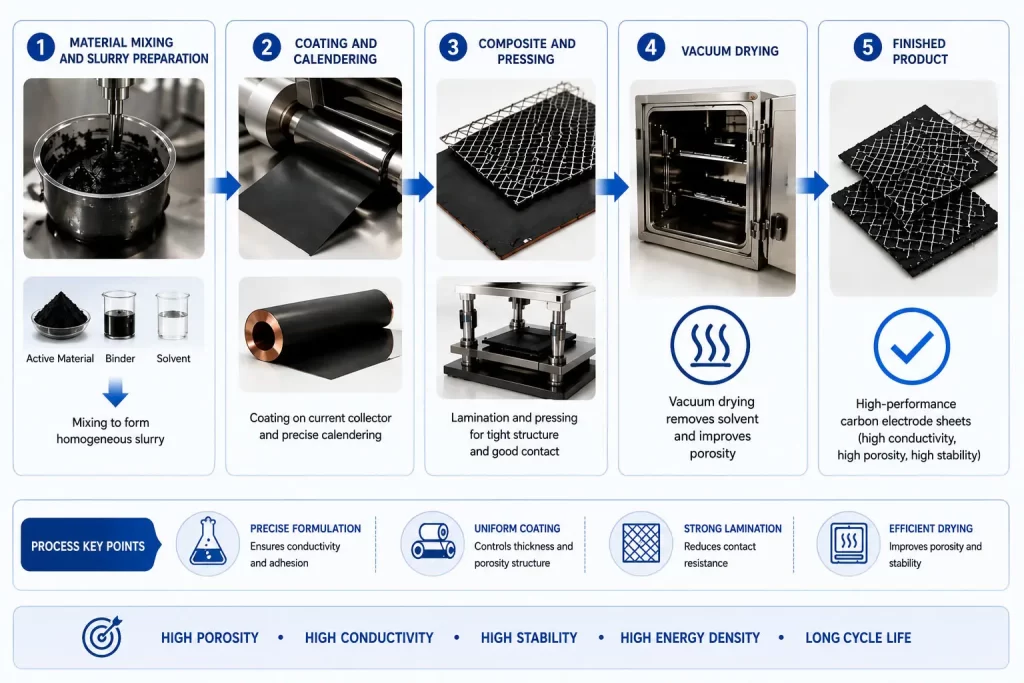
Electrode Preparation
Lithium anodes are processed under controlled conditions to ensure uniform thickness and surface quality.
Cathode structures are prepared using specialized carbon materials designed to optimize conductivity and reaction efficiency.
Precise electrode manufacturing is essential for achieving consistent capacity and voltage characteristics.
Cell Assembly
Battery assembly typically occurs within controlled dry-room environments to prevent contamination from moisture and impurities.
During assembly:
- Electrodes are positioned precisely.
- Separators are installed.
- Internal structures are aligned.
- Components are integrated into the battery housing.
High-precision assembly helps maintain consistency across large production volumes.
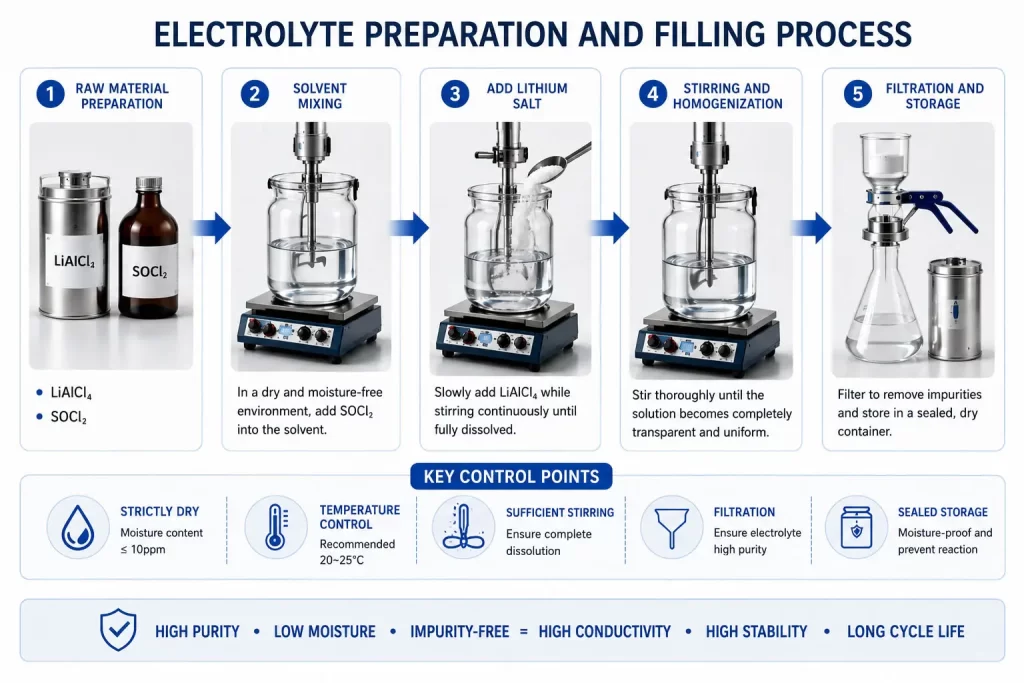
Electrolyte Filling
The thionyl chloride electrolyte is introduced through carefully controlled filling processes.
Accurate electrolyte volume is essential for maximizing battery capacity and ensuring long-term reliability.
Hermetic Sealing
Sealing represents one of the most critical manufacturing steps.
Advanced laser welding and sealing technologies create airtight battery enclosures that prevent leakage and protect internal components from environmental exposure.
Reliable sealing contributes significantly to the long shelf life expected from industrial Lithium Thionyl Chloride Batteries.
Aging and Stabilization
After assembly, batteries undergo a controlled aging process.
This stage allows the internal chemistry to stabilize and helps identify any manufacturing abnormalities before products move to final testing.
Performance Testing
Each production batch is subjected to comprehensive quality inspections, including:
- Open-circuit voltage testing
- Internal resistance measurement
- Capacity verification
- Leakage testing
- Temperature performance evaluation
- Safety inspections
Only batteries meeting strict quality standards proceed to shipment.
Bobbin-Type vs Spiral-Type Lithium Thionyl Chloride Batteries
Lithium Thionyl Chloride Batteries are generally available in two primary construction types.
Bobbin-Type Design
Bobbin-type batteries are optimized for low-current applications requiring maximum operating life.
Typical characteristics include:
- Highest energy density
- Lowest self-discharge
- Longest service life
- Excellent performance in remote monitoring systems
Applications include:
- Smart utility meters
- Water meters
- Gas meters
- Environmental sensors
- Asset tracking devices
Spiral-Type Design
Spiral-type batteries are designed to support higher pulse currents and increased power demands.
Advantages include:
- Higher current capability
- Faster response to load changes
- Enhanced pulse performance
Applications include:
- GPS tracking devices
- Security systems
- Wireless communication equipment
- Emergency backup systems
Industrial Applications of Lithium Thionyl Chloride Batteries
The exceptional reliability of Li-SOCl₂ technology makes it suitable for numerous industrial sectors.
Smart Metering Infrastructure
Electricity, water, and gas meters often operate in remote locations for many years without maintenance. Lithium Thionyl Chloride Batteries provide the long-lasting power required for these deployments.
Internet of Things (IoT)
IoT devices frequently operate with low power consumption and require extended battery life. Li-SOCl₂ batteries help reduce maintenance costs while improving system reliability.
Asset Tracking and Logistics
GPS tracking systems, cargo monitoring devices, and transportation management equipment benefit from the stable voltage and long operating life of Lithium Thionyl Chloride Batteries.
Security and Alarm Systems
Backup power systems, wireless alarm devices, and remote surveillance equipment rely on dependable battery performance during critical situations.
Industrial Monitoring Equipment
Factories, pipelines, utility networks, and environmental monitoring stations often require power sources capable of operating in extreme temperatures and challenging environments.
How to Choose a Reliable Lithium Thionyl Chloride Battery Manufacturer
Selecting the right Lithium Thionyl Chloride Battery Manufacturer is essential for ensuring long-term product performance and safety.
Important evaluation criteria include:
- Manufacturing experience
- Quality management systems
- Battery testing capabilities
- Production consistency
- International certifications
- OEM and customization support
- Technical engineering resources
- Global logistics capabilities
Manufacturers that invest in advanced production technology and rigorous quality control are more likely to deliver stable, dependable battery performance throughout the product lifecycle.
Why Choose Gloflux
At Gloflux, we combine manufacturing expertise, quality-focused production, and global supply chain capabilities to deliver reliable Lithium Thionyl Chloride Battery solutions.
Our advantages include:
- Comprehensive Li-SOCl₂ battery portfolio
- Industrial-grade quality standards
- OEM and private label services
- Custom battery pack development
- International compliance support
- Stable global supply capabilities
- Technical consultation and engineering assistance
Whether powering smart meters, IoT networks, industrial sensors, or critical infrastructure, Gloflux provides dependable energy solutions designed for long-term performance.
Conclusion
Lithium Thionyl Chloride Battery technology remains one of the most effective power solutions for applications requiring high energy density, low self-discharge, and extended operational life. Through advanced materials, precision manufacturing, and strict quality control, these batteries deliver reliable performance across a wide range of industrial and commercial environments.
As global demand for connected devices, smart infrastructure, and long-life electronic systems continues to grow, Lithium Thionyl Chloride Batteries will remain an essential technology supporting the next generation of industrial innovation.
FAQ
What is a Lithium Thionyl Chloride Battery used for?
It is commonly used in smart meters, IoT devices, GPS trackers, industrial sensors, security systems, and remote monitoring equipment.
How long can a Li-SOCl₂ battery last?
Depending on application requirements and operating conditions, service life can range from 10 to 20 years.
Are Lithium Thionyl Chloride Batteries rechargeable?
No. Li-SOCl₂ batteries are primary lithium batteries designed for single-use applications and cannot be recharged.
What is the voltage of a Lithium Thionyl Chloride Battery?
Most Li-SOCl₂ batteries provide a nominal voltage of 3.6V.
What is the difference between bobbin-type and spiral-type batteries?
Bobbin-type batteries prioritize maximum capacity and long life, while spiral-type batteries are optimized for higher pulse current and power output.
Can Gloflux provide customized Lithium Thionyl Chloride Battery solutions?
Yes. Gloflux offers OEM, private label, and custom battery pack solutions tailored to specific industrial and commercial applications.
Talk to the Manufacturer
Resources & Insights
High Capacity Lithium Battery for Wearables: High-Voltage LiPo Cell Design
2026-10-19
Cylindrical Battery Packs for Laptops: 2S vs 3S vs 4S Battery Design
2026-10-19
Stage Lighting Battery Pack: Prevent Voltage Drop & LED Flicker
2026-10-19
Best Rechargeable Batteries for Smart Devices: Performance, Safety, and Selection Guide
2026-10-19


