


 Home /
Custom Lithium Battery Pack for Solar Systems: A Complete OEM Design Guide


Table of Contents
A Custom Lithium Battery Pack for Solar Systems should be designed as part of the complete power architecture—not selected only by voltage and Ah rating. For OEM solar lighting, monitoring equipment, off-grid electronics, backup power and portable energy systems, the battery must match the load profile, solar controller, enclosure, operating temperature and safety requirements.
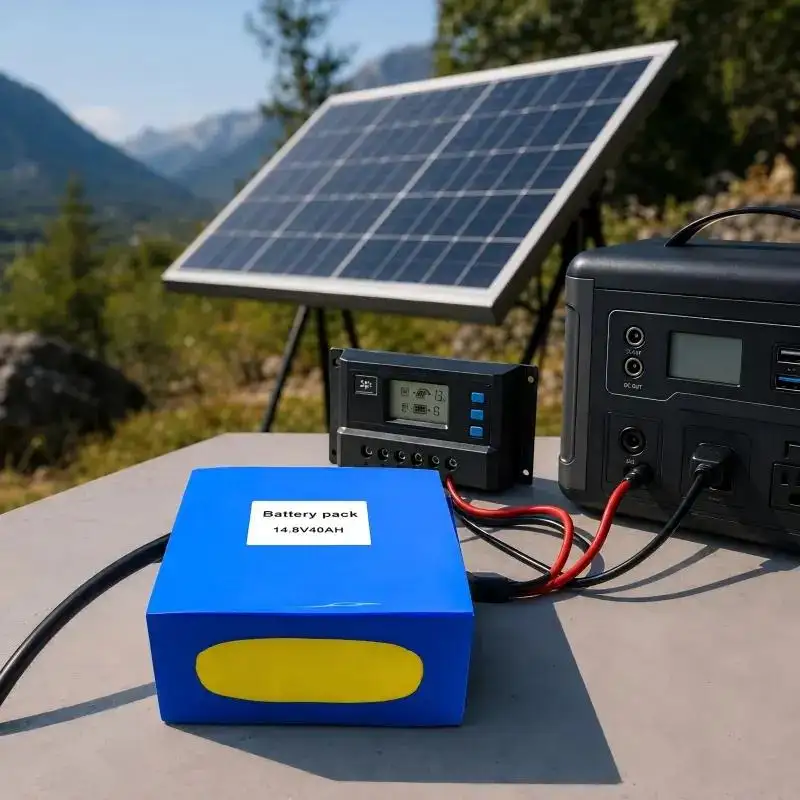
At Gloflux, our experience with designing custom lithium batteries gives us the capability to design battery packs for solar systems at a system level. This includes cell choices, series-parallel configuration, BMS selection, wiring and connector choices, and enclosure design.
1. Start With Energy and Load Requirements
The first engineering question is not "How many Ah do we need?" but:
How much usable energy does the system consume between charging cycles?
Battery energy is calculated as:
Energy (Wh) = Nominal Voltage (V) × Capacity (Ah)
For Gloflux's 14.8V platform:
| Capacity | Nominal Energy |
| 7Ah | 103.6Wh |
| 10Ah | 148Wh |
| 22Ah | 325.6Wh |
| 40Ah | 592Wh |
These are nominal values. Actual usable energy should also account for:
•DC/DC or inverter efficiency
•BMS cutoff limits
•Permitted depth of discharge
•Ambient temperature
•Cable losses
•Battery aging
•Required reserve capacity
For example, a 30W solar monitoring system running for four hours requires 120Wh at the load. A 148Wh battery may appear sufficient, but the design margin becomes much smaller after conversion losses and SOC reserve are included.
2. What 14.8V, 4S and 16.8V Mean
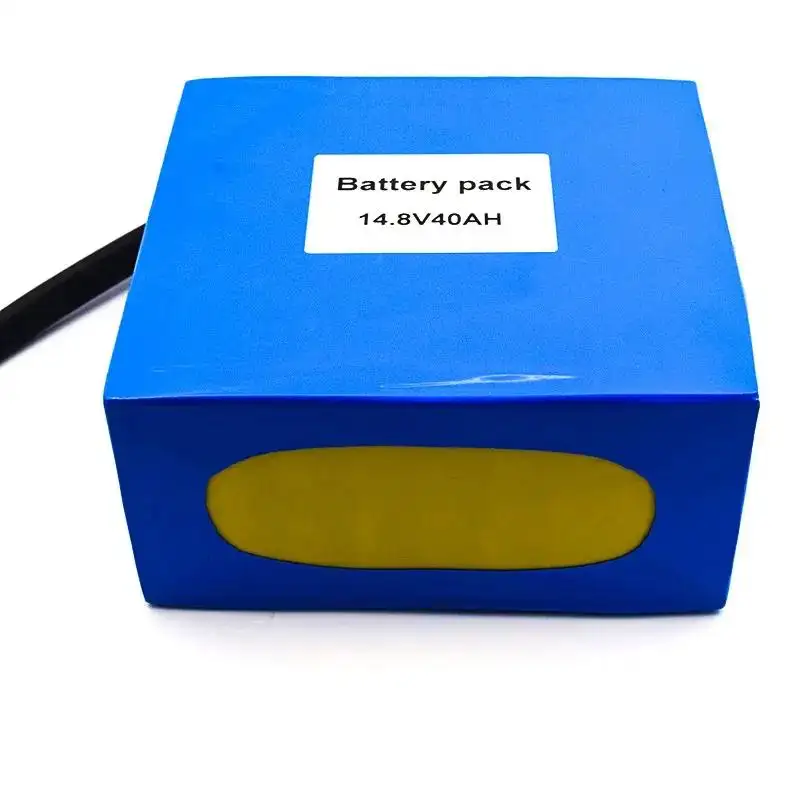
One Gloflux Custom Lithium Battery Pack for Solar Systems configuration uses a 21700-4S2P architecture, with:
•Nominal voltage: 14.8V
•Capacity: 10,000mAh
•Charge voltage: 16.8V
•Cell size: 21 × 70mm
•Cell format: 21700
The product family also supports 7Ah, 10Ah, 22Ah and 40Ah, using either 18650 or 21700 cells.
In a 4S pack, four lithium-ion cell groups are connected in series. Series connection establishes the voltage; parallel connection increases capacity and can increase current capability.
This is why a 14.8V nominal battery should not be paired with a charger simply because the charger is "around 14V." The complete 4S Li-ion pack requires the correct charging profile and, for this Gloflux configuration, a 16.8V charge ceiling.
3. 18650 or 21700: Select by System Design
A professional Custom Lithium Battery Pack for Solar Systems should not default to the largest cell format.
18650 may be useful when:
•The enclosure requires flexible cell positioning;
•The existing product is already designed around 18mm cells;
•Smaller cell geometry simplifies mechanical packaging.
21700 may be useful when:
•Higher capacity per cell can reduce cell count;
•Fewer weld points are desirable;
•Higher pack-level energy density is a priority.
The final decision should also consider discharge current, DC internal resistance, cell sourcing, temperature rise, pack dimensions and production consistency.
Gloflux lists 180mΩ cell resistance for the current 21700 solar-pack example. For an OEM design, however, we recommend confirming whether any resistance specification refers to individual-cell impedance or complete-pack resistance and under what SOC, temperature and measurement method it was obtained.
4. Size the BMS From Current, Not Capacity
A 40Ah pack is not automatically a high-power pack.
For a Custom Lithium Battery Pack for Solar Systems, the allowable current depends on the complete electrical path:
Cells → Interconnects → BMS → Wiring → Connector → Load
The BMS should therefore be sized using both:
continuous current, such as a lighting or communication load;
peak current, such as motor startup, pump startup or inverter surge.
At Gloflux, BMS customization can include:
•Overcharge protection;
•Over-discharge protection;
•Overcurrent protection;
•Short-circuit protection;
•Temperature protection;
•Optional SMBus, I²C or CAN communication.
A BMS with a higher current label cannot compensate for undersized cells, thin wiring or a connector with excessive contact resistance.
5. Match the Solar Controller to the Battery
Controller compatibility is one of the most important checks in a Custom Lithium Battery Pack for Solar Systems.
For a 14.8V / 16.8V Li-ion platform, verify:
•Maximum charging voltage;
•Available charging current;
•Low-voltage cutoff;
•Charge-temperature limits;
•Restart behavior after BMS protection;
•Whether lead-acid equalization can be disabled.
Charging current must remain within the limits of both the cells and the BMS. Likewise, long cable runs require adequate conductor cross-section because voltage drop and resistive heating increase with current.
6. Mechanical and Thermal Design Matter Outdoors
A solar battery may work correctly on a laboratory bench yet fail prematurely inside a sealed outdoor enclosure.
Important mechanical variables include:
•Cell spacing and insulation;
•Cable gauge and routing;
•Connector current rating;
•Enclosure heat dissipation;
•Water and dust protection;
•Condensation management;
•Vibration and mounting;
•Temperature-sensor location.
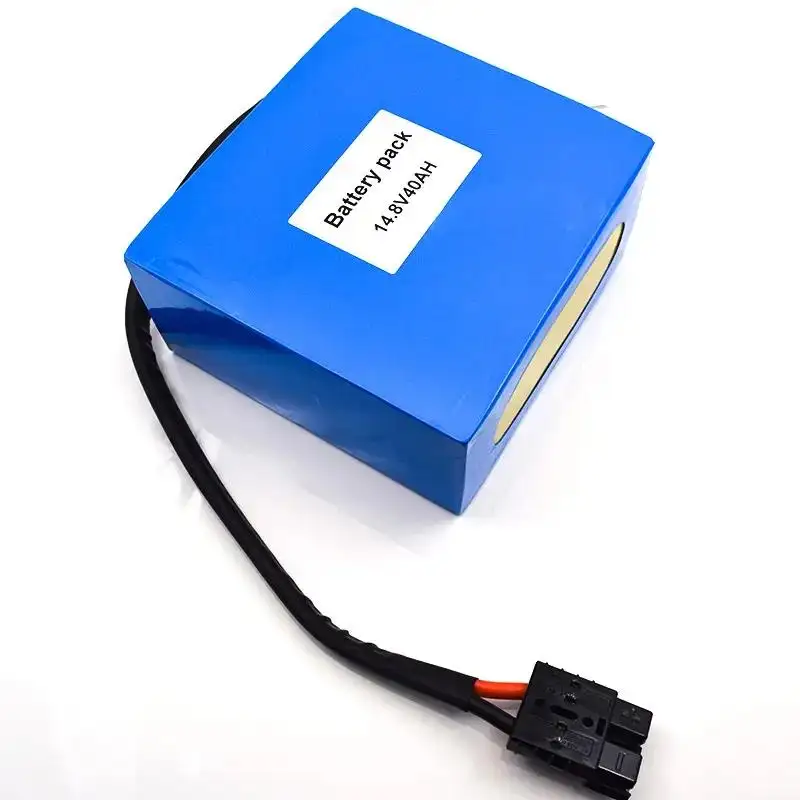
Gloflux can customize wire length, terminals, connectors, battery dimensions and PVC, ABS or metal enclosures, as well as application-specific waterproof structures.
An IP-rated housing should not be treated as a substitute for thermal design: sealing a battery can also reduce heat transfer.
7. Design Compliance Before Mass Production
Compliance requirements should be identified before the battery design is frozen.
Depending on the application and destination market, an OEM project may need to evaluate requirements such as:
•UN38.3 for lithium battery transport;
•IEC 62133 for applicable portable-battery products;
•IEC 62619 or other industrial battery requirements;
•target-market UL, CE or related conformity requirements.
The exact requirement depends on the finished battery and end product. Certification support should not be confused with certification of every possible customized configuration.
From Prototype to Production With Gloflux
A well-designed Custom Lithium Battery Pack for Solar Systems balances energy, current, charging behavior, mechanical integration, temperature and compliance rather than optimizing one parameter in isolation.
Gloflux supports OEM/ODM development from cell sourcing, engineering design and prototype testing through mass production. Our manufacturing base includes a 30,000m² facility, more than 800 employees and annual lithium-battery capacity exceeding 100 million units, supporting both engineering validation and volume programs.
For projects requiring a 14.8V Custom Lithium Battery Pack for Solar Systems, Gloflux's 7Ah–40Ah platform, 18650/21700 options and customizable BMS, wiring and enclosure provide a practical starting point. Review the current specifications and discuss your load, charging and mechanical requirements with the Gloflux engineering team.
FAQs
Q1. What voltage does the Gloflux solar lithium battery pack use?
Gloflux offers a 14.8V nominal lithium-ion battery pack with a listed 16.8V charging voltage for this solar battery platform.
Q2. What capacity options are available?
The Gloflux Custom Lithium Battery Pack for Solar Systems is available in 7Ah, 10Ah, 22Ah, and 40Ah capacity options.
Q3. Does Gloflux use 18650 or 21700 cells?
Both are available. Gloflux supports 18650 and 21700 cylindrical lithium-ion cells, allowing the pack structure to be selected according to capacity, dimensions, current requirements, and application needs.
Q4. Can Gloflux customize the BMS?
Yes. Gloflux supports customized BMS functions including overcharge, over-discharge, overcurrent, and short-circuit protection, with optional communication interfaces such as SMBus, I²C, and CAN.
Q5. Can the battery dimensions and enclosure be customized?Yes. Gloflux can customize pack dimensions, mounting structure, wiring, connectors, and enclosures using materials such as PVC, ABS, and metal.
Talk to the Manufacturer
Resources & Insights
High Capacity Lithium Battery for Wearables: High-Voltage LiPo Cell Design
2026-10-19
Cylindrical Battery Packs for Laptops: 2S vs 3S vs 4S Battery Design
2026-10-19
Stage Lighting Battery Pack: Prevent Voltage Drop & LED Flicker
2026-10-19

Best Rechargeable Batteries for Smart Devices: Performance, Safety, and Selection Guide
2026-10-19


