


 Home /
 Battery Charge Time Calculator: How Long Does It Take to Charge a Battery?


Table of Contents
- What Is Battery Charge Time?
- Basic Battery Charge Time Formula
- Why Charging Efficiency Matters
- Understanding Battery Capacity
- How Charger Output Affects Charging Speed
- Charging Stages Explained
- Lithium vs Lead-Acid Charging Time
- How Temperature Impacts Charging
- Battery Management Systems (BMS)
- Solar Charging Time Calculation
- Fast Charging vs Battery Lifespan
- Common Battery Charging Mistakes
- How to Improve Charging Efficiency
- Choosing the Right Battery for Faster Charging
- Why Charging Technology Matters in 2026
- Final Thoughts
- FAQ About Battery Charge Time
Battery charging time is one of the most important factors when choosing portable power systems, backup batteries, solar storage units, or rechargeable electronic devices. Whether you are charging a lithium battery pack, an RV battery, a portable power station, or a deep-cycle energy storage system, understanding battery charge time helps improve efficiency, battery lifespan, and daily usability.
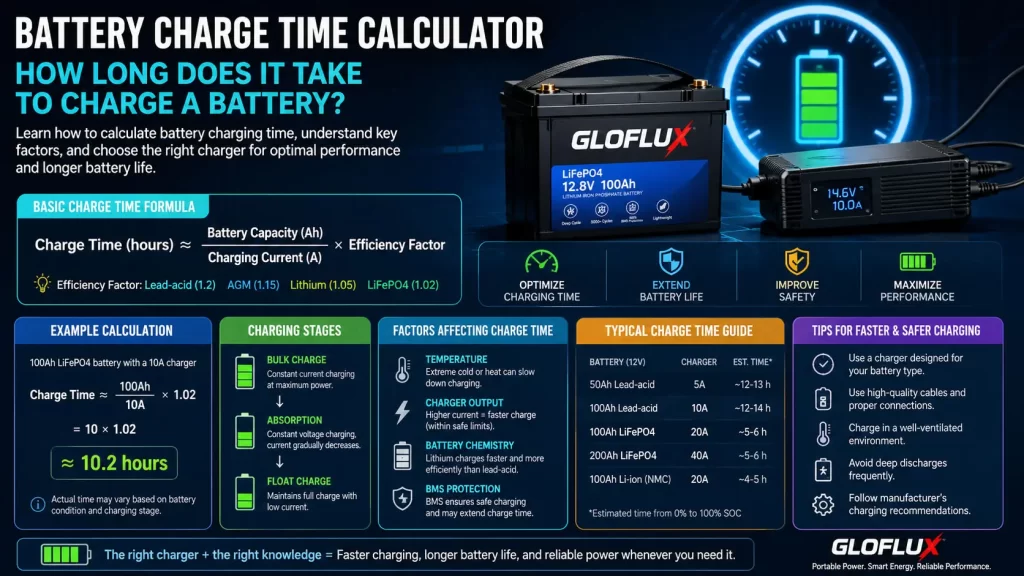
At Gloflux, we provide battery solutions designed for portable electronics, energy storage, replaceable battery systems, and smart power applications. In this guide, we explain how battery charging works, how to estimate charging time accurately, and which factors influence charging speed in real-world applications.
What Is Battery Charge Time?
Battery charge time refers to the amount of time required to recharge a battery from a lower state of charge to full capacity. Charging speed depends on multiple variables, including:
- Battery capacity (Ah or Wh)
- Charger output current
- Battery chemistry
- Charging efficiency
- Battery Management System (BMS)
- Ambient temperature
- Charging stage behavior
Many users assume battery charging is linear, but in reality, most modern batteries slow down during the final charging stage to protect long-term battery health.
Basic Battery Charge Time Formula
The most common method for estimating charging time uses this formula:
Charging Time (hours)≈Charging Current (A)Battery Capacity (Ah)
This formula provides a simplified estimate under ideal conditions.
Example
Suppose you have:
- A 100Ah battery
- A 10A charger
The estimated charging time becomes:
10A100Ah=10 hours
However, real charging times are usually longer because charging efficiency losses must also be considered.
Why Charging Efficiency Matters
No battery charges with 100% efficiency. Energy is always lost as heat, resistance, and internal conversion processes.
Typical charging efficiency:
| Battery Type | Charging Efficiency |
|---|---|
| Lead-Acid | 70–85% |
| AGM | 80–90% |
| Lithium-ion | 90–98% |
| LiFePO4 | 95–98% |
Because of these losses, the practical formula becomes:
Charging Time≈Charger CurrentBattery Capacity×Efficiency Factor
For lead-acid batteries, an efficiency factor of 1.2 is commonly used.
Real-World Example
A 100Ah lead-acid battery with a 10A charger:
10100×1.2=12 hours
This explains why real charging often takes longer than simple calculations suggest.
Understanding Battery Capacity
Battery capacity is usually measured in:
- Amp Hours (Ah)
- Watt-hours (Wh)
Ah vs Wh
Amp Hours describe current over time, while watt-hours measure total stored energy.
The conversion formula is:
Wh=Ah×Voltage
Example
A 12V 100Ah battery stores:
100×12=1200Wh
Understanding watt-hours becomes especially important for portable power stations and lithium energy storage systems.
How Charger Output Affects Charging Speed
Charging current significantly impacts charge time.
Low-Amperage Chargers
Advantages:
- Gentler charging
- Lower heat generation
- Better for long-term battery health
Disadvantages:
- Longer charging time
High-Amperage Chargers
Advantages:
- Faster charging
- Better for commercial or emergency use
Disadvantages:
- Higher heat production
- Increased stress on some battery chemistries
- May reduce lifespan if poorly managed
Modern lithium systems often support much higher charging currents than traditional lead-acid batteries.
At Gloflux Battery Solutions, portable lithium battery systems are designed for stable high-efficiency charging while maintaining safe thermal performance.
Charging Stages Explained
Many batteries charge in multiple stages rather than at constant speed.
1. Bulk Charging Stage
This is the fastest charging phase. The charger delivers maximum safe current until the battery reaches around 70–80% capacity.
2. Absorption Charging Stage
Charging current gradually decreases while voltage remains stable. This prevents overheating and overcharging.
3. Float Charging Stage
The charger maintains a low voltage to keep the battery fully charged without damaging it.
Lead-acid batteries rely heavily on float charging, while lithium batteries typically do not require prolonged float stages.
Lithium vs Lead-Acid Charging Time
Lithium batteries charge much faster than lead-acid systems due to higher charging efficiency and lower internal resistance.
| Feature | Lead-Acid | Lithium |
|---|---|---|
| Charging Efficiency | Lower | Higher |
| Charge Speed | Slower | Faster |
| Heat Generation | Higher | Lower |
| Voltage Stability | Less stable | More stable |
| Typical Charge Time | Longer | Shorter |
For example:
- A lead-acid battery may require 10–12 hours
- A lithium battery with equivalent usable capacity may charge in 2–5 hours depending on charger size
This is one reason lithium technology continues expanding across:
- Portable energy storage
- Smart electronics
- RV systems
- Solar backup systems
- Emergency power devices
How Temperature Impacts Charging
Temperature strongly affects charging performance.
Cold Weather
Low temperatures:
- Slow chemical reactions
- Increase internal resistance
- Reduce charging efficiency
- Extend charge times
Some lithium batteries include low-temperature charging protection to prevent damage.
High Temperatures
Excessive heat:
- Accelerates battery degradation
- Increases safety risks
- Shortens cycle life
Battery systems should always operate within manufacturer-recommended temperature ranges.
Battery Management Systems (BMS)
Modern lithium batteries often include Battery Management Systems.
A BMS helps:
- Prevent overcharging
- Control temperature
- Balance cell voltages
- Improve charging safety
- Extend battery lifespan
Without proper management, fast charging can reduce battery stability and longevity.
At Gloflux, intelligent battery protection and stable charging behavior are important priorities for portable power and replaceable battery systems.
Solar Charging Time Calculation
Solar charging introduces additional variables because sunlight conditions constantly change.
Solar charging depends on:
- Solar panel wattage
- Sunlight intensity
- Controller efficiency
- Weather conditions
- Battery voltage
Basic Solar Charging Formula
Charging Time=Solar Panel WattageBattery Wh
Example
A 1200Wh battery using a 200W solar panel:
200W1200Wh=6 hours
In practice, solar charging usually takes longer because sunlight conditions fluctuate throughout the day.
Fast Charging vs Battery Lifespan
Many users prioritize fast charging, but extremely aggressive charging can negatively affect battery longevity.
Potential risks include:
- Increased internal heat
- Faster chemical aging
- Reduced cycle life
- Higher stress on cells
Modern smart charging systems attempt to balance:
- Charging speed
- Thermal safety
- Long-term battery health
Lithium batteries with advanced BMS technology generally handle fast charging much better than traditional lead-acid systems.
Common Battery Charging Mistakes
Using the Wrong Charger
Incorrect voltage or charging profiles may damage the battery.
Frequent Deep Discharge
Repeatedly draining batteries to extremely low levels can shorten lifespan.
Ignoring Temperature Conditions
Charging frozen or overheated batteries creates long-term damage risks.
Overcharging
Overcharging especially affects lead-acid batteries and can cause swelling, overheating, or capacity loss.
How to Improve Charging Efficiency
Use Compatible Chargers
Always match charger voltage and chemistry to the battery.
Avoid Extreme Temperatures
Moderate charging environments improve efficiency and lifespan.
Maintain Proper Cable Quality
Low-quality cables increase resistance and reduce charging efficiency.
Upgrade to Lithium Systems
Lithium batteries typically provide:
- Faster charging
- Better efficiency
- Higher energy density
- Longer lifespan
Choosing the Right Battery for Faster Charging
Modern users increasingly prioritize batteries that support:
- Fast charging
- Portable energy storage
- Lightweight designs
- Smart charging control
- Stable power output
This trend is especially visible in:
- Outdoor electronics
- Portable energy systems
- RV applications
- Backup power stations
- Smart mobility devices
At Gloflux, battery solutions are designed around efficiency, portability, and modern charging expectations.
Why Charging Technology Matters in 2026
Battery technology continues evolving rapidly in 2026.
Key industry trends include:
- Faster USB-C PD charging
- Smart BMS integration
- High-efficiency lithium systems
- Portable replaceable battery modules
- Compact high-density battery designs
- Safer thermal management systems
Consumers now expect shorter charging times alongside longer battery runtime.
As smart electronics and portable energy systems become more advanced, charging performance becomes just as important as total battery capacity.
Final Thoughts
Battery charging time depends on much more than battery size alone. Charger current, chemistry, efficiency, temperature, and charging stages all influence real-world charging performance.
Understanding how battery charging works helps users:
- Select the correct charger
- Improve charging safety
- Extend battery lifespan
- Optimize portable power systems
- Reduce unnecessary downtime
Whether you are charging a portable lithium battery, an RV energy system, or a backup power station, accurate charge time estimation helps improve both performance and reliability.
For more battery knowledge and portable energy solutions, visit Gloflux Official Website.
FAQ About Battery Charge Time
How long does a 100Ah battery take to charge?
A 100Ah battery typically requires 10–12 hours using a 10A charger, depending on battery chemistry and charging efficiency.
Why do lithium batteries charge faster?
Lithium batteries have lower internal resistance and higher charging efficiency than lead-acid batteries.
Does fast charging damage batteries?
Excessive fast charging may reduce battery lifespan if thermal management and charging control are inadequate.
Can temperature affect charging speed?
Yes. Cold temperatures slow charging efficiency, while excessive heat may reduce battery lifespan.
What is the best charger size?
The ideal charger depends on battery chemistry, capacity, and intended charging speed.
Talk to the Manufacturer
Resources & Insights

High Capacity Lithium Battery for Wearables: High-Voltage LiPo Cell Design
2026-10-19
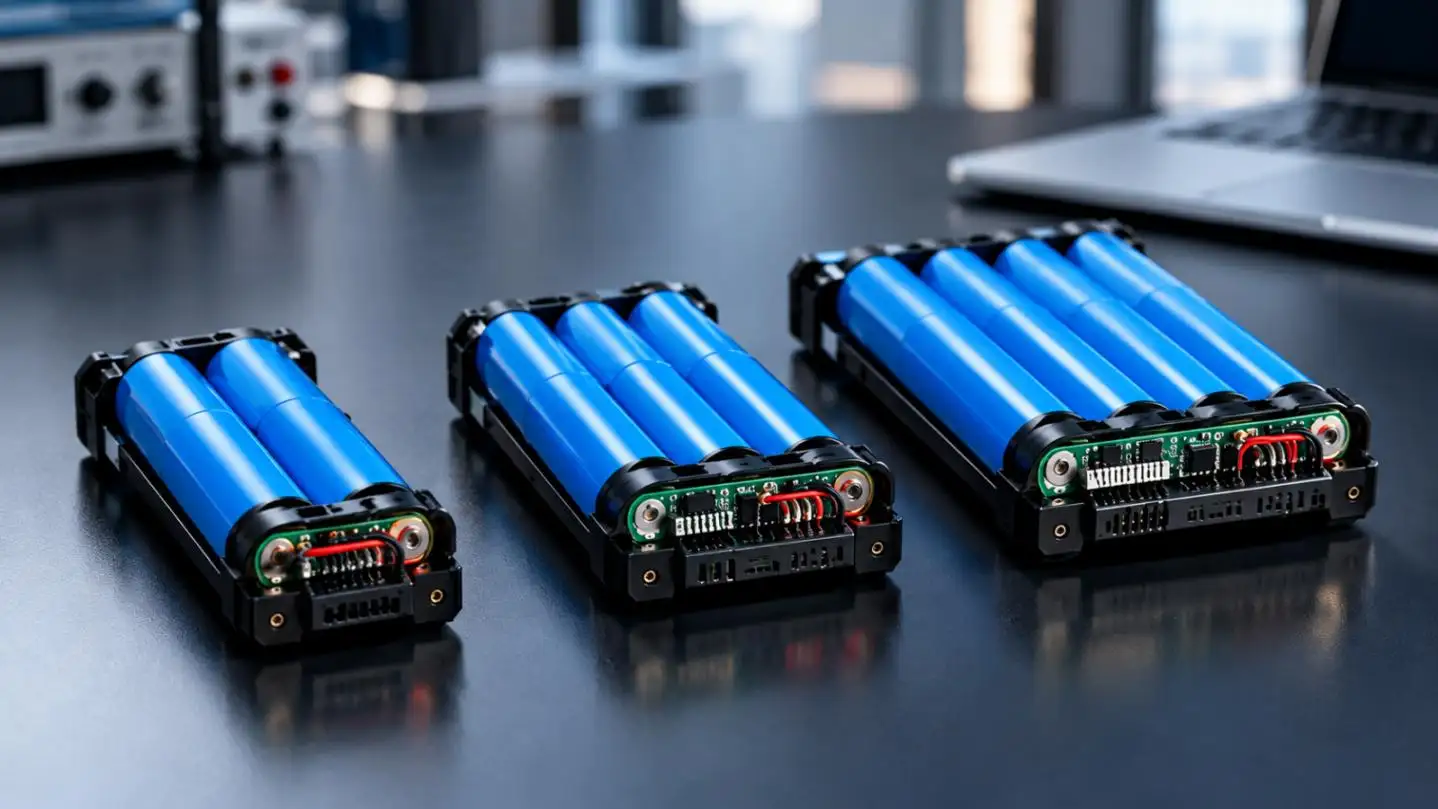
Cylindrical Battery Packs for Laptops: 2S vs 3S vs 4S Battery Design
2026-10-19
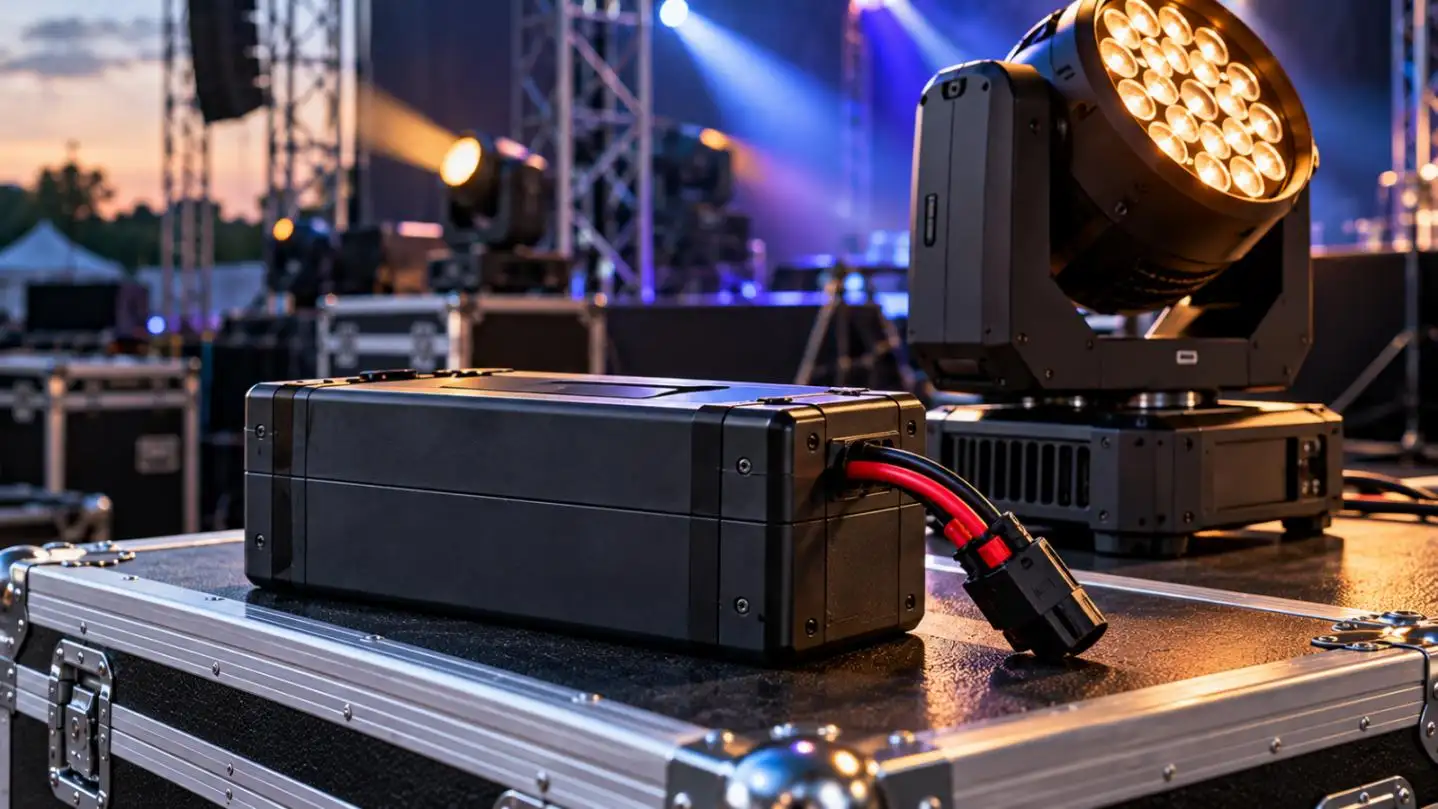
Stage Lighting Battery Pack: Prevent Voltage Drop & LED Flicker
2026-10-19

Best Rechargeable Batteries for Smart Devices: Performance, Safety, and Selection Guide
2026-10-19


